





There is no shortage of explanations for why the Bulletin of the Atomic Scientists moved its metaphorical “Doomsday Clock” up by a whopping 4 seconds Tuesday, to 85 seconds to midnight. For instance, world leaders are openly talking about testing and using nuclear weapons, and the US is taking the threat of fossil-fuel-driven climate change even less seriously than it did last year.
But underlying all of the existential threats we’ve created for ourselves is a lack of cooperation, made far worse by AI’s acceleration of deepfakes and the erosion of trust in information systems.
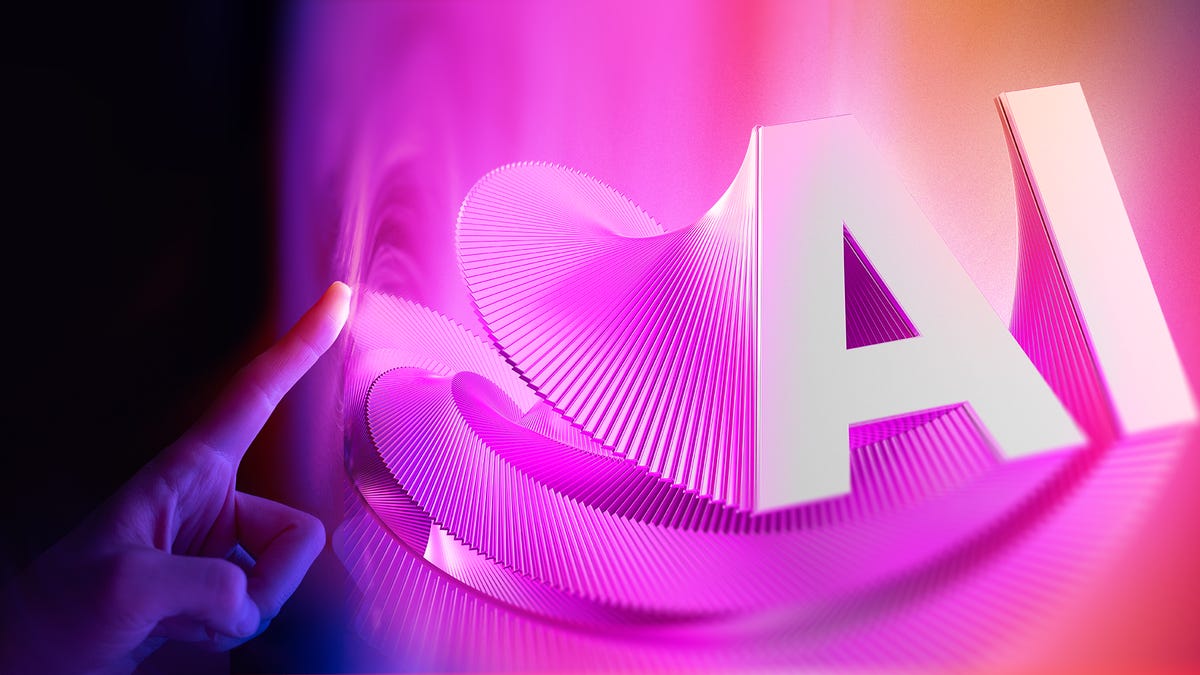
“AI is a significant and accelerating disruptive technology,” Daniel Holz, chair of the Bulletin’s Science and Security Board that sets the Doomsday Clock and a professor of physics at the University of Chicago, said during the announcement. “AI is also supercharging mis- and disinformation, which makes it even more difficult to address all of the other threats we consider. But instead of working toward international standards governing AI safety, we are running headlong into an AI arms race with what could be dire consequences.”
AI-Powered Impersonation Is Emerging as a Top Cyberthreat for 2026
AI and social media are contributing to what journalist and Nobel Peace Prize recipient Maria Ressa called an “information armageddon.” Without reliable information, we lack the “shared reality” needed to face existential threats like climate change and nuclear weapons. Generative AI allows for the creation of disinformation at virtually no cost and in high volume, along with increasingly convincing scams.
“Information integrity is the mother of all models, because you can’t run democracy on a corrupted operating system,” Ressa said.
It isn’t the only warning about the risks of AI in the past week. Pope Leo XIV, in a message ahead of the World Day of Social Communications, raised concerns about people giving over their ability to think and communicate to AI systems.
“By simulating human voices and faces, wisdom and knowledge, consciousness and responsibility, empathy and friendship, the systems known as artificial intelligence not only interfere with information ecosystems, but also encroach upon the deepest level of communication, that of human relationships,” the pope wrote.
Don’t miss any of our unbiased tech content and lab-based reviews. Add CNET as a preferred Google source.
Similar worries have been on the minds of some of the creators of AI. Dario Amodei, co-founder and CEO of the AI developer Anthropic, published a lengthy blog post on the risks and opportunities of increasingly powerful AI systems. He highlighted the risks of AI autonomy, misuse and economic disruption — if the technology puts vast numbers of people out of work.
“Humanity is about to be handed almost unimaginable power, and it is deeply unclear whether our social, political, and technological systems possess the maturity to wield it,” Amodei wrote.
Despite the doom and gloom of the Doomsday Clock’s name, the experts speaking at the Bulletin’s announcement said the goal is to highlight the opportunities to avoid the worst-case scenario. “This is a fundamentally optimistic exercise,” Holz said. “The whole point of this is that there are ways to turn back the clock.”
Watch this: 2025 Tech Rewind: AI Domination, the Rise of ‘Slop’ and Court Victories | Tech Today
Because the clock represents human-caused threats, people can fix them, said Alexandra Bell, president and CEO of the Bulletin. Bell encouraged people to seek out accurate information about things like climate change, nuclear weapons and artificial intelligence and to push politicians and others with power to fix things.
“Every time we’ve been able to turn back the clock, it’s been because we’ve had scientists and experts working to find solutions and a public that demanded action,” Bell said.
Read the full article here