





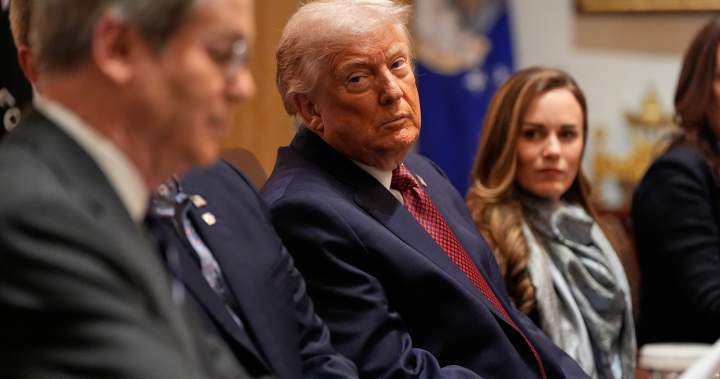
U.S. President Donald Trump said Monday he may impose “very severe tariffs” on fertilizer from Canada “if we have to” in order to bolster domestic production.
Trump made the comment while taking questions from reporters during a roundtable event at the White House where he announced a US$12-billion tariff relief fund for American farmers, who have been facing rising costs for agricultural inputs like seed and fertilizer amid Trump’s global trade war.
“A lot of (fertilizer) does come in from Canada, and so we’ll end up putting very severe tariffs on that, if we have to, because that’s the way you want to bolster here,” Trump said.
U.S. Agriculture Secretary Brooke Rollins said her department and others were working on a plan to reshore fertilizer production to the U.S., while also directing fertilizer manufacturers and other industrial players to lower their prices.
“The president has been very unequivocal in saying we have to figure out why all these input costs are skyrocketing,” Rollins said.
Many U.S. farmers rely on Canadian potash fertilizer from Saskatchewan in order to add potassium to their soils. Over 90 per cent of Canadian fertilizer is exported, and the U.S. market accounts for well over half of that, according to Fertilizer Canada.


Get breaking National news
For news impacting Canada and around the world, sign up for breaking news alerts delivered directly to you when they happen.
When Trump imposed a blanket 25 per cent tariff on Canadian goods early this year, he lowered the tariff on fertilizer to 10 per cent after outcry from industry groups and Republican lawmakers in farming states, such as Sen. Chuck Grassley of Idaho.
That tariff only applies to quantities of fertilizer exports to the U.S. that exceed limits under the Canada-U.S.-Mexico Agreement on free trade (CUSMA).
Canadian and U.S. farmers said in March they were facing higher fertilizer bills amid Trump’s trade war. Some Canadian lawmakers like Ontario Premier Doug Ford had suggested Canada should block potash exports as a negotiating tactic in broader trade talks with the U.S., a move Saskatchewan Premier Scott Moe opposed.
Saskatchewan-based potash producer Nutrien recently announced plans to build a new export facility for global markets in Washington state, rather than in British Columbia, which has angered Canadian politicians.
Rollins said Monday that US$11 billion of the new aid package will go to row crop farmers and will be disbursed by Feb. 28. The administration is holding back the remaining US$1 billion for fruits, vegetables and other crops to finalize the details, Rollins said.
U.S. Treasury Secretary Scott Bessent said the payments will be a “liquidity bridge during a period of adjustment” to support farmers until they see benefits from Trump’s trade deals and other policies.
“This relief will provide much-needed certainty to farmers as they get this year’s harvest to market and look ahead to next year’s crops, and it’ll help them continue their efforts to lower food prices for American families,” Trump said during the White House event.
The Trump administration has said it is examining the higher costs for agricultural products and machinery. Soybean farmers expect to see their third consecutive year of losses in 2025, according to the American Soybean Association.
During his first term, Trump gave about US$23 billion in aid to farmers hurt by his trade policies. Farmers are set to receive a near-record US$40 billion in government payments this year.
Net farm income could fall by more than US$30 billion in 2026 due to a decline in government payments and low crop prices, according to an estimate from the Food and Agricultural Policy Research Institute at the University of Missouri.
—with files from Reuters
Read the full article here