





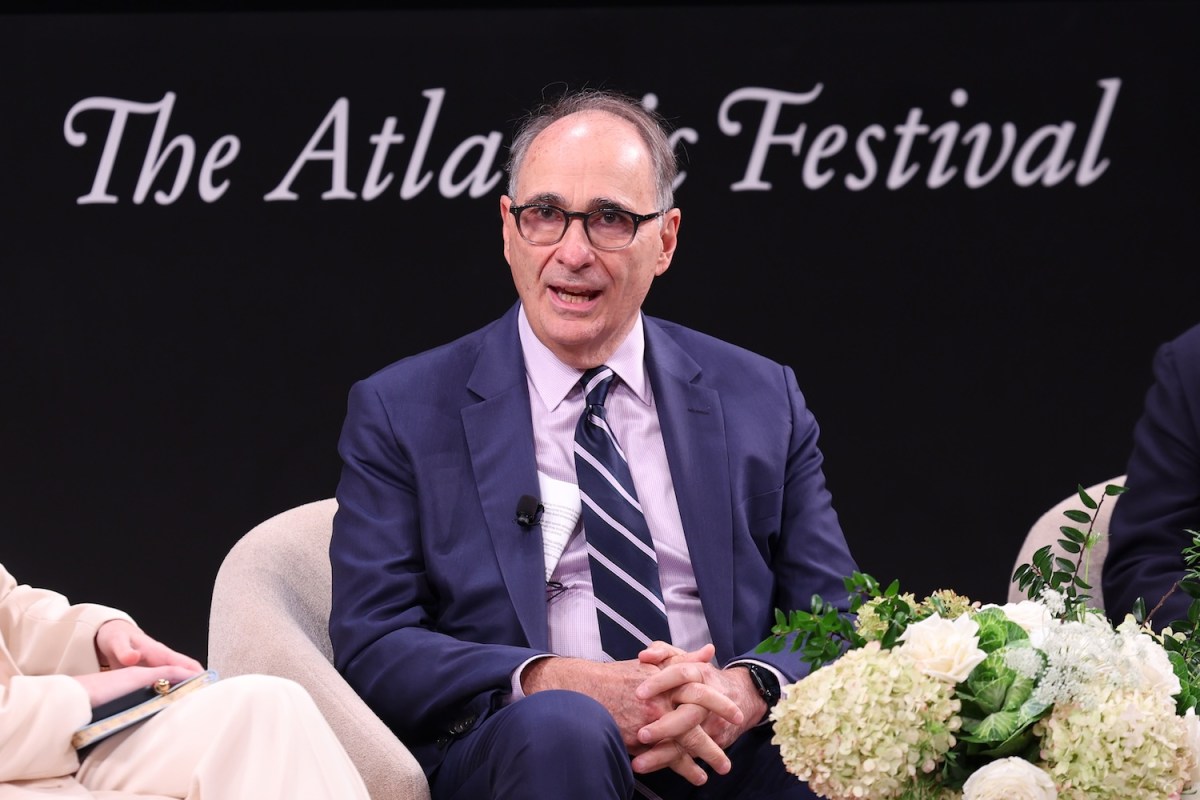
President Donald Trump is repeating former President Joe Biden’s most damaging political mistake by denying the reality of the affordability crisis gripping American households, former Obama strategist David Axelrod warns in a new essay for The Atlantic.
Axelrod argues the president is “walking himself – and his party – into the same perilous trap” that helped doom the Democratic Party in the 2024 election, even as voters continue to list rising prices as their top concern.
Why It Matters
Axelrod writes that Trump won in 2024 by relentlessly attacking Biden’s refusal to acknowledge public frustration with soaring prices. But nearly a year into Trump’s return to the White House, “inflation is as high today as it was the day he took office,” he says, and voters now judge Trump just as harshly as Biden on economic management.
Now a political adviser and commentator, Axelrod was President Barack Obama’s chief campaign strategist and served as a senior adviser to Obama in the White House. He has since joined CNN as a political commentator, wrote the memoir Believer: My Forty Years in Politics, and launched The Axe Files podcast.
In The Atlantic, Axelrod argues Trump’s insistence on portraying the economy as an “economic miracle,” despite ongoing cost-of-living pain, mirrors Biden’s failed attempt to sell “Bidenomics” to skeptical voters in 2023 and 2024.
He warns that ignoring price pressures helped drive unexpected Democratic gains in state and local elections in the fall—and could cost Republicans control of Congress next year.
What To Know
Axelrod writes that Trump’s core 2024 pitch—“I will rapidly drive prices down, and we will make America affordable again”—has not materialized. Instead, he says, the president’s “signature economic initiative,” a sweeping round of import tariffs described as the steepest since the Great Depression, has “predictably increased costs for American consumers.”
Trump’s across-the-board tariffs plan risked raising prices on everyday goods, with economists warning that broad duties can fuel higher inflation even as wage growth slows.
In July, Alberto Cavallo, Harvard Business School professor, told Newsweek that price increases were “largely driven by goods from China, particularly in categories such as household goods, furniture, and electronics.”
However, Cavallo added, the retail price impacts remained modest when compared with the actual size of the tariffs announced, saying this is in line with trends observed during the U.S.-China trade war in 2018-2019, when “prices at the border rose quickly, but pass-through to retail prices was slow and uneven.”
“A similar dynamic appears to be unfolding now,” he said. “U.S. firms are experiencing higher import costs, as suggested by stable or rising import prices, but have not yet passed most of these increases on to consumers.”
Axelrod says job growth has indeed weakened this year and notes that public approval of Trump’s handling of the economy has mirrored Biden’s anemic numbers.
The former Obama adviser argues Trump is now resorting to the same messaging issue that sunk Biden—claiming success, dismissing voters’ concerns and blaming his predecessor for economic discomfort nearly a year after leaving office. When asked this week about affordability, Axelrod notes Trump called inflation a “Democrat scam” and “fake narrative,” even as Americans confront higher prices “every time they go to the store or pay their bills.”
Axelrod writes that Democrats have seized on Trump’s vulnerability. He highlights last week’s special election in Tennessee, where Democrat Aftyn Behn focused heavily on inflation and health care costs and came far closer to flipping a deep-red district than expected—“the latest warning flare for Trump and his party” less than a year before the midterms.
Inside the White House, Axelrod describes Trump presiding over Cabinet meetings filled with “fawning praise,” even as the president “drifted in and out of sleep.” When pressed by reporters about inflation’s political potency last week, Trump lashed out, calling affordability concerns a “con job.”
What People Are Saying
Trump, last week calling the affordability issue a “fake narrative” and “con job” created by Democrats, during a Cabinet meeting: “They just say the word. It doesn’t mean anything to anybody. They just say it—affordability. I inherited the worst inflation in history. There was no affordability. Nobody could afford anything.”
Kevin Hassett, White House economic adviser: “Trumponomics works and Bidenomics doesn’t. The affordability gap that was created by Biden’s runaway inflation is gradually being whittled away. But we understand that people understand as they look at their pocketbooks and go to the grocery store, that there’s still work to do.”
What Happens Next
Trump “will never be on a ballot again,” Axelrod writes, but he is now fighting to preserve a loyal Republican Congress. With inflation still elevated, tariffs raising costs and job growth slowing, Axelrod warns Republicans are courting the same backlash that crippled Biden: “asking voters… to believe him over their lying eyes.”
If Trump continues downplaying economic pain, Axelrod argues, Democrats could be positioned to retake one or both chambers of Congress in the 2026 midterms—an outcome driven, he writes, by the president’s own refusal to confront the crisis he promised to fix.
Read the full article here