




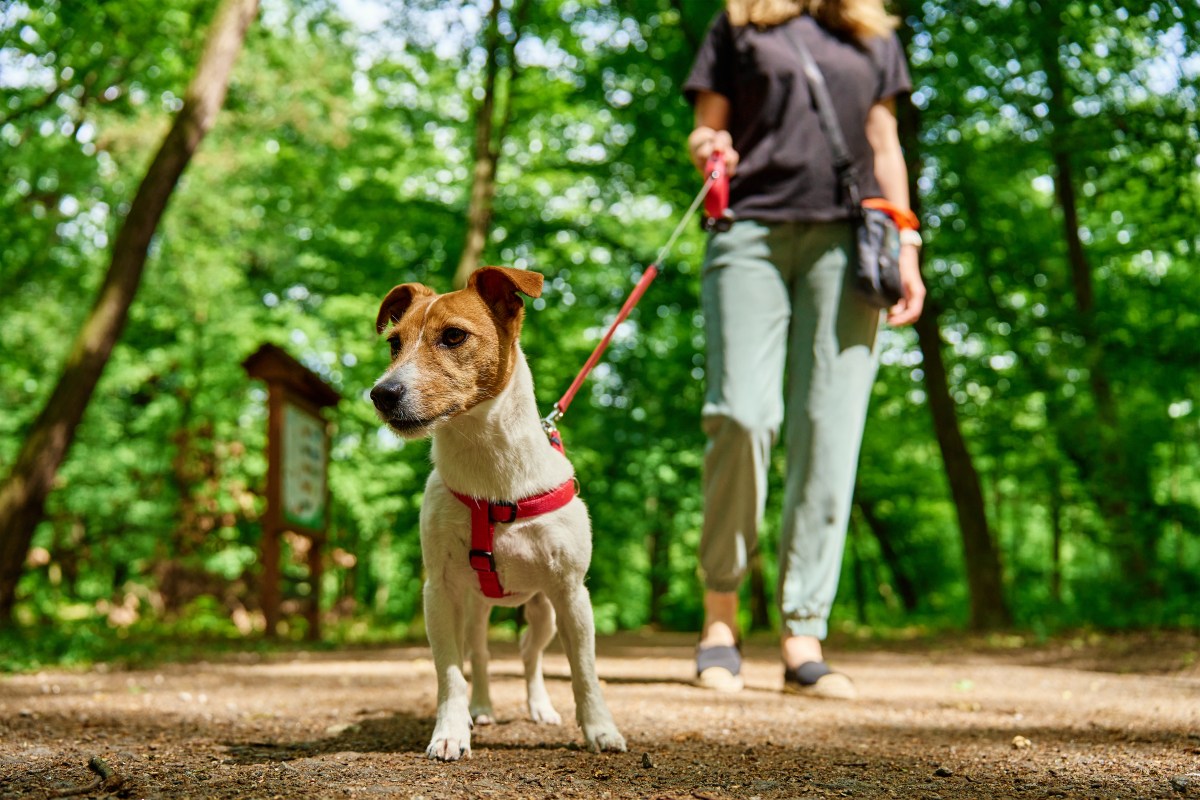
How long you should walk your dog for depends on far more than enthusiasm or energy. Veterinarians say age, breed, health, and even walking surfaces all play a role in keeping pups active without risking injury.
Understanding what is appropriate at each life stage can help owners build safe, healthy routines for their fur-babies.
How Long Should Dog Walks Be Based on Their Age?
Puppy
Puppy exercise must be handled with care because their bones are still developing. Dr. Liza Cahn, veterinarian at Embrace Pet Insurance, recommends following a simple guideline: “Five minutes of structured walking per month of age, up to twice daily.”
Structured walks should stay short because “repetitive, forced exercise can stress developing joints,” Cahn told Newsweek. She also said that free play is safer since puppies naturally regulate themselves.
Dr. Elena Shirley, lead veterinarian partner at CityVet-Charlotte Uptown, told Newsweek that growth plates make young dogs vulnerable.
Shirley said that romping on soft surfaces is ideal and running on hard ground should be avoided until the dog is older. Short 80- to 150-foot bursts can help introduce the idea of pacing with an owner, but only on forgiving surfaces.
Adolescent
As dogs reach 6 to 18 months, stamina improves, and they can handle longer outings. Cahn said that these walks can gradually increase in duration during this stage. Large and giant breeds still require caution because their growth plates close more slowly.
Shirley added that, once growth plates are confirmed closed, owners can begin slowly expanding distances or adding running, ideally on softer trails to protect joints—especially in breeds predisposed to hip or elbow issues.
Adult
Most healthy adults do well with consistent, breed-appropriate exercise. Cahn said these dogs typically benefit from 30 to 90 minutes of activity per day, though needs vary widely. Some canines remain naturally sedentary, while highly active breeds may need far more intense workouts to stay balanced and healthy.
Dr. Karyn Collier, medical director at Hillside Veterinary Clinic in Dallas, said that adults aged 1 to 6 years can walk “1 to 2 hours daily” as long as they have been gradually conditioned to that level.
Senior
As dogs reach their senior years, exercise stays important but should be gentler. Cahn recommends shorter, softer-paced walks and close monitoring for stiffness or fatigue. Mental enrichment becomes just as helpful for aging canines as physical movement.
Collier said that fit seniors can still tolerate an hourlong walk, though arthritic dogs may need shorter sessions. She also highlighted swimming as a low-impact option, thanks to the water’s reduced strain on joints.
Shirley said that paying attention to attitude—whether excited or hesitant—helps guide safe pacing. Intervals of walking with short jogging bursts may work well for seniors who still enjoy movement.
Signs That a Dog Is Getting Too Much or Too Little Exercise
Cahn said that too little activity may appear as destructive behavior, excessive barking, hyperactivity, or difficulty settling. Too much exercise shows up as “reluctance to walk, fatigue, weakness, pain, limping, injury, or stiffness the next day.”
Shirley added that sore muscles, damaged paw pads, or heat-related symptoms can signal overexertion, while boredom and weight gain point to insufficient movement.
Collier said that heavy panting, limping, or lagging behind during a walk are clear signs of fatigue. Inactive canines may appear restless or gain weight.
The veterinarians said that exercise must be tailored to the individual dog. As Shirley added, “There is no one size fits all rule.”
Age, breed, health, weather, and surface type all influence what is safe and appropriate. When in doubt, start slow, observe your dog’s comfort, and work with your veterinarian to build the right routine.
Read the full article here