






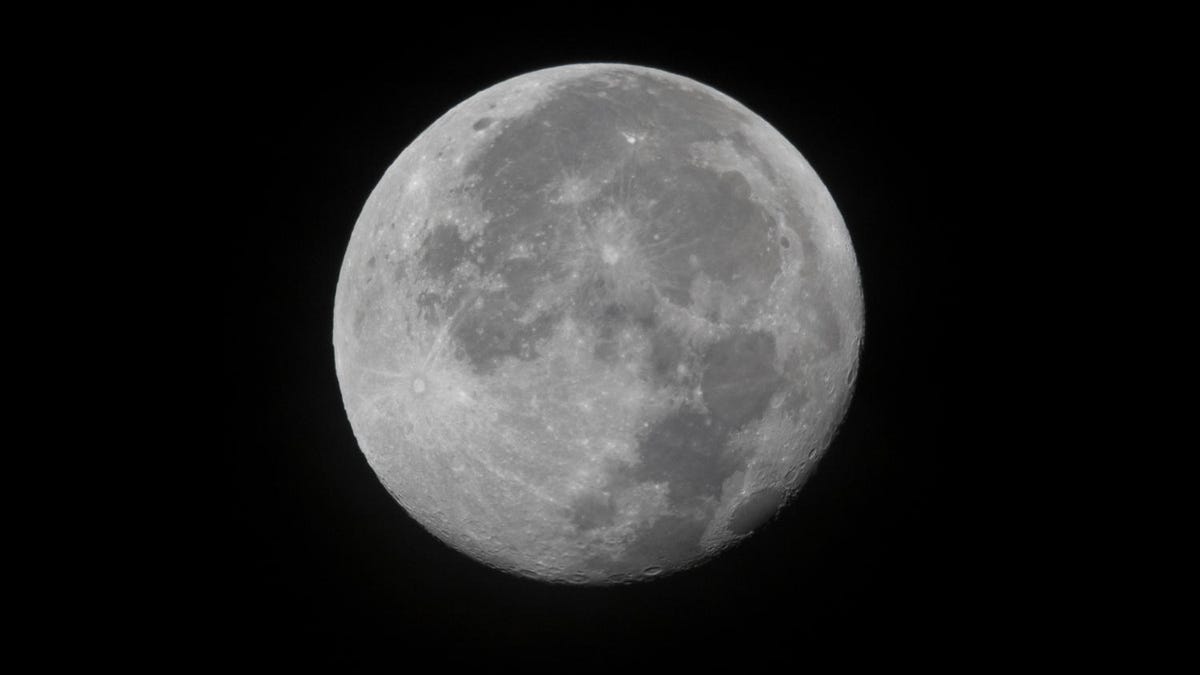
Like wolves, supermoons tend to come in packs. Earth has just experienced three supermoons in a row, dating to October, with the fourth and final supermoon of the sequence happening in the early hours of Jan. 3. The Wolf Moon is also the last supermoon of 2026 until November.
Don’t miss any of our unbiased tech content and lab-based reviews. Add CNET as a preferred Google source.
The moon spends three to four months at a time in perigee, a fancy term that means it’s as close to Earth as its elliptical orbit will allow. During this time, humans refer to full moons as supermoons. Because the moon is physically closer to Earth than it normally is, a full moon appears brighter and larger in the sky.
The moon will appear up to 14% bigger and 30% brighter than a micro moon.
The difference can be a moon that is up to 14% bigger and 30% brighter than a micromoon, which occurs when the moon is at apogee, or the furthest point away from Earth. That brightness is the real differentiator, as a supermoon is bright enough to light up your backyard, especially if there is snow on the ground.
To see the moon at its brightest, you’ll want to stay up late on Jan. 2 or wake up very early on Jan. 3. According to The Farmer’s Almanac, January’s supermoon will rise from the eastern horizon and streak across the sky to settle in the west around sunrise. The moon will reach peak illumination at 5:03 a.m. ET. It should still be dark outside for the entire US during this time, so everyone will have a chance to see it.
If you see it can’t because of weather or other engagements, the Wolf Moon will be over 90% full from Dec. 31 through Jan. 5, which gives you almost a week of near-maximum illumination.
Because the moon is the largest and brightest object in the night sky, you also won’t need any special magnification devices to see it. However, a good pair of binoculars or a telescope makes the moon’s surface details easier to see, and helps photographers take some impressive moon shots.
The full moon in January is commonly called the Wolf Moon because of increased activity from wolves during this time. Not only does January mark the beginning of the wolf’s winter mating season, but wolves are also typically more active at dusk and dawn. Dusk is pretty early in the day, especially right after the winter solstice. In the old days, this meant that people were more likely to see a wolf or hear wolves howling during January.
Read the full article here