



If you hear the unmistakable buzzing sound of a moped at full speed, you should know you are in trouble.
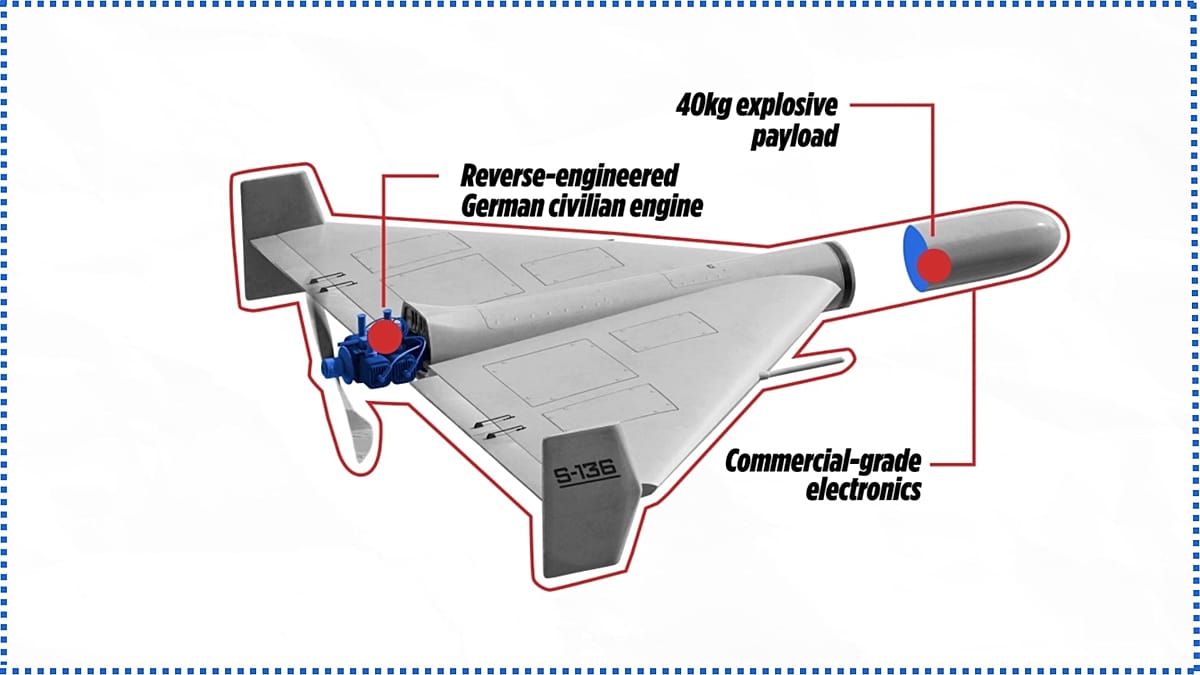
But if we look closer, we see the danger is not the technology: it is the price tag. Iran uses a sheer number of these cheap, simple drones to overwhelm advanced defence shields.
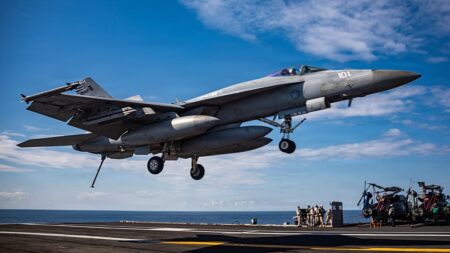
It is completely unsustainable to fire a million-dollar interceptor at a €25,000-€40,000 drone. By launching massive waves, Iran can effectively bankrupt a billion-dollar air defence grid.
And the Shahed is the AK-47 of the skies. It carries a deadly explosive payload but relies on low-tech parts.
After supplying thousands of these to Moscow, Iran watched how Russia used them in Ukraine. Now, Tehran is bringing those exact swarm tactics back to the Middle East.
And from Iran’s territory, these drones can reach almost anywhere, casting a shadow over the entire region.
Depending on the model, the range reaches 2,500 kilometres, covering everything from the Mediterranean coast to the furthest reaches of the Arabian Peninsula.
With Shaheds threatening US bases, oil refineries, and tourist hubs, no one seems to be safe.
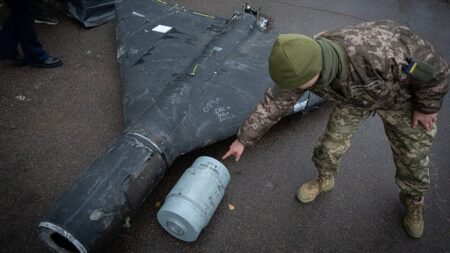
But a blueprint exists to stop them. A multilayered anti-drone air defence system, including mobile squads, electronic warfare and new interceptor drones, helped Ukraine achieve an interception rate of over 80%.
With President Volodymyr Zelenskyy saying Russia has launched close to 60,000 Shahed-type attack drones against Ukraine, one question arises: is the Middle East ready to intercept a similar wave?
Watch the Euronews video in the player above for the full story.
Read the full article here