





Dogs in Europe had been domesticated from wild wolves by at least 14,200 years ago, two new genetic studies suggest.
Both studies, published March 25 in Nature, use ancient DNA recovered from fossil dog bones to revise the early history of domestic dogs (Canis familiaris). The research pushes back the confirmed date for dogs’ separation from wolves (Canis lupus) by more than 3,000 years.
The two studies are a “significant advance” in understanding how dogs evolved from wolves, says evolutionary biologist Beth Shapiro of the University of California, Santa Cruz, who was not involved in the new work. And they show that living dogs are the result of more than 15,000 years of migrations, interbreeding and human influence, she says.
Dogs were the first animals domesticated by humans — tens of thousands of years before horses, sheep or cattle — and share many of their genes with wolves. Scientists think dogs evolved from wolves, mainly to be less aggressive to humans, but the exact date of their genetic divergence is not known.
A 2015 study estimated that dogs split from wolves between 27,000 and 40,000 years ago, based on fossilized wolf bones from Siberia that were radiocarbon-dated to about 35,000 years ago. And, until now, the oldest confirmed dog remains with preserved DNA, found in northwest Russia, date to about 10,900 years ago.
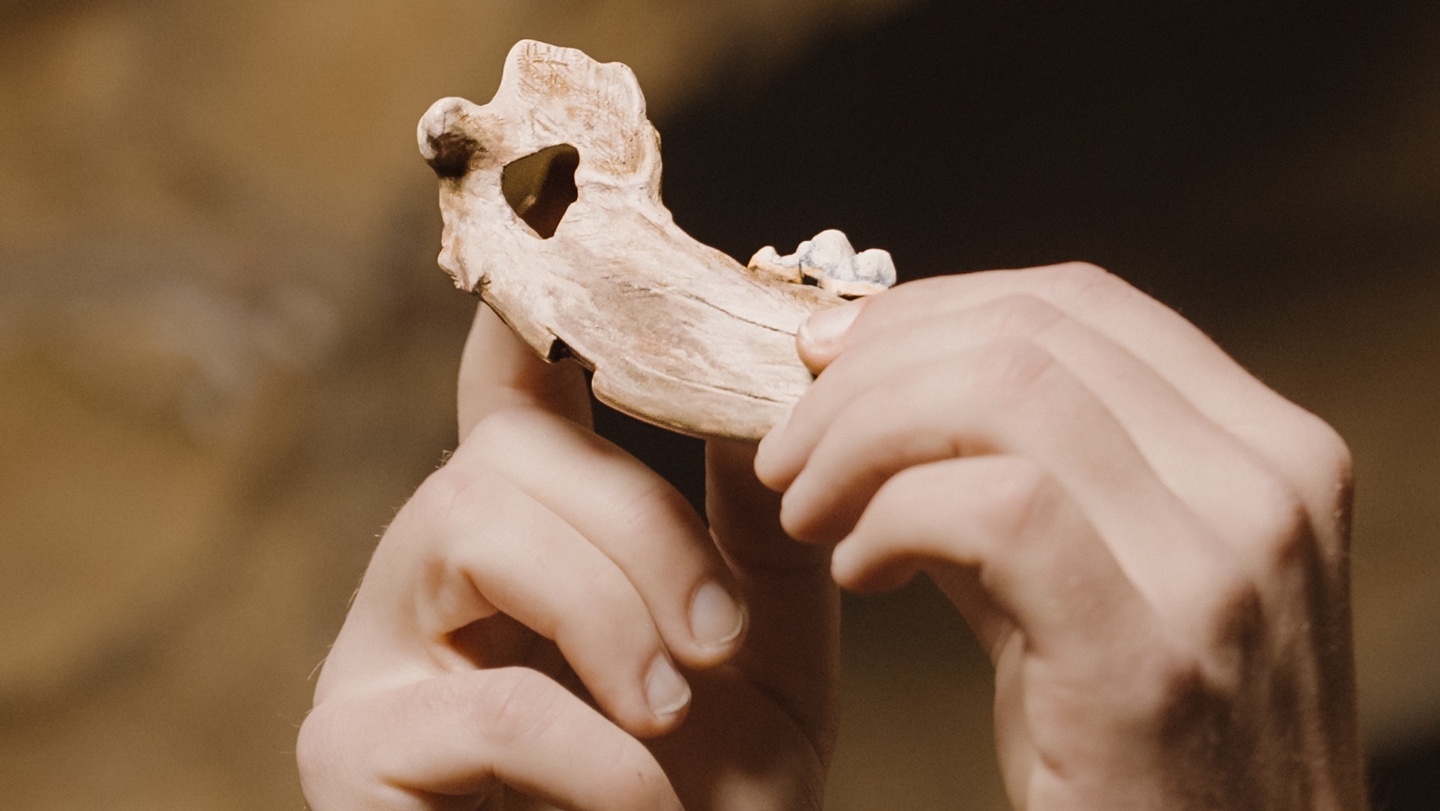
The researchers in the latest studies examined ancient DNA extracted from over 200 sets of dog and wolf remains at dozens of prehistoric sites across Europe, Southwest Asia and the Iranian plateau. The oldest dog in both studies is from the Kesserloch archaeological site in Switzerland, radiocarbon-dated to 14,200 years ago, during the Paleolithic period. Genetic analyses show that the Kesserloch dog shared ancestry with Paleolithic dogs from other regions, suggesting dogs were widely established and genetically distinct from wolves by then.
The second study examined dog genomes from ancient sites in what are now Turkey, England and Serbia, and shows that genetically stable dog populations had spread across this region by about 14,300 years ago.
Fossilized dog bones from many of the sites also showed consistent genetic signatures, suggesting they belonged to established, stable populations. The researchers don’t know if any of these ancient dogs were technically pets of the prehistoric humans who lived at the sites or if the dogs had been just “hanging around the human campsites,” says geneticist Anders Bergström from the University of East Anglia in Norwich, England. But there is archaeological evidence that at least one of the dogs had been well cared for by humans, which suggests dogs were well-tempered members of their groups, he says.
Both studies’ findings reinforce the idea that dogs had evolved from wolves between 27,000 and 40,000 years ago. But both refute the idea that dogs in Europe descended independently from European wolves. Instead, the data “show these early European dogs shared the same origins as dogs elsewhere and had somehow reached Europe by 14,000 years ago,” Bergström says.
Bergström and his coauthors also found traces of Southwest Asian ancestry among some ancient European dogs, which may reflect the migration of farming people from that region into Europe. And the authors of the second study note that the remains of the genetically similar dogs were often found among the remains of genetically dissimilar human groups. The finding suggests that the spread of dogs was linked to the migrations and interactions of the human groups.
The latest studies offer further evidence for the idea that dogs had a single origin, possibly somewhere in Asia, with further interbreeding of early dogs and wolves, says Adam Boyko of Cornell University, who has studied dog genetics but wasn’t involved in the new studies. “Of course, we can’t rule out that some early fossils classified as wolves were actually tame and effectively dogs,” he says. “But from the standpoint of modern dogs, it seems they all share a single domestication origin.”
The more ancient dog DNA we can study, Shapiro says, the closer we’ll get to answering the question of when and where our remarkable partnership with dogs began.
Read the full article here