






Exposure to harmful UV and smoking were the leading causes of preventable cancers among Australians in a major global analysis which found two in every five cancers could be avoided.
The World Health Organisation (WHO) study, published in the journal Nature on Wednesday, analysed leading risk factors for 36 cancer types across 185 countries. Australia was the only country where UV radiation was the leading factor linked to preventable cancers in men.
Tobacco smoking was the leading risk factor for cancer among Australian women.
Australians have known for decades that high UV levels, outdoor lifestyles and a large fair-skinned population put us at greater risk of skin cancers. A 2012 study estimated 96 per cent of melanomas in Australia were caused by UV exposure.
But what is less known is that men are more likely to get skin cancers than their female peers once they reach the age of 45, said Melanoma Institute cancer epidemiologist Professor Anne Cust.
Cust said the study was a warning to all Australians but particularly to men, who generally spend more time outdoors and use less UV protection.
“You can’t change the damage you’ve done, but you can make changes to reduce your future risk,” she said.
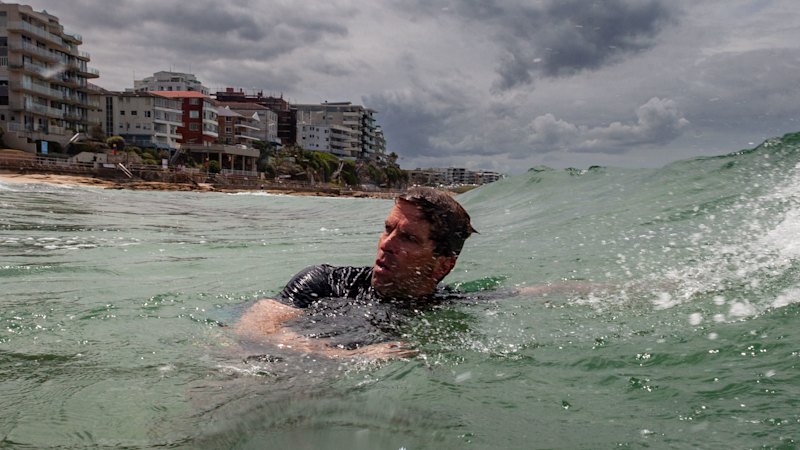
Growing up in Sydney’s Sutherland Shire, Andrew Camfield spent most of his early years at the beach. He rarely wore sunscreen and believed having a tan was healthy.
Camfield’s first warning came in 2018 when he had a melanoma removed from the back of his calf. When another lump reappeared over his scar three years later, he was diagnosed with stage three melanoma and underwent surgery to remove his lymph nodes, followed by 12 months of aggressive immunotherapy.
Now cancer-free, Camfield remains a keen ocean swimmer (he plans to complete the Rottnest Channel Swim in Western Australia this year) but avoids long swims after 8am and wears a rash vest in hotter parts of the day. He relentlessly reminds his friends and three teenage sons to do the same.
“I often do try to bring back that image [of my treatment] because it’s easily forgotten,” Camfield said. “I just want them to remember the form advanced melanoma can take.”
Advances in immunotherapy have improved five-year survival rates from less 10 per cent a decade ago to more than 50 per cent today.
But surfer and stage four melanoma survivor Craig Brewer said too many people were still exposing themselves to avoidable skin cancers.
“Even though I’m living a normal life now, I would never wish what I went through upon anybody,” he said. “It’s an unnecessary risk.”
The link between cancers and common lifestyle and environmental factors is well established, but the scale of the Nature study is rare.
About 7.1 million of the 18.7 million new cancer cases recorded globally in 2022 were linked to 30 modifiable risk factors measured in the study, according to its authors. Lung, stomach and cervical cancers made up around half of these potentially preventable cases.
Globally, smoking accounted for 3.3 million cases, infections for 2.2 million cases, and alcohol about 700,000 cases.
“These three factors alone represent the majority of preventable global cancer burden globally, highlighting where prevention efforts could have the greatest impact,” said Dr Isabelle Soerjomataram, deputy head of the International Agency for Research on Cancer at the WHO.
“Using this data, we have now the information to prevent cancer before it starts and help populations enjoy a healthier life.”
Because there is generally a delay between when someone is exposed to harm and when they get cancer, the researchers analysed the number of cancers in 2022 against the prevalence of common risk factors about 10 years earlier.
These risk factors were only those that could be avoided or limited, had an established causal relationship with cancer, and were covered by high-quality national exposure data. These also included factors such as air pollution, high body-mass index and insufficient physical activity.
Among women, the largest global share of preventable cancers is linked to human papillomavirus (HPV). Australia is projected to be the first country to eliminate cervical cancer by 2035, but barriers to accessing the highly effective HPV vaccine are hampering efforts in lower-income countries.
Professor Karen Canfell, lead researcher at the University of Sydney’s cancer elimination collaboration, said screening programs for cervical, lung and breast cancer had saved lives in Australia and provided an example for other nations to follow.
Despite these successes, less than 15 per cent of cancer research funding goes towards prevention and early detection, Canfell said.
“We see from this type of analysis that these are areas where there could be many cancers prevented, and therefore many lives saved,” she said. “I think this [study] is really the basis for a clarion call into increased investment into programs that work.”
The Morning Edition newsletter is our guide to the day’s most important and interesting stories, analysis and insights. Sign up here.


From our partners
Read the full article here