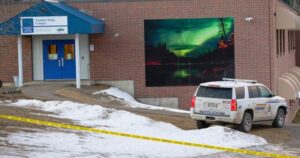




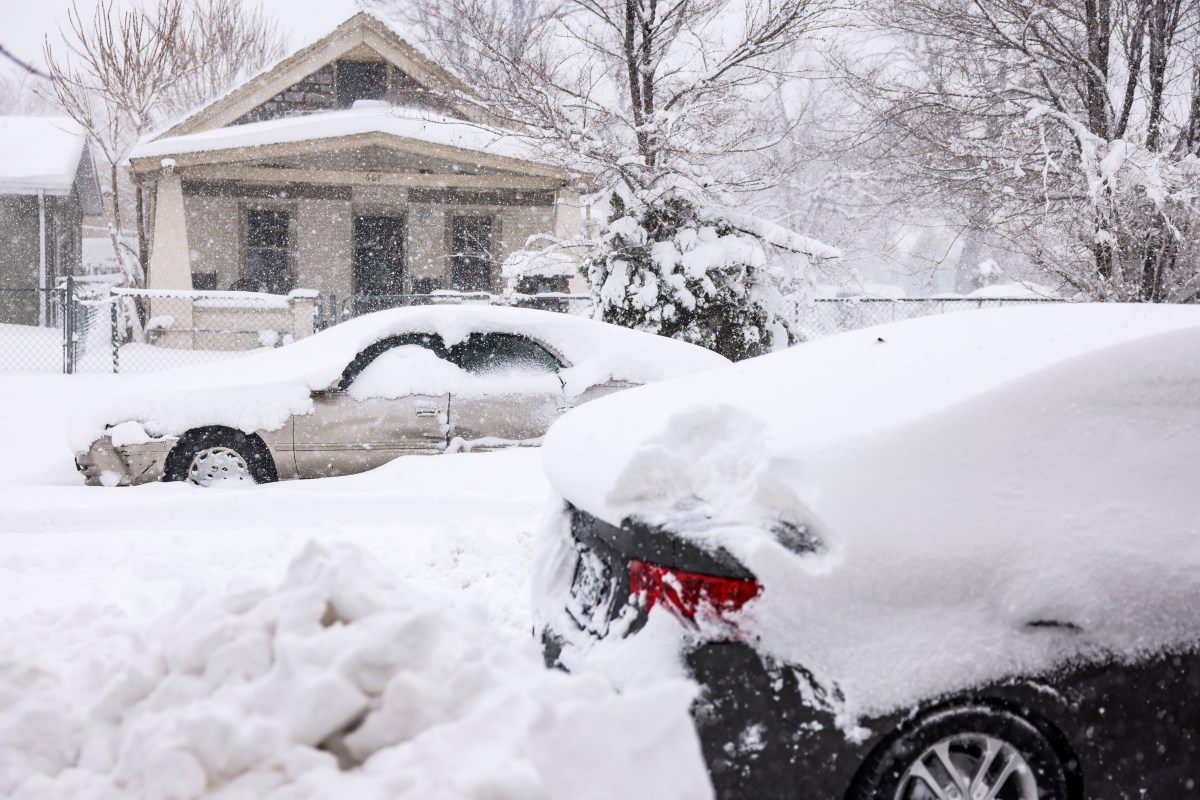
An elderly homeless woman and her disabled son were found dead inside a snow-covered car in a Providence, Rhode Island, parking lot on February 11—nearly two weeks after a desperate call for help went unanswered, according to local news station WPRI.
Providence police identified the victims as 75-year-old Irina Kozak and her 49-year-old son, Stanislaw Kozak. The pair had been living out of their white Kia Sorento for approximately a year. Their deaths were ruled weather-related, with underlying health conditions also cited as contributing factors, according to authorities.
Newsweek reached out to the Providence Police Department on Saturday via email for comment.
The Context
The Kozaks’ deaths are among dozens of weather-related fatalities reported across the country in recent weeks, with powerful winter storms sweeping multiple states within days of each other.
Public health officials attributed fatalities to hypothermia, suspected carbon monoxide poisoning and weather-related accidents—risks that compound as outages linger and cold snaps persist.
The case also highlights the compounding vulnerabilities facing homeless individuals during extreme weather, particularly those who are elderly, disabled or face language barriers. It raises serious questions about emergency response protocols and the gaps that can emerge when dispatchers are unable to communicate directly with a person in crisis.
What To Know
According to WPRI, the initial call to Providence police came the evening of January 28 when temperatures had plunged to single digits—just three days after a storm buried the city under 20 inches of snow.
The caller was not Irina Kozak herself, but a Russian interpreter, the English-speaking boyfriend of a Russian-speaking friend Kozak had contacted. He had first gone to a police department in another town where officers directed him to call Providence police.
A call log later obtained by WPRI’s Target 12 showed the interpreter told dispatchers that Kozak was “disabled inside her white Kia Sorento” and “cannot get out,” and that her son had “passed away” and “hadn’t moved in two days.” Dispatchers were never able to speak directly with Kozak, and officers were unable to reconnect with the interpreter after the initial call.
The caller could only say the car was located “at a park near Miriam,” referring to Miriam Hospital in Providence. Officers searched the surrounding area, including nearby Lippitt Park, but came up empty. About an hour after the call, the log noted officers had “checked parks in area—Miriam Hosp—unable to locate.”
The Kozaks were ultimately found on February 11 in a parking lot directly adjacent to the hospital. Police said they later notified a relative in Germany via WhatsApp.
What People Are Saying
Providence Police Colonel Oscar Perez told WPRI: “We didn’t have a plate for the car,” noting that without a direct line to Kozak and only a vague location, officers faced significant obstacles in their search.
Rhode Island Governor Dan McKee warning residents of further severe weather: “We’re tracking a significant winter storm that is expected to impact our state beginning on Sunday evening. Our crews are ready and we’ll keep Rhode Islanders informed at every stage. Take steps to prepare now and stay tuned for forecast updates.”
What Happens Next
Perez told WPRI that the department is “reviewing the response to determine if any improvements can be made moving forward.”
In a polarized era, the center is dismissed as bland. At Newsweek, ours is different: The Courageous Center—it’s not “both sides,” it’s sharp, challenging and alive with ideas. We follow facts, not factions. If that sounds like the kind of journalism you want to see thrive, we need you.
When you become a Newsweek Member, you support a mission to keep the center strong and vibrant. Members enjoy: Ad-free browsing, exclusive content and editor conversations. Help keep the center courageous. Join today.
Read the full article here