



Updated ,first published
Authorities are warning there is nothing they can do to stop the spread of H5N1 bird flu through Australia’s wildlife, after another 20 cases of the deadly virus were recorded nationwide.
There have now been 53 cases recorded overall, including the first case of the virus in a silver gull, commonly known as the seagull and a species found in large numbers nationwide.
Six new cases are suspected in Victoria.
Meanwhile, a cluster of nearly 50 dead birds off the South Australian coast is being probed for links to the current outbreak, and a suspected infected bird was found near an open range zoo in Monarto, less than an hour east of Adelaide.
While the risk to human health from the virus remains low, experts are concerned about the effect it could have on the poultry industry. In 2024, a different strain of bird flu led to authorities killing 2 million chickens, disrupting egg supplies.
In its latest updates, the federal Department of Agriculture, Fisheries and Forestry confirmed a further 20 birds from Kangaroo Island and the south-east coast of South Australia had tested positive, including a seagull found at the town of Robe.
The Burnet Institute’s chief health officer, Associate Professor Suman Majumdar, said a confirmed case in a seagull was significant.
“Gulls move between beaches, wetlands, farmland and urban areas, which could carry the virus into a much wider range of wildlife, poultry and environments,” he said.
Majumdar said overseas experience with this strain suggested Australia should expect further deaths and detections in seabird colonies and marine mammals in the weeks ahead.
“What we are seeing now is the early part of that curve,” he said.
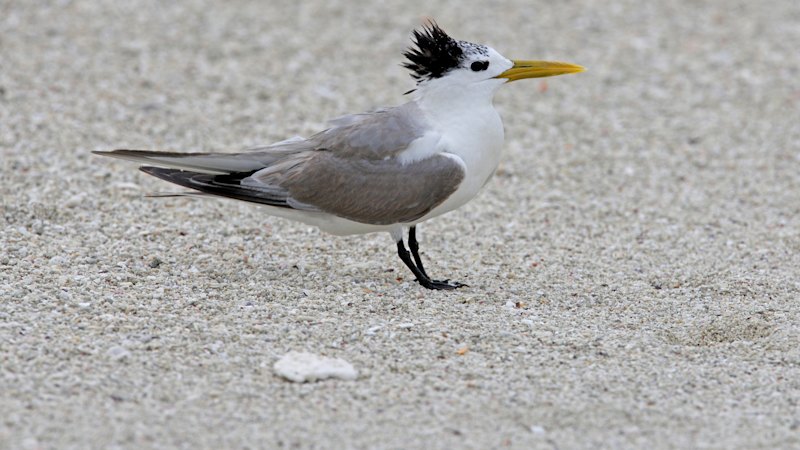
On Saturday afternoon, South Australian Minister for Climate, Environment and Water Emily Bourke said a cluster of 49 dead and at least 35 sick terns detected on Friday at Baudin Rocks, off the coast north of Robe, was set to be tested for the virus.
“This is a significant change in what is happening in South Australia,” Bourke said.
South Australia’s Chief Veterinary Officer, Skye Fruean, said there were no reports of deaths or illnesses when the same area was surveyed two weeks ago, confirming that this was being treated as a mass mortality event. Hundreds of birds live or breed at Baudin Rocks.
“We expect we will get some bad news from that situation in the coming days,” Fruean said.
Meanwhile, Monarto Safari Park has confirmed the government alerted it to a tern believed to have tested positive in its vicinity on Saturday.
Fruean said the bird was discovered by a bystander on a road near the town of Monarto, also not far from an Ingham’s poultry facility where eggs are hatched into chicks.
“It is quite a lot further inland than any of the cases we’ve had to date, and we need to wait for confirmation, but it’s an area where we have [poultry] production as well, so we’ve been talking to stakeholders even before this detection. They’re well prepared,” she said.
The zoo said in a statement that the bird was found several kilometres west of the park, not within its animal collection. It said it had been preparing for such an event by “bird-proofing habitats for vulnerable species, installing specialised feeding systems that minimise contact between wild birds and animals in our care”.
Australia’s Chief Veterinary Officer, Dr Beth Cookson, said all the infected birds so far were wild seabirds found in coastal locations, and there remained no detections in the poultry or agricultural production systems.
Jack Gough, chief executive of the Invasive Species Council, said the reported mass mortality event illustrated how quickly the outbreak could escalate.
“We cannot stop the virus, and ultimately it will be a numbers game for vulnerable birds and sea mammals,” Gough said. “That’s why we need people to keep pet cats and dogs contained and governments to urgently invest in scaled-up wildlife resilience measures like fox and cat control.”
The latest updates from Canberra and South Australia came less than 48 hours after the H5N1 variant of the virus was detected in Victoria for the first time, in a crested tern in Portland.
Since then, Agriculture Victoria has said it has detected a further six suspected cases in crested terns, also from the Portland and nearby Nelson Bay areas.
People who suspect they have seen birds infected with or killed by H5N1 are urged not to touch them, but instead to call the Emergency Animal Disease hotline on 1800 675 888.
The federal government had invested $113 million to prepare for the arrival of the flu strain in Australia, and released a further $24 million to states and territories in July.
With AAP
Start the day with a summary of the day’s most important and interesting stories, analysis and insights. Sign up for our Morning Edition newsletter.
From our partners
Read the full article here