



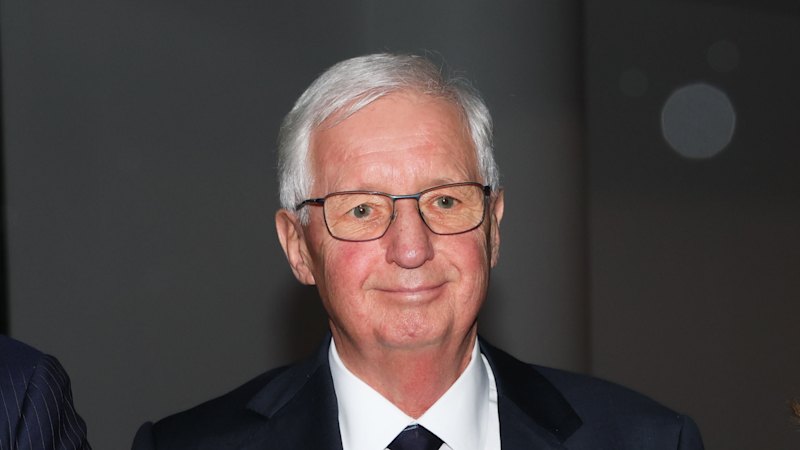
When former University of Wollongong chancellor Michael Still raised the prospect of hiring professor John Dewar to act as interim vice-chancellor for $1 million a year, the institution’s general counsel outlined how any real or perceived conflict of interest should be managed.
That was because Dewar wanted to work a nine-day fortnight at the university, with one day reserved for unpaid secondary employment at KordaMentha – a consulting firm where he was working and frequently used by Australian universities.
How that conflict of interest was managed is at the centre of an Independent Commission Against Corruption’s third week of hearings, which on Tuesday heard more evidence from Still.
Still quit his chancellor post last Friday, days before he was due to appear at the inquiry.
Tuesday’s hearing detailed how Wollongong University’s general council Rebecca Lim’s advice in May 2024 indicated that to proceed with hiring Dewar, then-chancellor Still should ask him to agree to employment terms to manage any real or perceived conflict of interest.
Those terms included that he agree to not play a role in seeking to have the University of Wollongong engage the consulting services of KordaMentha.
But according to emails shown at inquiry, just before he took up the job in June, Dewar sent Still a draft “scope of services” which said how KordaMentha might conduct enterprise-wide review of the university’s operations, at a cost of up to $300,000.
Dewar also emailed a colleague to say it was “very likely” the firm would win work from the university.
It detailed how KordaMentha could provide advice on cost savings relating to inefficiencies, potential restructuring and greater deployment of AI in service delivery as part of what was termed a “diagnostic” review of its operation.
Counsel assisting the inquiry Emma Bathurst drew Still’s attention to the email attachment and asked, in light of the legal advice around avoiding conflicts of interest when it came to appointing Dewar as interim vice chancellor: “Did this trigger some alarm bells for you?”
“I can’t recall reading this,” Still said. “But as I read it now… There’s nothing special about it, but I can’t recall reading it. I’m sorry.”
The hearing was shown how before a request for proposal (RFP) from the university was sent to KordaMentha and two other firms, Still asked for some amendments to be made including inserting the word “diagnostic” [review].
After Bathurst suggested to Still that he had taken it from the draft scope of works, Still said: “Yes, from memory I thought it was good wording.”
Bathurst then suggested “it tends to suggest you did look at the draft scope of work, correct?” to which Still replied: “Yes, it does.”
He also said: “The wording is similar in some ways, for sure, but there was no intention to have it mirror for Professor Dewar.”
KordaMentha went on to be awarded the contract.
Bathurst later put it to Still that the process was not conducted in accordance with the universities’ procurement policy, the integrity of the process was undermined, and that Still wanted KordaMentha to win the tender because it increased the chances of Dewar agreeing to become interim vice chancellor.
She also suggested Still “kept tight control over the procurement process”, so it was designed in a way that it was very likely that KordaMentha would win it.
Still denied those allegations.
Still was asked about his 20-year professional relationship with Tanya Diesel, owner of Aspirall Consulting, which won two contracts with the university worth tens of thousands and paid from the chancellor’s $2 million discretionary fund.
“In hindsight, I possibly should have said that there was a … friendly professional relationship of a high level kind. What I was led to believe was that the declaration was needed to disclose a close personal relationship, which it certainly wasn’t, and so I didn’t,” he said.
Still will be in the witness box again on Wednesday. The inquiry is also expected to hear evidence from former chief governance officer Alyssa White, who is also at the centre of the inquiry.
She quit two days before the public hearing began. The corruption inquiry has previously heard how she gave her friends from high school interview questions in advance before they went on to be awarded jobs and helped her friends secure lucrative pay rises.
Still also corrected the evidence he had given the previous day, when he said he first became aware of a “serious wrongdoing report” into White on a January 2025 Zoom call with other university staff.
Still said he only became aware of it during the corruption hearing. ICAC Commissioner Paul Lakatos SC on Tuesday asked him: “The source of the information is the Zoom call. I’m just wondering how you made an error of that magnitude?”
Still replied: “I don’t know.”
From our partners
Read the full article here