





A teenage boy accused of attempting to hijack a Jetstar aircraft stopped off at Hungry Jack’s shortly before sneaking onto a plane wearing a high-vis disguise and carrying a bag containing weapons and a teddy bear.
New details of the then 17-year-old’s alleged offending can be revealed for the first time as the prosecution fights to move the case to a higher court.
Court documents show the teen, who was a learner driver, was working as a carpentry apprentice in the Ballarat region and owned a silver Holden VF ute. He also held a junior firearms licence.
The boy’s father owned four firearms including two shotguns and a rifle.
On the day of the alleged offending, in March 2025, the boy’s mother dropped him at work before he walked to the train station and got a taxi home, paying in cash.
Once home, he took his father’s two shotguns and rifle from a gun safe, alongside ammunition, knives, petrol bombs and a fake explosive device, leaving a letter on the bench and driving towards Avalon Airport.
Arriving about 11am, he drove around the airport before visiting Hungry Jack’s at Little River at 12.25pm.
The teenager returned to the airport about 2.15pm, opening and shutting a service road gate as he went, before parking next to shipping containers. There, he put on high-vis clothing and carried his weapons and two tool bags to a fence, in which he cut a hole and entered the airport grounds. The walk to the plane took about six minutes.
A Jetstar flight was on the tarmac, due to leave for Sydney at 2.55pm.
On board were 173 passengers and six crew.
The prosecution said that because of the way the teenager was dressed, witnesses thought he was an engineer, and he was able to enter the plane via the front staircase.
When asked to see his boarding pass, the sweaty and clammy boy whispered to a cabin crew member that he had “bombs in the bags”. He said, “I need to go into the cockpit” and asked crew to “stay calm”.
As he moved towards the cockpit door, he unzipped his jacket and removed parts of a shotgun, which he attempted to put together.
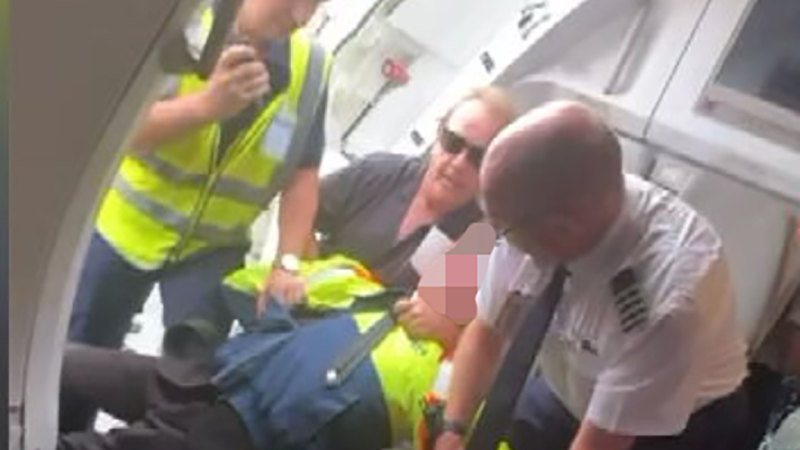
A witness then jumped onto the boy to grab the barrel of the gun before restraining the teenager in a choke hold as staff secured the area and placed the accused in flexicuffs, the court documents state.
While being restrained, the boy told others he did not want to scare people but had been planning this for months before deciding within the week before “to do it”.
When asked if he had anything else planned, he said, “Yeah, wait and see.”
“Some things need to be done,” he then said.
During a police investigation, court documents show the boy had been carrying with him a bomb plan and a to-do list.
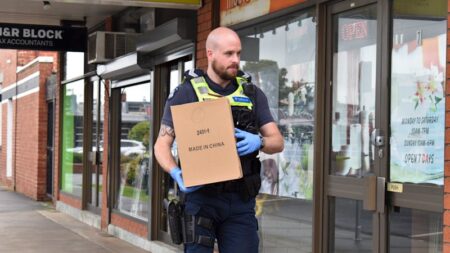
A search of his bags showed he brought a disassembled shotgun, knives, a lighter, Molotov cocktails and a teddy bear onto the plane.
Inside his ute was another gun, a letter written using a typewriter and mobile phones. Details of the letter cannot be reported due to a court-issued suppression order.
The teen is charged with possessing a trafficable quantity of firearms, possessing controlled weapons without excuse, assaulting crew, attempted hijacking, prejudicing the safe operation of an aircraft with the intent to kill, and attempting to take control of an aircraft, among other things.
He is facing life behind bars.
On Tuesday, a children’s court heard that in the days before the armed teenager boarded and allegedly attempted to hijack the commercial aircraft, he used the internet to search airports and the shooting down of planes.
He had allegedly begun falling out with friends, telling them he had been talking to a girl, made new friends who had “shown him the way”, and found his life’s purpose.
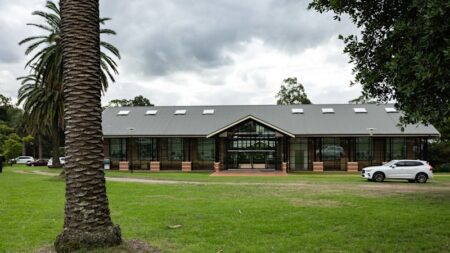
The prosecution is fighting to have the case moved from the children’s court to a higher court, either the County or Supreme Court, arguing the penalties available at the lower court are insufficient for the level of alleged offending.
The teen’s defence lawyer argued the children’s court was the best place to hear the case for a range of reasons, including that it would be heard sooner and that the complex nature of the case, including emotive material and medical language, could be challenging for a jury that is expected to be impartial.
He also raised that a defence of mental impairment might be pursued.
Start the day with a summary of the day’s most important and interesting stories, analysis and insights. Sign up for our Morning Edition newsletter.
From our partners
Read the full article here