




Washington — A panel of judges on a federal appeals court ruled Thursday that a district court judge did not have the authority to order the release of Mahmoud Khalil, the Columbia University activist who has been targeted by the Trump administration for deportation.
The three-judge panel on the U.S. Court of Appeals for the 3rd Circuit ruled 2-1 that the U.S. District Court for the District of New Jersey “lacked jurisdiction over Khalil’s removal proceedings” under a provision of the Immigration and Naturalization Act, or INA.
“Our holdings vindicate essential principles of habeas and immigration law. The scheme Congress enacted governing immigration proceedings provides Khalil a meaningful forum in which to raise his claims later on — in a petition for review of a final order of removal,” the majority wrote.
The decision is a victory for the Trump administration in its push to detain and remove pro-Palestinian activists in the U.S. on student visas. The judges ordered the district court to vacate Khalil’s habeas corpus petition, raising the prospect that he could be detained again as his immigration case proceeds.
The American Civil Liberties Union, which is representing Khalil, said in a statement that the ruling “does not go into effect immediately and the Trump administration cannot lawfully re-detain Mr. Khalil until the order takes formal effect, which will not happen while he has the opportunity to seek immediate review.” Khalil said the ruling is “deeply disappointing, but it does not break our resolve.”
“The door may have been opened for potential re-detainment down the line, but it has not closed our commitment to Palestine and to justice and accountability,” he said. “I will continue to fight, through every legal avenue and with every ounce of determination, until my rights, and the rights of others like me, are fully protected.”
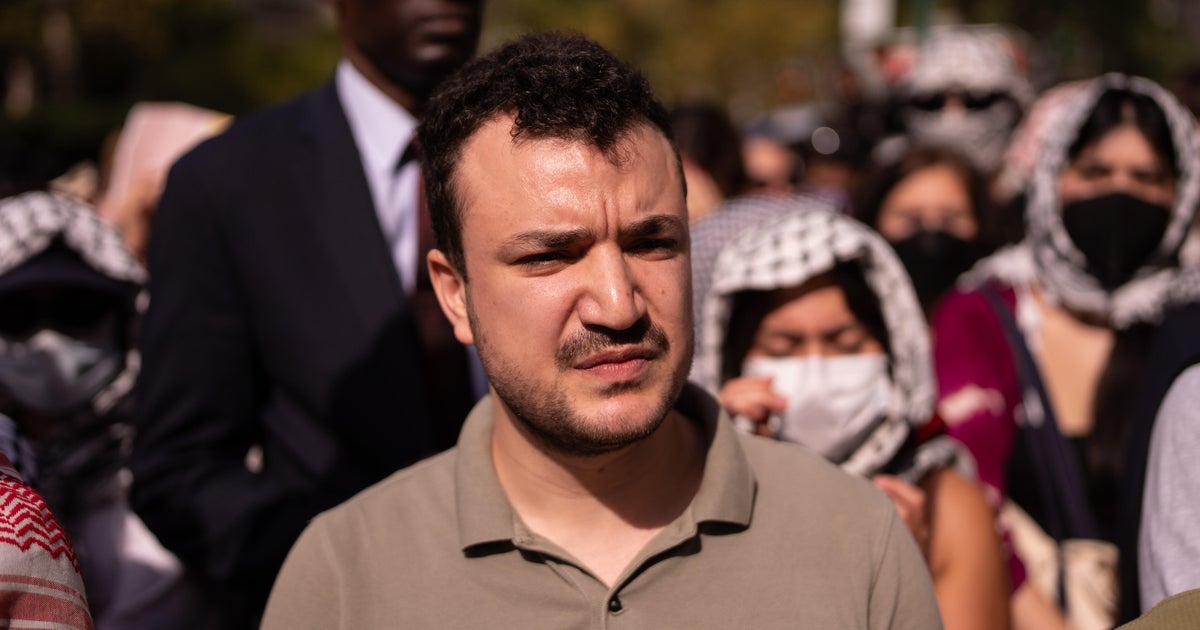
Khalil is a green card holder of Palestinian descent who was detained by immigration agents in March. He was initially detained under a determination by Secretary of State Marco Rubio that his “presence or activities would compromise a compelling U.S. foreign policy interest.” Khalil alleges the Trump administration detained him for months and sought to deport him as part of a wider policy of punishing foreign students for protesting Israel’s conduct in its war against Hamas.
Khalil’s legal team filed a habeas petition with the U.S. District Court in New Jersey seeking his release. Judge Michael Farbiarz granted that request in June, determining that Khalil was not a threat to the community, was not a flight risk and that his detention had been “highly unusual.”
While proceedings were underway in New Jersey, a separate immigration judge was considering the government’s attempt to remove Khalil from the country. The immigration judge ultimately concluded that he could be deported to Algeria or Syria, which Khalil has challenged.
The appeals panel ruled on Thursday that the district court had jurisdiction to hear Khalil’s habeas petition, but it did not have “subject-matter” jurisdiction. The court said that the proper avenue for Khalil to challenge his detention and deportation was through the process laid out by the INA, not a habeas petition.
“[V]arious provisions of the INA limit an alien’s ability to collaterally attack (challenge) ongoing immigration proceedings through habeas. The District Court did not see those limits as barring subject-matter jurisdiction over Khalil’s claims. We disagree,” the majority wrote. “[The INA] strips the District Court of jurisdiction, requiring Khalil to wait to raise his claims until he files a petition for review (PFR) of a final order of removal.”
The two judges who ruled in the government’s favor were Thomas Hardiman and Stephanos Bibas. Hardiman was named to the bench by President George W. Bush in 2007, and Bibas was appointed by President Trump in 2017.
Judge Arianna Freeman, a Biden appointee, dissented from the majority’s ruling, writing that she believes the district court does have subject-matter jurisdiction over Khalil’s case.
Read the full article here