






I’m never so torn in my work as a psychologist as when a woman tells me their intention to leave an abusive relationship. Pauline Hanson has been widely condemned for suggesting on Wednesday that women should simply leave abusive relationships. Like much of Hanson’s politics, her latest kernel of wisdom offers a simplistic solution to a complex problem.
As a psychologist working with victim-survivors and perpetrators of domestic violence, I recognised Hanson’s words as reflective of a worryingly widely held opinion – men’s violence is viewed as a problem for women to solve, namely by leaving relationships. Missing from this commentary is the imperative for men to stop perpetrating abuse.
Hanson’s further comments about both men and women “losing their cool” in response to stressors such as cost of living externalises responsibility for abuse, simplifying and minimising the cause and impact of domestic violence. To borrow her language, men tend to “lose their cool” when women in abusive relationships do exactly as Hanson suggests – that is, leave.
Intended or actual separation is a significant risk factor for intimate partner homicide. In contrast to Hanson’s flippant comments, the decision will prove arduous for all women. For some, it will prove fatal.
Abusive men, and particularly those with narcissistic personality traits, may be enraged by the loss of control brought about by their partner leaving the relationship. For some men, the idea of their partner living a life independent of the relationship is a trigger to violence. If they can’t have their partner, no-one can.
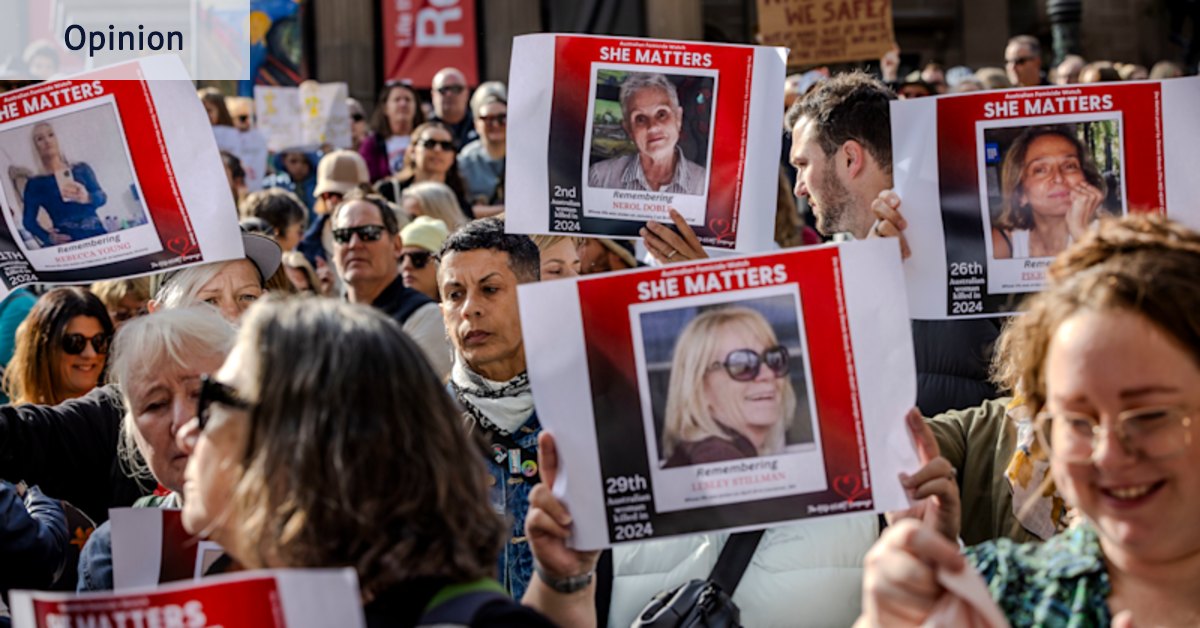
Two-thirds of women killed by male partners die during or after attempts to leave. Hannah Clarke and her three young children, burned to death in the family car by her estranged husband. Noeline Dalzell, killed by her ex-husband while their teenage children attempted to shield their mother. Lynn Cannon, fatally stabbed by her former partner. Nelomie Perera, whose two teenage children witnessed their father attack their mother with an axe. The list goes on.
It is distressing but essential to recount these deaths. Considering the stories of these women – and those of hundreds if not thousands injured by men every year – reinforces the glib nature of questions about why women “don’t just leave”.
I was surprised to hear similar comments during my book group’s discussion of Anna Funder’s renowned book, Wifedom. The historical fiction shines a light on the significant role of George Orwell’s wife, Eileen, to his life and literary output. Also highlighted is Orwell’s misogynistic and philandering behaviour. The very characteristics that made Eileen an asset to Orwell – wit, intelligence, strong work ethic, and (eventual) financial security – were cited as reasons for her capacity and volition to leave the unenviable relationship.
In my clinical work I see no shortage of women staying in relationships that range from stale to difficult to outright abusive. The reasons why women do not readily leave gives an idea about the complexity of the problem at hand. Fear. Shame. Embarrassment. Coercive control. Hope that things may change. Gaslighting (being made to feel responsible for a perpetrator’s behaviour or the outcomes of that behaviour). Social, cultural and religious expectations about family and relationships. Dependence on the perpetrator for finances, housing or employment. Implicit or explicit threats from the perpetrator. Learned helplessness (not exercising control or autonomy after enduring repeated aversive events). Attempting to save or protect others, including children and pets, from the perpetrator. Many women will return to abusive relationships several times, often following increased threats or escalation of violent behaviour to themselves or others if their absence continues.
Women in abusive relationships are damned if they do and damned if they don’t. Two of those most successful performing artists of our time, Tina Turner and Cher, were warned their careers would be over if they were to leave their abusive marriages. They proved their critics wrong, but many women are not so fortunate. Closer to home, crises around cost of living and housing affordability impact the capacity of women to leave relationships. Further financial constraints such as a broken child support payment system, gender pay gap, and lower superannuation balances compound barriers for women wanting to make a break.
Like Hanson, many of us are quick to judge the actions of victim-survivors of domestic violence. Most of us have commented on friends’ difficult or abusive relationships and wondered why they do not “just leave”. We speak with confidence about what we would do in such circumstances. Maybe you would leave, but consider for a moment that your passage to safety is unlikely to be straightforward or risk-free.
Hanson is correct in saying that women should not be in abusive relationships. But let’s not pretend that leaving is an easy option.
Dr Bianca Denny is a practising clinical psychologist based in Melbourne.
The Opinion newsletter is a weekly wrap of views that will challenge, champion and inform your own. Sign up here.


From our partners
Read the full article here