





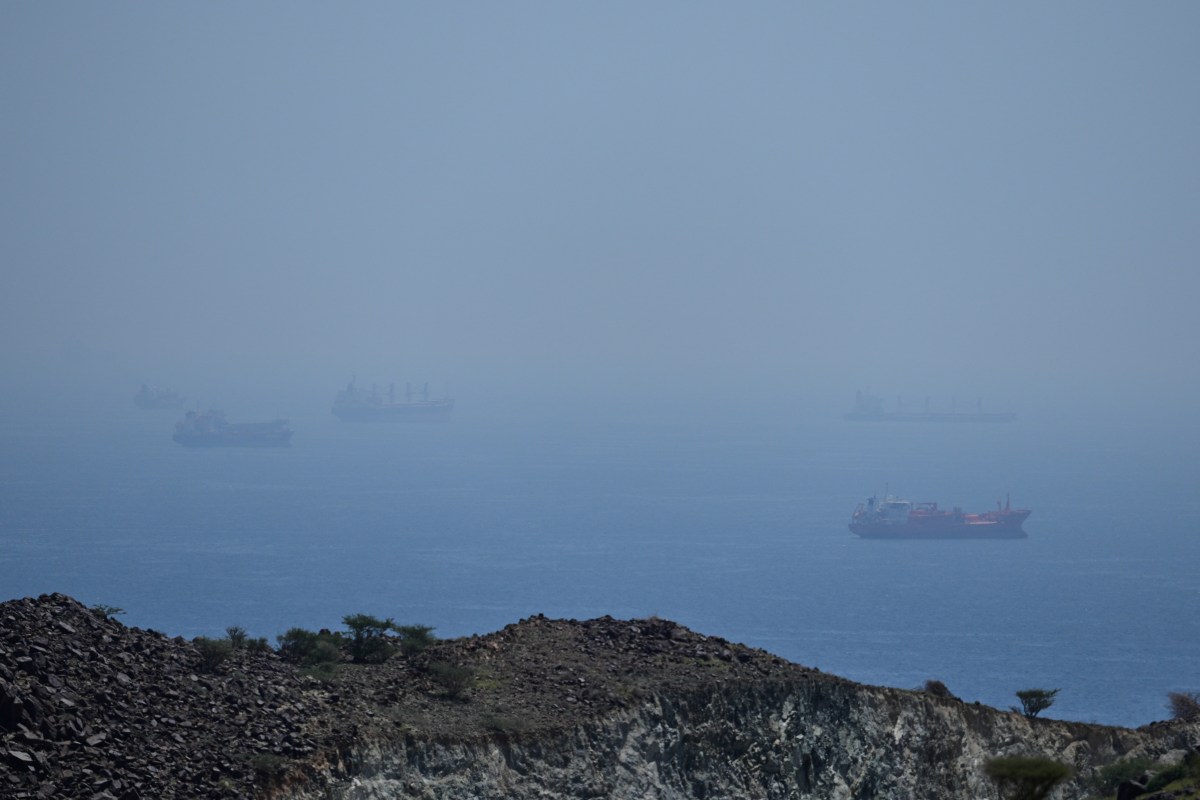
Iran fired on two Indian-flagged merchant ships in the Strait of Hormuz on Saturday after reversing a one-day reopening of the waterway, escalating a standoff with the United States that has pushed the region to the brink of renewed conflict.
The attacks—captured in a harrowing 33-second audio recording—came hours after Tehran declared the strait closed again in retaliation for Washington’s continued blockade of Iranian ports. Global oil markets, shipping lanes carrying roughly one-fifth of the world’s energy supply, and a fragile ceasefire due to expire Wednesday are all now at risk.
‘You Are Firing Now! Let Me Turn Back!’
The voice on the recording belongs to a crew member aboard the motor tanker Sanmar Herald, one of the two Indian-flagged vessels fired upon Saturday. The clip, posted to X by maritime tracking account TankerTrackers.com, captures the crew appealing desperately to the Islamic Revolutionary Guard Corps (IRGC) as shots rang out.
“Sepah Navy! Motor Tanker Sanmar Herald! Sanmar Herald! Sepah Navy! You gave me clearance! You gave me clearance to go! Sepah Navy! Sepah Navy! This is motor tanker Sanmar Herald! You gave me clearance to go! My name second on your list! You gave me clearance to go! You are firing now! Let me turn back!”
TankerTrackers.com wrote on X that it received the recording through maritime channels—typically passed over WhatsApp through what it described as the “maritime grapevine”—and verified its timing against the vessel’s AIS tracking data. They added the UK Maritime Trade Operations center (UKMTO) independently confirmed the attacks.
How the Strait Closed Again
On Friday, Iran announced the strait’s reopening to commercial vessels following a 10-day truce and a ceasefire between Israel and Hezbollah in Lebanon—a move that briefly sent oil prices lower. But President Donald Trump declared the U.S. blockade of Iranian ports would “remain in full force” until Tehran reached a deal with Washington, triggering an immediate reversal.
The IRGC issued a sweeping warning Saturday night: no vessel should move from anchorage in the Persian Gulf or Sea of Oman, and any ship approaching the strait “will be considered as cooperation with the enemy” and targeted. Iran’s Supreme National Security Council called the U.S. blockade a ceasefire violation, and Iran’s new Supreme Leader, Ayatollah Mojtaba Khamenei—elevated after his father was killed in Israel’s opening strike—said the navy stands “ready to inflict bitter defeats on its enemies.”
U.S. Central Command said American forces have turned back 23 ships bound for Iran since the blockade began Monday.
India Summons Iran’s Ambassador
The Ministry of External Affairs summoned Iran’s ambassador to New Delhi on Saturday for a meeting with Foreign Secretary Randhir Jaiswal, who delivered a formal rebuke over what India called a “serious incident.”
The ministry released its full statement Saturday on X:
“During the meeting, Foreign Secretary conveyed India’s deep concern at the shooting incident earlier today involving two Indian-flagged ships in the Strait of Hormuz. He noted the importance that India attached to the safety of merchant shipping and mariners and recalled that Iran had earlier facilitated the safe passage of several ships bound for India. Reiterating his concern at this serious incident of firing on merchant ships, Foreign Secretary urged the Ambassador to convey India’s views to the authorities in Iran and resume at the earliest the process of facilitating India-bound ships across the Strait.”
Adding: “The Ambassador of Iran undertook to convey these views to the Iranian authorities.”
The Bigger Stakes
The Strait of Hormuz is the world’s most critical oil chokepoint—roughly one-fifth of global supply passes through it. Its closure now enters its eighth week of a war that has killed at least 3,000 people in Iran, more than 2,290 in Lebanon, 23 in Israel, more than a dozen in Gulf Arab states, and 13 U.S. service members.
Iranian Deputy Foreign Minister Saeed Khatibzadeh warned the U.S. was “risking the whole ceasefire package” and “risking the global economy through these miscalculations.” He also ruled out handing over Iran’s stockpile of 970 pounds of enriched uranium to the United States, calling the idea “a nonstarter.”
Trump struck a different tone. “They can’t blackmail us,” he said Saturday, while also describing “very good” conversations taking place behind the scenes.
What Happens Next
Pakistan is working to broker a second round of direct U.S.-Iran negotiations, with Foreign Minister Ishaq Dar saying his country is trying to “bridge” differences between the two sides. Pakistan’s army chief visited Iran on Saturday carrying new U.S. proposals, which Iranian officials said are under review. Iran’s deputy foreign minister said Tehran was not yet ready for another face-to-face round, citing Washington’s “maximalist position.”
The ceasefire expires Wednesday. Whether Pakistan’s mediation can produce a deal—and whether the strait reopens before global energy markets absorb another shock—will define the coming days.
Reporting from the Associated Press contributed to this article.
Read the full article here