




Opinion
The state government’s Big Build is the gift that keeps on giving, albeit for all the wrong reasons. In the past two years, The Age has published over 100 articles on it as part of its award-winning Building Bad series. There are surely many more on the way.
Nick McKenzie’s latest article on the Big Build again made the front page on Tuesday. The leaked report that forms the basis of that story has been shared with me and its content is not a pretty sight. The report was written in 2024 by one of the private partners that seven years earlier won the contract to build the Metro Tunnel.
The document covers a second wave of substantial Metro cost overruns. The first wave occurred between 2017 and 2020, with the government eventually agreeing to pay an additional $1.4 billion on the condition that it was matched by the private consortium. The document estimates the second wave cost overruns to be $1.7 billion.
All of this is on the public record. What’s new is the level of detail about what went wrong. It mainly points to a variety of COVID and non-COVID related matters, including delays and cost inflation.
But it also points to $196 million of unforeseen “attendant labour” costs. That is a reference to labour hire firms, who needed CFMEU-endorsed enterprise bargaining agreements to bid for work, bringing with it the need for more workers on higher pay. Another $221 million are costs attributed to contractors going broke, maybe because of those CFMEU-backed agreements.
What should we make of this? The leaked document is an ambit claim intended to put pressure on the government to hand over as much additional taxpayer cash as possible. The private consortium wanted $1.7 billion. It got less than half that in the end.
Yes, $196 million sounds like a lot. But it is less than 1.5 per cent of the $15.5 billion total cost of the Melbourne Metro, and most of it may have ended up in the pockets of workers.
And the numbers are from one party in a dispute who for tactical reasons stands to benefit from making the picture seem worse than it really is.
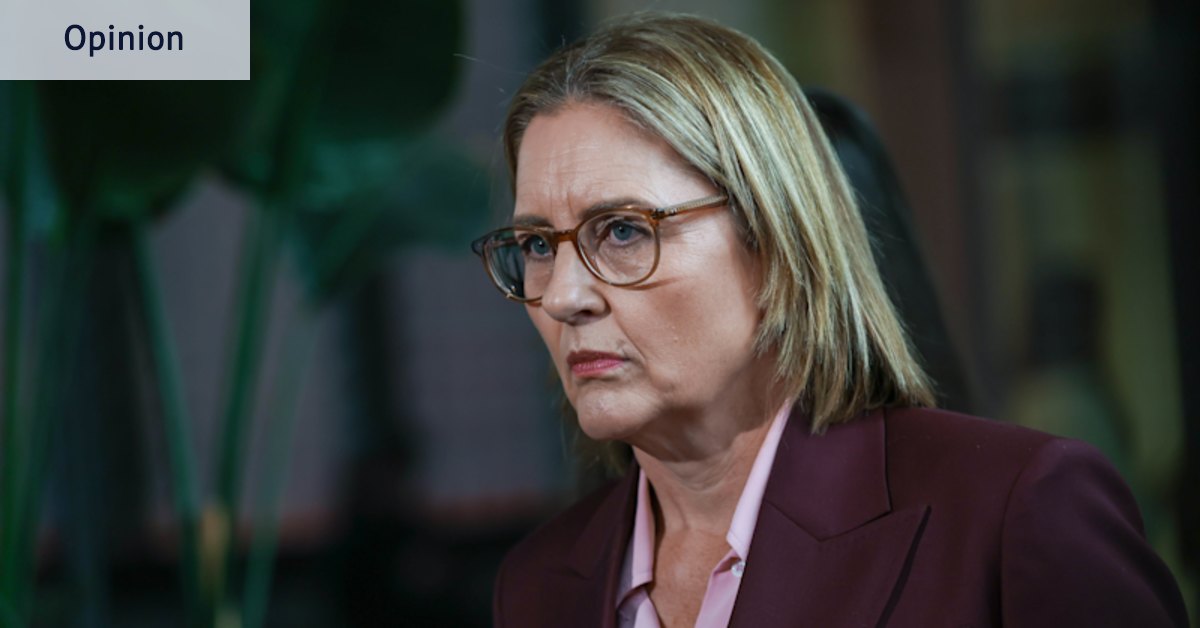
Seen in this way, maybe the story is not as bad as it seems. Perhaps Premier Jacinta Allan has a point when she says exactly that and insists that there is nothing more that can be done to fix a problem that’s been overstated?
The trouble is this: however you cut it, we are talking about a lot of public money ending up in the wrong hands. And it comes at a time when populists are enjoying the sunshine by pointing to examples like this as evidence of a political system that’s failed.
And it is not just the money that is of concern. We were sold that idea that privatising infrastructure would bring with it efficiency and taxpayer savings, when cost overruns, dubious characters, and high salaries alongside healthy profits seem to be the order of the day.
Then there’s the cascading contracts that are now a feature of private construction, fuelled by government policy coupled with inattention. Proprietors can enter the industry with little scrutiny much less good character, disappear when they get into trouble and then miraculously re-appear in different guise.
For two years The Age has been running its Building Bad series, and yet the state government and its vast bureaucracy appear to have been content to wring their collective hands while doing nothing.
Victoria does not want for more integrity agencies. The Ombudsman, the Auditor-General and the Independent Broad-based Anti-corruption Commission have between them about 585 staff and an annual budget of $150 million. IBAC’s definition of corruption may not be as broad as it would like, but it is still broad.
Former IBAC Commissioner Robert Redlich has acknowledged, in retrospect, that “IBAC could have used its existing powers to investigate some of the allegations”, supporting a similar conclusion reached by former IBAC CEO Alistair Maclean some 18 months earlier.
That’s why an independent inquiry is urgently needed. What began as a piece of eye-catching investigative reporting has gradually morphed into an increasingly murky tale that is sucking in more parts of the state apparatus. And just at that moment when our political system is buckling at the knees.
An inquiry like this is unlikely to dwell on bad news.
It might find that the cost to taxpayers has been small when compared to the Big Build’s big budget, and is modest by interstate and even international standards.
It may have sympathy for the claim that the CFMEU hired former criminals and bikies as part of a “second chances” policy, albeit one that may have gone horribly wrong.
It might find that the claims of rampant corruption are overstated. The Watson Report estimated that the corrupt officials in the CFMEU amounted to “about 20 people in a union with 30,000 members. This small group was not concerned with laws or union rules; they had little regard or respect for the general membership; they ran the CFMEU for their own profit and their own benefit. Several of them were deeply corrupt.”.
It might also find that the Big Build was badly needed to keep up with our surging population, and that its legacy is first class infrastructure of European rather than Soviet-era quality.
Premier, we do not need a full royal commission with their rivers of gold for the legal fraternity. A pared back Queensland-style commission of inquiry with very clear terms of reference backed by royal commission powers would do.
One thing’s for certain. Without an independent inquiry, The Big Build will be the gift that will keep on giving.
Professor David Hayward is emeritus professor of public policy at RMIT University.
The Opinion newsletter is a weekly wrap of views that will challenge, champion and inform your own. Sign up here.


From our partners
Read the full article here