





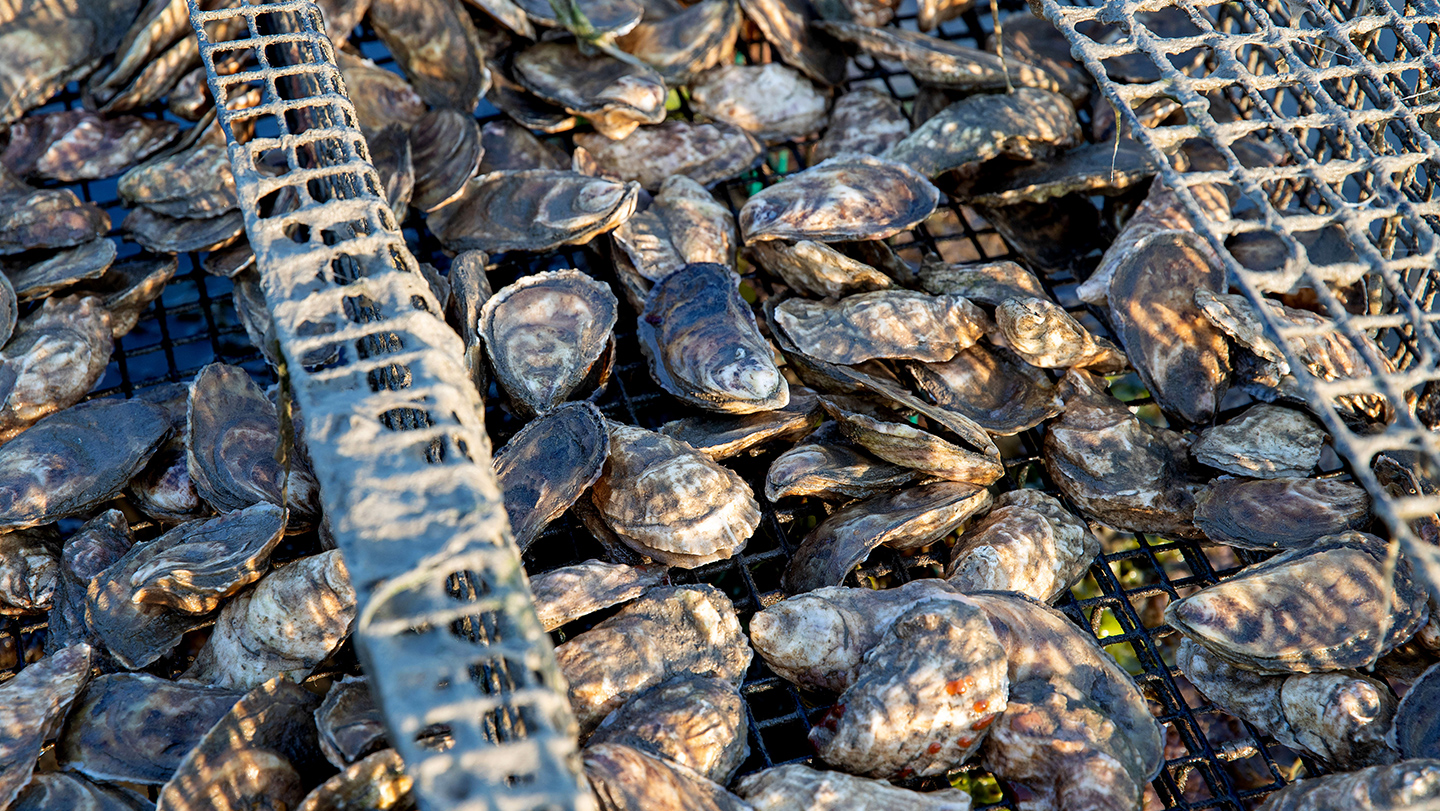
In warm, sunny weather, certain marine algae along American coasts and elsewhere can flourish into harmful algal blooms, producing a substance known as saxitoxin. This neurotoxin is deadly for many animals, and is the cause of paralytic shellfish poisoning in people who eat contaminated seafood.
But an unlikely animal has an antidote: the American bullfrog (Rana catesbeiana), which probably also encounters the toxin in its freshwater habitats.
A jab of a protein produced by the frog rescued mice from a deadly dose of the toxin, researchers report July 16 in Nature Communications. Previous research had shown that the protein, called saxiphilin, acts like a toxin-binding sponge that mops up saxitoxin before it does its dirty work.
The study lays the foundation for a future saxiphilin treatment for people suffering from the nausea, tingling and more serious paralytic symptoms caused by shellfish poisoning. Though deaths are rare, saxitoxin has caused a handful of outbreaks in the United States in recent years. Without a specific antidote, treatment relies on supportive care such as breathing assistance and oxygen.
Saxitoxin is considered a chemical weapon by international law, “and here we have what appears to be an effective rescue antitoxin that could be injected and provide relief of symptoms — particularly severe symptoms — of shellfish poisoning,” says evolutionary biologist Matthew Holding of the University of Michigan in Ann Arbor, who wasn’t involved in the research.
Researchers injected the abdomens of 13 mice with a lethal saxitoxin dose. Almost all developed limb paralysis within three minutes and ultimately died. “They expire because they just can’t breathe,” says biophysicist Daniel Minor of the University of California, San Francisco.
Another 10 mice got a shot of saxiphilin a minute after the saxitoxin injection. Nine survived.
Mice also had high survival rates when the toxin and antidote were injected together and when the antidote was delivered first. However it’s administered, saxiphilin appears to stop saxitoxin from blocking the sodium ion channels in the surfaces of nerve cells. These channels are crucial because they control the influx of sodium ions into nerve cells, which is what creates the electrical impulses necessary to transmit the signals that control muscle movement. “The saxiphilin is able to scoop up the toxin, keeping it from getting to the ion channels, and then transport it out so it can either be destroyed or excreted,” Minor says.
The degree of saxiphilin’s effectiveness surprised researchers. “Even at what seem to be fairly low ratios of the toxin sponge protein to the toxin, you’re able to see near-complete rescue,” Holding says.
The results demonstrate that the amphibian-derived protein survives in warm mammalian bodies — a prerequisite for a human treatment, says Rebecca Tarvin, an evolutionary biologist at the University of California, Berkeley. “It has the potential to act as either a prophylactic treatment or a therapeutic,” says Tarvin, who wasn’t involved in the new study.
Even if similar injections work in humans, administering an antidote one minute after someone has unknowingly eaten contaminated shellfish isn’t realistic, Tarvin says. But affected seafood lovers probably consume much lower doses relative to their size than were injected into the mice. People also typically start to feel poisoning symptoms after a few hours, allowing for enough time for doctors to administer a treatment to people known to have eaten potentially contaminated shellfish. “It might just take long enough that [you could give] a therapeutic like this … in time,” she says.
Further studies are needed to ensure that saxiphilin would be safe to use in humans, and that it’s just as effective against lesser-known and less common but even more potent varieties of saxitoxin that occur in shellfish, Minor says. He hopes to develop a simple inexpensive test using saxiphilin so harvesters can quickly assess their catch for saxitoxin-contaminated seafood more quickly than the lab testing that some states currently conduct.
Minor is also thinking more broadly. Toxins are ubiquitous in nature, as are the resistance mechanisms that animals have evolved to defend themselves. “This is the bigger biological question,” Minor says. “How widespread is this resistance mechanism? What other molecules is it deployed against?”
Read the full article here