




Despite his optimism about the city’s future, Calgary’s mayor isn’t shying away from tough decisions in the upcoming city budget, including the need for a multi-billion-dollar infrastructure investment.
Mayor Jeromy Farkas said Wednesday that the “bill is now coming due” for decades of deferred decisions from all orders of government in the form of a $50-billion infrastructure deficit over the next 10 years.
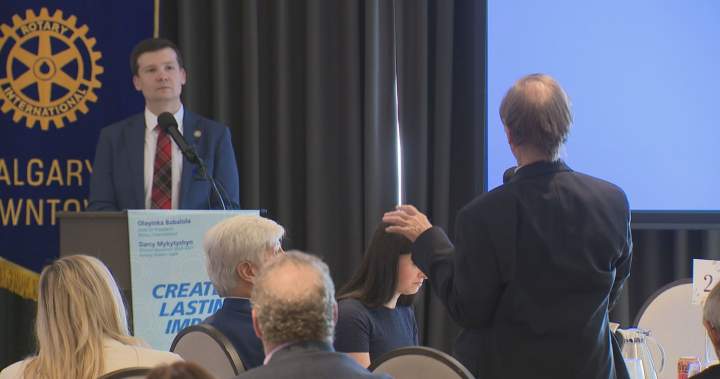
“Right now, we face incredibly serious challenges,” Farkas said during a State of the City address to the Rotary Club of Calgary Downtown. “Affordability, public safety, economic uncertainty, rapid growth, and infrastructure that hasn’t kept pace with the city that we have become.”
The mayor said the city must invest in its transportation network, water system and recreation facilities to meet population growth, as well as the needs of the city when it reaches two million people.
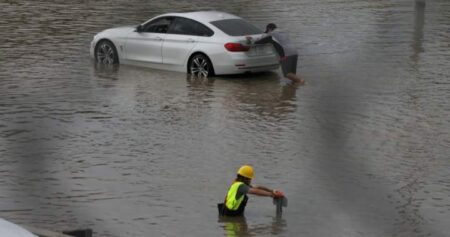
Farkas told the luncheon crowd that the issue is evidenced by the Dec. 30 rupture of the Bearspaw feeder main as well as the fast-tracked project in the city’s northwest to replace the failing water line by the end of this year.
The $50-billion deficit “won’t disappear” in a single budget or council term, Farkas said, but council “can stop making it worse” by chipping away at the issue in the upcoming four-year budget in November.

Get daily National news
Get daily Canada news delivered to your inbox so you’ll never miss the day’s top stories.
However, Farkas said the situation doesn’t give city hall permission “to spend without discipline.”
“Fiscal discipline does not mean refusing to invest, it means knowing the difference between what we need and what we want,” the mayor said. “It means finding savings before asking taxpayers for more.”
How much of an increase Calgarians could see on their property tax bills has been top of mind at city hall after Global News obtained confidential preliminary budget documents showing property tax revenue would need to increase by 20.2 per cent in 2027 to fund all the funding requests in front of council.
Those documents also show city administration has begun whittling down those requests to prepare a preliminary budget scenario with a potential 15 per cent property tax increase for consideration during a closed-door session later this month.
Farkas made no mention of the confidential documents during Wednesday’s address, or the special meeting of council held Tuesday to discuss potential ramifications for Ward 14 Coun. Landon Johnston; the councillor who claimed to have leaked confidential documents.
“I think he’s trying to shift the narrative or change the channel away from controversy towards forward thinking and planning,” said Lori Williams, an associate professor of policy studies at Mount Royal University. “One of the things that’s relatively new in municipal budgeting is trying to plan for infrastructure failure; in other words, investing in something that’s been left off the list.”
Farkas’ address came on the same day a pair of funding requests were in front of the city’s Infrastructure and Planning Committee for consideration during the upcoming four-year budget.
Those requests, which will require a final say from council as a whole, include $37 million annually for sidewalk renewal as well as $13.5 million per year for the public tree canopy.
Ward 10 Coun. Andre Chabot said questioned how council is expected to fund everything over the next four years.
“Is it millrate support like as in property taxes? Or is there other funding mechanisms we can look at to minimize a tax increase,” Chabot said. “We could look at debt financing some of the capital infrastructure that has a long life expectancy, which would lessen the burden today on immediate taxpayers.”
Farkas said just because something falls on the “city hall wishlist,” doesn’t mean it will receive funding.
He told the crowd of Rotarians that council must demand value from city administration and have the “discipline to say no.”
“We have to choose water before wants, safety before nice-to-haves, and core infrastructure before projects that can wait,” Farkas said. “That is how we protect taxpayers, while still preparing Calgary for the future.”
The four-year budget will be made public in early November, three weeks ahead of deliberations.
Read the full article here