




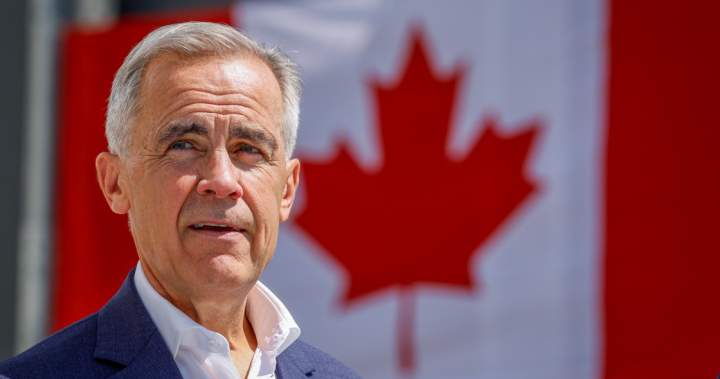
Canada will respond “dollar for dollar” to new U.S. tariffs on Canadian goods, Prime Minister Mark Carney said late Friday as Ottawa suspended trade negotiations with Washington and recalled its negotiating team.
The move came as President Donald Trump’s new 50 per cent tariffs on billions of dollars worth of Canadian goods took effect at 12:01 a.m. Eastern Saturday after the two countries failed to finalize a comprehensive trade deal ahead of Trump’s deadline.
The tariffs were originally set to kick in Wednesday, but Trump announced a three-day pause to allow the trade talks — which had intensified over the past few weeks after the tariffs were first threatened — to conclude.
While Trump said at the time “we have a deal” with Canada, Canadian officials had been more measured, saying final details and agreement language still needed to be hammered out.
That work had yet to conclude as the tariffs took effect at 12:01 a.m. Eastern Saturday, with negotiators leaving a meeting Friday evening in Washington without a final deal in hand.
In a statement late Friday, Prime Minister Mark Carney said Canada was suspending trade negotiations and recalling its negotiating team to Ottawa, arguing that last-minute changes to the U.S. position were unfair, uneconomic and raised questions about the reliability of any agreement.

Get breaking National news
Get breaking Canada news delivered to your inbox as it happens so you won’t miss a trending story.
Carney said recent progress had not been enough to meet Canada’s objectives, which included preserving broad access to the U.S. market, reducing tariffs on key sectors and protecting Canadian businesses. He also said Canada would match the new U.S. tariffs “dollar for dollar” and announce additional support measures for affected workers and businesses in the coming days.
U.S. Trade Representative Jamieson Greer, however, blamed Canada for the collapse of the talks, saying Ottawa declined to finalize a deal under terms agreed to earlier in the week. Greer said the United States had offered Canada preferential treatment and additional tariff relief, but that new Canadian demands and reversals of previous commitments upended the agreement.
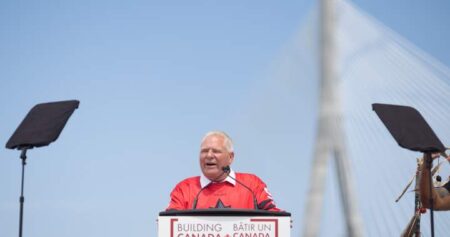
Ontario Premier Doug Ford backed Carney’s approach, saying the prime minister has his “full support for a strong response — tariff for tariff, dollar for dollar.” Ford said “everything needs to be on the table” to protect Canadian sovereignty and economic security and that Ontario is ready to do its part.
B.C. Premier David Eby also voiced support for a tough response, saying British Columbians “will always stand with Canada” and that Canadian “politeness should never be mistaken for weakness.” Eby said Canadians did not ask for the trade dispute but would “keep fighting for as long as it takes.”
Sources have told Global News the U.S. was prepared to lower — but not remove — sectoral tariffs on steel, aluminum and autos under the deal while withdrawing the new 50 per cent tariff order altogether. The deal was also set to include enhanced partnerships in areas including defence, critical minerals and energy.
Canada, meanwhile, would address the three trade irritants cited by Trump for the new tariffs: provincial boycotts of U.S. alcohol, reciprocal tariffs on American autos and auto parts, and tariff-rate quotas for dairy exports under supply management.
Greer said the proposal also included a broader economic and national security partnership covering export controls, digital trade, critical minerals and efforts to combat transshipment and forced labour, as well as a path toward formal negotiations on the Canada-U.S.-Mexico Agreement. He called Canada’s decision not to sign the deal a “missed opportunity” to deepen cooperation with the United States.
The new tariffs are being imposed under Section 338 of the U.S. Tariff Act, which allows a president to tariff any country that “discriminates” against U.S. commerce.
The office of U.S. Trade Representative Jamieson Greer says nearly US$20 billion worth of Canadian imports will be tariffed, an amount that will “offset” the economic impact of Canada’s “unreasonable and discriminatory” measures. Greer also criticized Canada for maintaining retaliatory measures against the United States, including restrictions on some American goods and services.
The imposition of the new tariffs makes the future of the trade deal being hammered out in Washington unclear.
It also puts into question efforts to renegotiate the Canada-U.S.-Mexico Agreement on free trade (CUSMA). Sources have told Global News that Canada was pursuing a three-step framework under the new trade deal that would lead to substantive talks to renew CUSMA, after the U.S. declined to do so at last month’s scheduled review.
Read the full article here