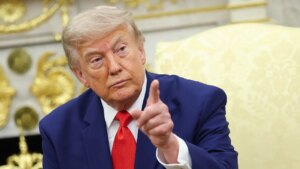




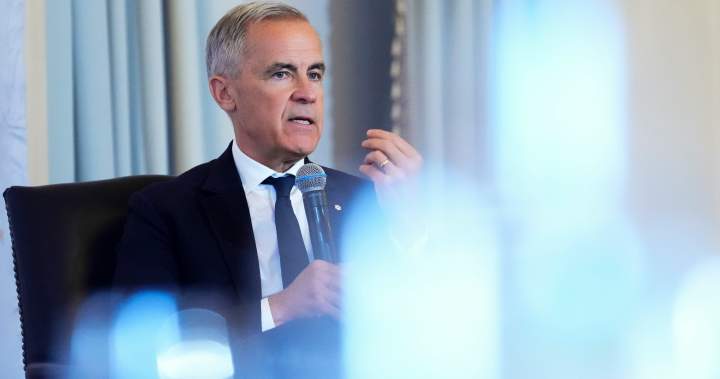
Prime Minister Mark Carney says Canada is “walking away from a bad deal” with the United States and will match 50 per cent tariffs “dollar-for-dollar” in industries like steel and dairy.
Carney confirmed he was “reluctantly” adding tariffs that would add costs in some areas for Canadians, but insisted they were necessary to retaliate against United States President Donald Trump’s levies.
“We cannot accept what they’ve offered, and we will not give what they asked,” Carney declared in Ottawa on Saturday morning.
The prime minister said talks had taken place with the United States over the past year, and accelerated in recent days. He suggested his team had been skeptical, but optimistic a deal could be reached.
Carney said Canada’s trade negotiations had taken place knowing the United States’ “signature was written in pencil,” with negotiators still hoping to “strike a fair deal” with its southern neighbour.
“We can’t control the storm that blows in from Washington,” the prime minister said. “We can, however, chart a new course by building Canada strong at home and diversifying our trading relationships abroad.”
He added the United States “asked too much and offered too little” as negotiations dragged on this week.
Conservative Leader Pierre Poilievre said in a post on social media he was “disappointed” the United States had chosen to levy more tariffs.
“Canadians must stand united to defend our country against these unfair attacks on our jobs and businesses,” he wrote.
“Canada cannot accept one-sided tariffs that will deindustrialize our country. Nor can we accept a bad deal. Instead, we must continue the fight for tariff-free trade. Later today, I will seek a call with the Prime Minister to discuss what we can do to fight for our workers, businesses, and economy.”
The tariffs had initially been set to take effect on Wednesday, before United States President Donald Trump delayed them by three days to allow intensifying trade talks to continue.
While the president claimed “we have a deal” with Canada, officials on the Canadian side were more cautious, pointing to disagreements on the finer details of legal language.


Get daily National news
Get daily Canada news delivered to your inbox so you’ll never miss the day’s top stories.
Then, in a statement late on Friday, Carney said Canada was suspending trade negotiations and recalling its negotiating team to Ottawa, arguing that last-minute changes to the U.S. position were unfair, uneconomic and raised questions about the reliability of any agreement.
Carney said on Saturday there were several outstanding problems Canada had when talks stalled.
The prime minister said they included:
- Issues with the level of auto tariffs, which vehicle types would be excluded from a deal and how much Canadian content could be included
- The last-minute addition of restrictions on Canada’s ability to strike free trade deals with other countries
- Efforts to restrict “protections of our language, culture and in effect our sovereignty”
Carney said on Friday night that recent progress had not been enough to meet Canada’s objectives, which included preserving broad access to the U.S. market, reducing tariffs on key sectors and protecting Canadian businesses.
U.S. Trade Representative Jamieson Greer, however, blamed Canada for the collapse of the talks, saying Ottawa declined to finalize a deal under terms agreed to earlier in the week.
Carney said Canada’s retaliatory tariffs would kick in next month.
As the trade talks collapsed, Canada’s premiers voiced broad support for Carney’s approach.
British Columbia’s David Eby said he was in favour of a tough approach and that Canadian “politeness should never be mistaken for weakness.”
On Saturday morning, Ontario Premier Doug Ford — who maintained his silence until after talks concluded — released a letter he sent to the prime minister earlier this week, advocating for “a coordinated dollar-for-dollar, tariff-for-tariff response and the continuation of existing countermeasures.”
Alberta Premier Danielle Smith, who has been the most vocal opponent of retaliatory tariffs, said she didn’t want to see the countermeasures.
“My first concern today is for the Albertans and Canadians whose livelihoods are at risk from these new tariffs and counter-tariffs,” she wrote in a social media post on Friday night.
“I welcome the federal government’s intention to provide relief for those businesses that are impacted.”
The prime minister acknowledged on Saturday that Ontario, Quebec and British Columbia would likely see the brunt of the impact from the tariffs.
“The partnership that we’ve established with the premiers is crucial, fundamentally important,” Carney said.
“The essence of our First Minister’s discussion two days ago was that it’s our judgment, as we told Canadians, that we were on a path to a potential deal that would give Canada not just the best deal overall but the best deal in all of our strategic sectors that the price for that deal in our judgment was worth paying.”
The prime minister said, however, he was no longer asking premiers to bring American alcohol back to provincial liquor stores after the deal fell apart.
Carney will meet with Canada’s premiers at 1:30 p.m.
— with files from Global News’ Sean Boynton, Alessia Simona Maratta & Jace Maki
Read the full article here