




As a maiden voyage, the first trip on Paul Le’s newly purchased fishing boat didn’t go much better than the Titanic’s: The vessel ended up on the bottom of the ocean, with Le and his friends hanging for dear life off the sides of two floating coolers in the tumbling waves of the Gulf of Mexico.
And their chances of surviving that maritime ordeal? Not good.
“Once the boat went down, the Coast Guard estimated the chances of finding the men in the water was less than 1%,” says Michael Tougias, author of “In Deep Water: A True Story of Sharks, Survival, and Courage” (St. Martin’s Press, June 23).
Tougias is best known as an author of stories of ocean survival and rescues at sea. An avid ocean fisherman himself, when he heard Le’s tale he knew he had his next book.
“The story had all the twists and turns and drama I’d been looking for,” Tougias says.
It all went down on October 8, 2022. Le was a realtor living in New Orleans, a second-generation Vietnamese-American who loved to fish. But having no boat of his own, Le only got out to deep Gulf waters to chase his favored red snappers when invited by someone else.
That changed with his purchase of a used 24-foot, center-console Pro-Line.
“Finally,” Le thought, “my own boat large enough to reach the good fishing at the offshore oil platforms.”
He headed out that day with life-long friends Sonny and Lu, but the three men had very little luck: They mostly struck out when it came to reeling in fish. Then almost anything that could go wrong on an ocean voyage went wrong.
After traveling about ten miles into the Gulf of Mexico off the Louisiana coast, for unknown reasons the boat began to take on water — worse, it was happening below decks, where it wasn’t initially seen.
But after the leak was discovered Le immediately understood the danger, aiming the boat back toward the coast and speeding toward safety. Then a wave swamped the low-riding vessel and the engines died.
“We have a problem,” Le knew.
The boat’s bilge was broken so the water couldn’t be pumped back overboard, and the radio didn’t reach far enough to help: Le’s “Mayday” calls went unanswered.
In the panic of abandoning the fast-sinking ship, nobody could find the flare gun.
“It’s as if time has sped up with one catastrophe after another all tumbling down on the three men at once,” Tougias writes.
When the boat went under the waves for good, the three floating men scrounged life preservers and tied two coolers together into a make-shift “life raft.” Fortunately one cooler held twelve bottles of water, six tangerines, and a small amount of sliced sandwich meat.
The strikes against the three friends were far more numerous. To begin, Le, Sonny and Lu had all lost their hats and sunglasses. On a bright day, they’d be exposed to devastating sunburns. And while the weather was forecast as mild, increasing winds led to high waves ceaselessly buffeting the helpless three.
While each held on onto his phone while going overboard, there was no reception. Le realized they were in a telephone “dead zone” but opted not to say those words aloud to his friends.
The boat sank before noon, and the men were not missed until nightfall. Plus, the high cost of diesel fuel meant the shrimp boats usually dotting those waters were few and far between.
The only thing to do was to try to swim to the nearest oil rig, about a mile away. It was exhausting work fighting the waters and winds. And while the coolers all three men were holding on to kept them afloat, they were also impeding their progress, the water current dragging their “raft” away from the oil rig they were aiming for.
After three hours of kicking the men were ultimately pulled away from the refuge of the rig. They would never get there.
Their next misfortune was swimming into a “smack” of jellyfish, those slimy sea creatures biting and stinging at will. Throbbing pain hit all three men, none worse than the new boat owner.
“[Le] is in agony from a sting on his genitals,” Tougias writes.
As the jellyfishes’ nematocysts (“tiny needlelike projections” ) pierced their skin, the men tried not to think of blood dripping into the water: Sharks were never far from their mind, a terror exacerbated when the remora fish who attach themselves to those man-eaters began to appear near the exhausted trio.
Even faced with a setting sun, physical exhaustion, dehydration, and increasing hypothermia (water pulls heat away from the human body twenty-five times faster than air), what the men didn’t do was give up.
Le wanted to live for his fiancée, Sam, and their young son, Alexander. Sonny needed to get home to see his dying father and take care of his dogs. Lu dreamt of buying his first house.
By dusk, Sam knew something was wrong and alerted the Coast Guard to Le’s absence. But Sam wasn’t sure what marina her fiancée and friends had left from, nor exactly where they were fishing. Consequently, the Coast Guard had to search for Le, Sonny and Lu in an area of Gulf waters the size of Rhode Island.
Had the missing boat still been afloat, the Coast Guard’s technology and expertise could have found the men quickly. But with the vessel sunk,the odds of finding the tiny, bobbing men under the dark of night were astronomically low.
In the water, things were getting worse and worse. Against his friends’ wishes but believing it was their only chance for survival, Le left the floating coolers to make a solo swim toward the sole shrimp boat they could see. He made it to within shouting distance before he saw a puff of black engine smoke. The shrimpers turned and motored away without ever knowing there was a man in the water.
Meanwhile Sonny, the athlete of the group and the one who’d been doing the most work trying to kick the raft forward, had a heart attack. He never experienced any pain and didn’t know about the cardiac event until doctors told him about it later.
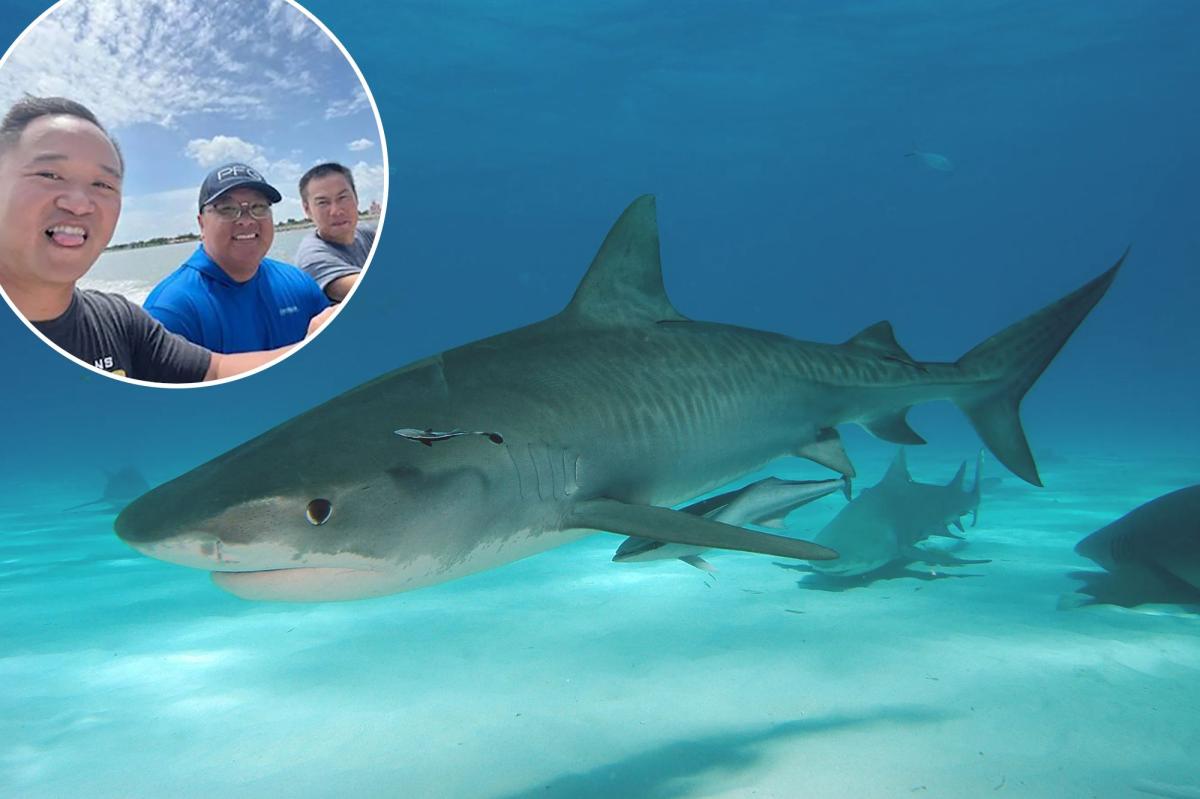
And Lu? After nearly 24 hours in the water he was ready to give up. He took a 30-second video of himself bobbing in the waves, what he thought of as a wordless message to his family that he’d never given up the fight—and then he was attacked by a raging tiger shark.
Unusually, the shark raised its body and head fully out of the water in its devastating assault. Fortunately, it clamped its terrifying teeth down only on the life-preserver covering Lu’s chest. Looking into the aquatic killer’s eyes from just inches away, Lu’s will to live crushed his willingness to give up. He jammed a thumb into each of the sharks’ two eyes, causing the monster to flee, never to return.
Almost unbelievably, all three men ultimately survived their 28 hours lost in the Gulf of Mexico.
“You’re safe now,” said the Coast Guard swimmer who rescued them. “We are the best at what we do.”
Read the full article here