



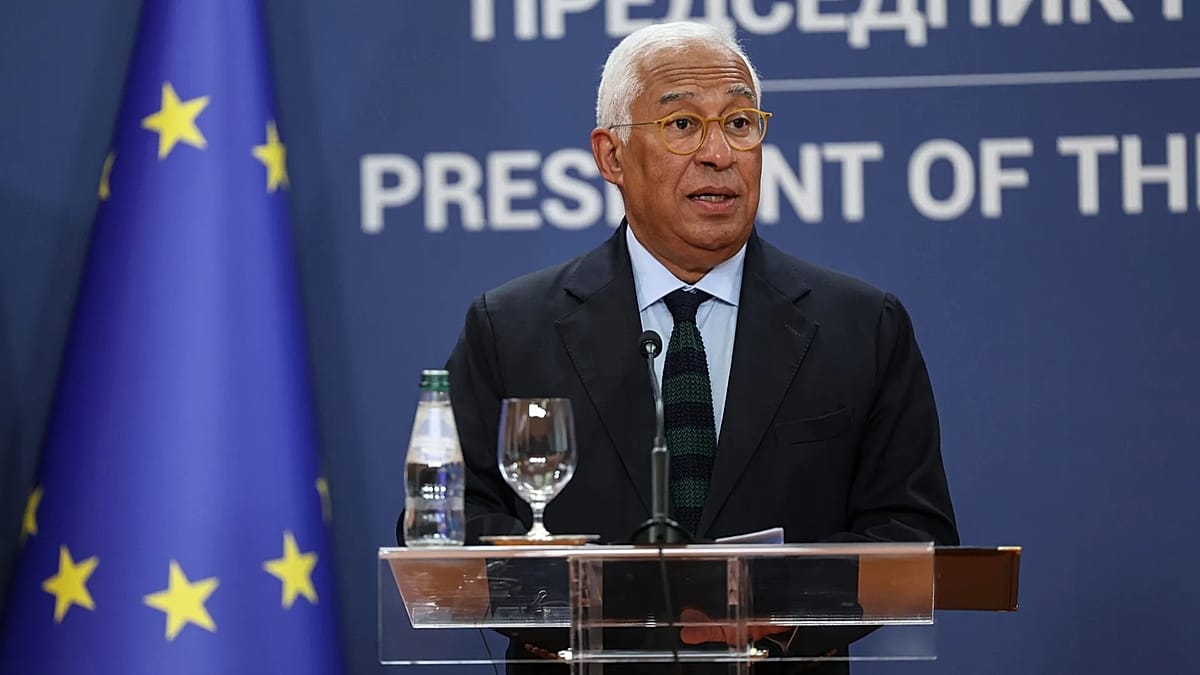
António Costa, the president of the European Council, has defended his surprise decision to open a diplomatic channel with the Kremlin to assess whether conditions exist for peace negotiations — a possibility his team concluded is not currently viable.
The issue dominated Thursday’s summit of EU leaders in Brussels.
No clear explanation emerged as to why Costa, who has made maintaining the unity of the 27 a central theme of his presidency, decided it was the right time to reach out to Moscow. Earlier this week, it emerged that his chief of cabinet, Pedro Lourtie, had held several phone calls with a top aide to Russian President Vladimir Putin.
It is understood, although his office did not confirm, that the official was Yuri Ushakov.
“The President explained that he had asked his office to open a diplomatic channel with Russia. The aim was to be ready, when the right moment comes, to defend the EU’s interests. What we are talking about are brief contacts, with no exchange on substance and no negotiations — simply diplomats carrying out diplomatic work,” an EU official said.
“The most important point is that Europeans remain coordinated on how to engage with Russia and on what the EU’s position should be,” the official added, stressing that coordinating the 27 is the job of the Council president.
According to the official, a “number of leaders” indicated that Costa would be the “natural representative” of the bloc’s interests, suggesting some support for potentially appointing him as a special envoy for direct talks with Russia.
Costa’s name has been floated in the past few weeks for a job not without risks.
The leaders of Slovenia and Austria were among those who cheered Costa’s decision on Thursday. Slovakia and Bulgaria are also considered supportive.
“Any steps that can lead to a cessation of hostilities and negotiations should be welcomed,” Slovenian Prime Minister Janez Janša said.
Still, several member states expressed their disagreement.
Poland, the Baltics and the Nordics were among those who raised concerns, several diplomats told Euronews. Driving the split is the fact that not all member states believe this is the right time to engage with Russia in any way, while others suggest the task be handled under the E3 format, meaning Germany, France and the United Kingdom. The E3 has been exploring ways to open its own channel to the Kremlin.
Costa did not carry out broad consultations with national capitals before deciding to test whether a channel could indeed be opened with the Russians. His entourage insisted that the Portuguese politician had done so encouraged by Ukraine, which had asked Europeans to take on a bigger role in the peace process, including by talking to Russia.
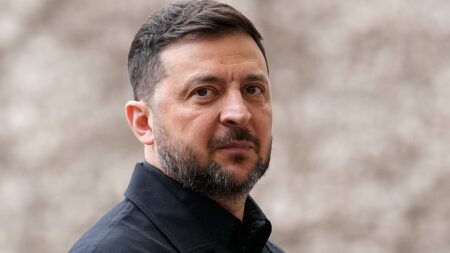
“It is important for it to have a strong voice and presence in this process, and it is worth determining who will represent Europe specifically,” Ukrainian President Volodymyr Zelenskyy said last month after speaking with Costa.
On Thursday, summit conclusions endorsed by the 27 leaders said, for the first time, that the EU was ready to “step up its engagement” in the negotiations.
Yet, the diplomatic communication took place days before those conclusions were sealed, raising a question as to whether Costa had a mandate or had acted with the backing of only a few member states. Euronews spoke with multiple officials from several member states who said they were not consulted and found out through media reports. Still, one of those diplomats said he saluted the president’s efforts.
The episode highlights the deep divisionsamong members when dealing with Russia.
“Both Ukraine and Europe have always been very clear that ultimately you will need negotiations to reach a lasting peace deal,” Dutch Prime Minister Rob Jetten said.
“But as long as the Russians are not willing to do that, we must help Ukraine to get the upper hand on the battlefield.”
Read the full article here