




Published on •Updated
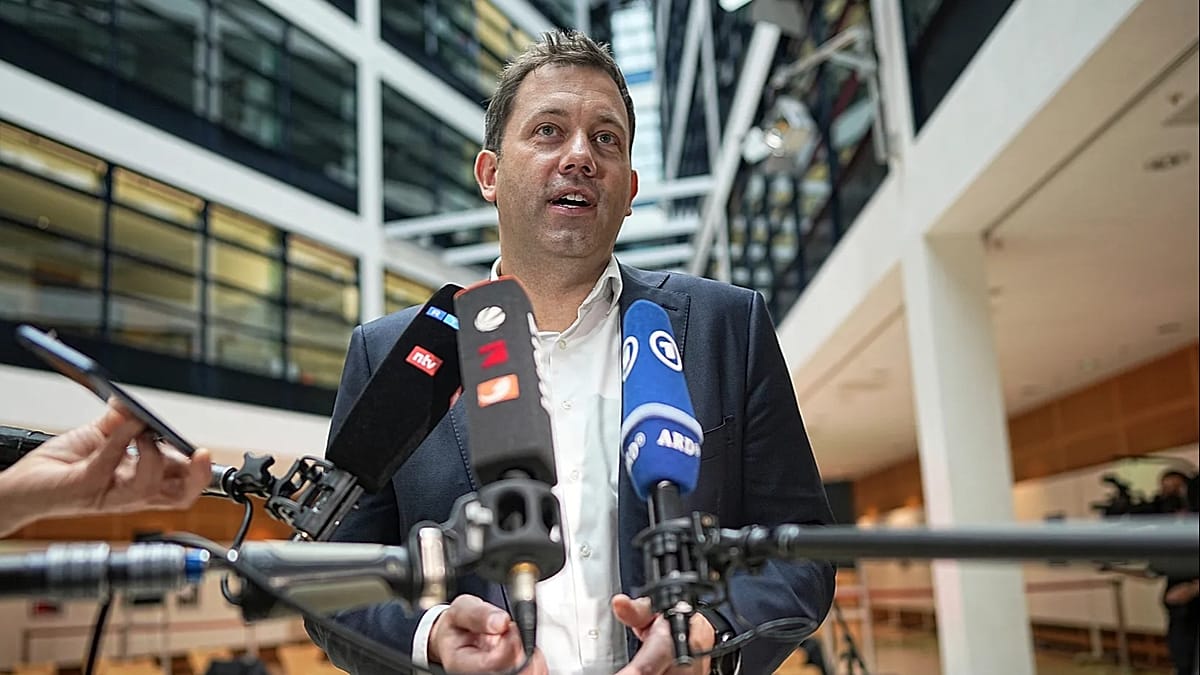
Failing to recognise that it is now essential to advance the digital euro is harming Europe, German Vice-Chancellor and Finance Minister Lars Klingbeil told journalists on Monday, ahead of a meeting of euro area ministers in Brussels.
The digital euro, a legislative proposal currently being discussed among the European Union’s institutions, is currently blocked in the European Parliament, where MEPs working on the file are struggling to come to an agreement.
“All I can say is that anyone who, in this situation, has not understood that it is now essential to advance the digital euro as quickly as possible is not serving Europe, but harming it. And everyone responsible for making decisions must be aware of that,” Klingbeil told journalists.
Spanish centre-right MEP Fernando Navarrete of the the European People’s Party (EPP), who is leading the work on the file, is now proposing a new design for the digital euro, which would essentially reduce the scope of the tool as outlined by the European Commission.
The EPP is divided over the digital euro, with the German delegation actively in favour. If the Parliament cannot agree a position on the file, the legislation will not be able to move forward.
What is the digital Euro?
The digital euro would be an electronic form of cash issued by the ECB, and would serve as an additional form of payment supplementing the cash and cards issued by commercial banks.
“We want to move the digital euro forward because it is important for the sovereignty of our continent, but cash will, of course, remain”, the vice-chancellor clarified.
Unlike everyday card payments, where payments are “private”, the digital euro would allow citizens a direct use of digital “public” money, now mainly available in the form of cash.
Under the European Commission’s proposal, the digital euro would include a digital wallet that could be used both online and offline, with payments not trackable.
An alternative to Visa and Mastercard
The digital euro proposal has surged in importance thanks to economic tensions between the EU and the US, offering as it does an alternative to Visa and Mastercard, the two US-based payment systems used in everyday life by most Europeans.
“Today, when a European customer makes a card payment, it is most often executed by a US firm”, Peter Norwood, senior research and advocacy from the NGO Finance Watch told Euronews.
In Europe, Mastercard and Visa account for 61% of card payments and nearly 100% of cross-border ones, according to data from the European Central Bank data from 2025.
“That gives foreign actors meaningful leverage over the day-to-day functioning of the European economy. A properly designed digital euro, with both online and offline functionality, would give Europeans a publicly backed digital payment option. One that keeps costs down, protects privacy and ensures European control over critical payments infrastructure”, Norwood added.
However, in Navarrete’s proposal, the digital euro would not be an alternative means of payment to Visa and Mastercard.
The European Parliament is expected to vote on the digital euro in May. If the legislation passes, there will begin negotiations between the European Commission, European Parliament and the Council of the EU.
Read the full article here