





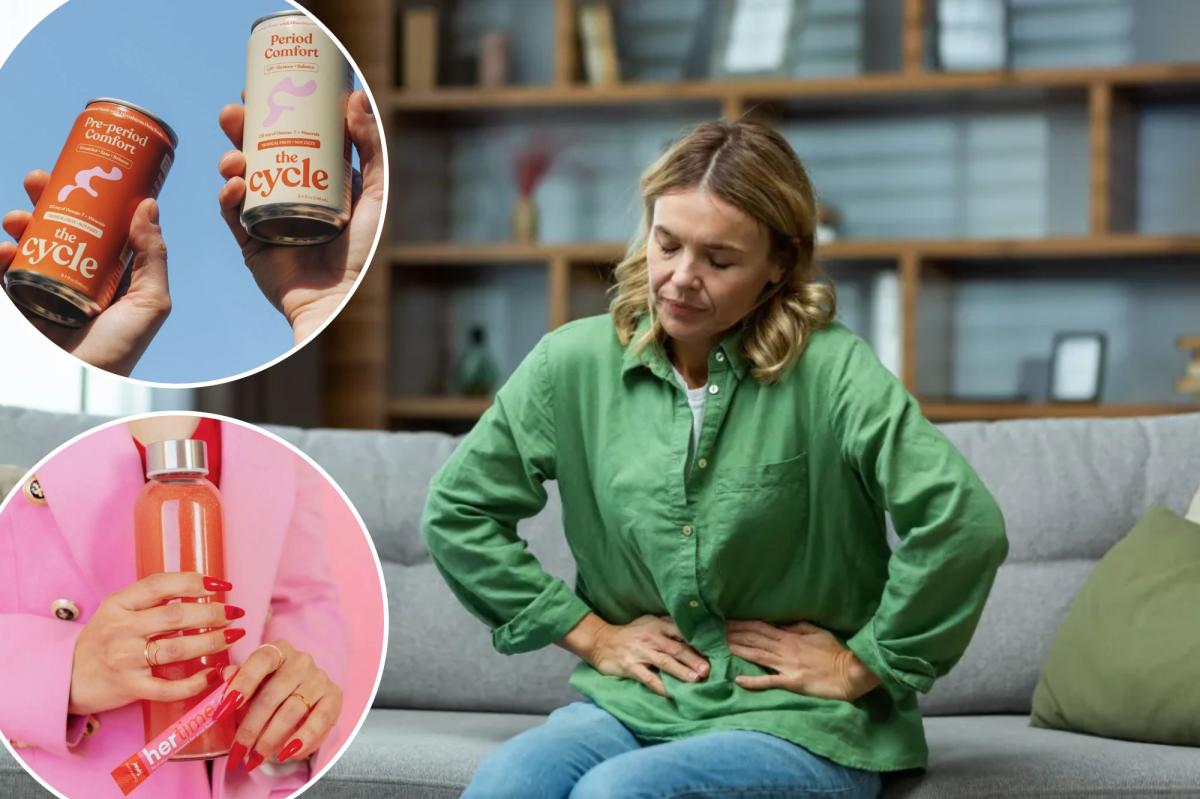
Aunt Flo has arrived — and this time, she’s bringing a beverage cart.
Period-friendly drinks have flooded the wellness world, with brands promising their specially formulated concoctions can help take the edge off that time of the month.
The Cycle, for instance, sells two canned drinks it markets as supporting hormonal health around your period, including one for the week before and another for the days you’re on it.
Another player in the space is Pink Stork, which sells PMS Tea to support menstrual regularity, energy levels and mood while easing pre-period woes.
Then there’s Jovia’s lineup, which has herbal teas formulated for different phases of the cycle, including a menstrual “comfort” tea, follicular “nourish” tea and luteal “balance” tea.
Mixhers’ Hertime PMS, meanwhile, is a powdered “hormone support supplement” marketed as a daily packet that, when mixed with water, can soothe cramps, ease bloating and help level out mood swings.
The company also offers Hertime PMS+, an extra-strength formula marketed for more intense symptoms, including severe cramping, heavy flow and irritability.
It’s enough to make you wonder: Can these period-friendly potions actually ease the monthly misery — or are they just pouring your hard-earned cash down the drain?
The period drink claims that hold water
These so-called period drinks fall into the booming category of “functional beverages,” which are crafted with added ingredients such as vitamins, minerals, herbs or other compounds that are designed to provide benefits beyond hydration.
“Across these products, there are a handful of ingredients that have real clinical evidence behind them,” Janelle Connell, a registered dietitian, told The Post. “The three stand-outs are chaste berry, ginger and lemon balm.”
Research suggests chaste berry may ease PMS symptoms including breast tenderness, headaches, irritability and mood swings.
Ginger, meanwhile, has anti-inflammatory properties that may help with cramping, nausea and bloating. One study even found it was as effective as ibuprofen for reducing menstrual pain.
“Lemon balm supports mood by increasing brain level of GABA, a neurotransmitter that helps us feel calm,” said Connell, who works as a translational science nutritionist at Viome. “It’s been studied in PMS and shown to help improve psychological and social wellbeing.”
Other components in these drinks have some supporting data, but the science isn’t as strong.
“You can try period juices to help relieve mild symptoms, but be realistic on what outcomes to expect.”
Dr. Sheryl A. Ross, MD, FACOG
“Ingredients like dong quai, white peony, Chinese licorice root and Siberian ginseng are more rooted in traditional women’s health practices than strong modern clinical trials for PMS specifically,” said Sydney Lappe, a registered dietitian at Top Nutrition Coaching.
Chamomile, fennel, cinnamon and turmeric also show some promise for symptoms such as cramping, inflammation, mood changes and overall symptom relief, she said, though the research remains limited.
Likewise, raspberry leaf, motherwort and nettle leaf have been used traditionally for cramps, heavy bleeding and menstrual support. While some research suggests potential anti-inflammatory, antispasmodic or calming effects Lappe said “high-quality human studies are still lacking.”
For ingredients that do have clinical backing, experts caution there’s a major catch.
“The dosing of these helpful ingredients are often not in high enough quantities to have a significant impact on disruptive period symptoms,” said Dr. Sheryl A. Ross, a board-certified OB/GYN and host of the “Pair-A-Docs Podcast.”
In other words, a splash of ginger or a sprinkle of magnesium may sound promising on a label — but it may not pack the same punch as the amount used in studies examining their effects.
Potential potion pitfalls
“Most of these ingredients are likely safe for healthy adults, and there’s no strong evidence that they routinely worsen PMS symptoms,” Lappe said. “But ‘natural’ isn’t exactly synonymous with harmless.”
For example, several formulas contain dong quai, an herb commonly used in traditional Chinese medicine — which Connell noted has natural compounds that thin the blood and may make bleeding worse.
Some also contain iron — a nutrient that can be important for some menstruating women, but which may cause issues like constipation and GI distress when taken unnecessarily.
Lappe also pointed to herbs such as chaste berry, licorice and ginseng, which may influence hormone-related pathways involved in the menstrual cycle. They’re not inherently problematic, she said, but stressed caution for those using hormonal medications or managing hormone-sensitive conditions
Another concern is supplement stacking. Layering PMS products on top of other supplements can lead to unintentionally taking too-high doses.
Experts also recommend taking a close look at the label.
“A big red flag is when products list their ingredients as proprietary blends, rather than providing individual ingredient dosages,” Connell said. “As a consumer, you have no way of knowing how much of an ingredient you’re taking in — and if it’s enough to provide symptom relief.”
Period relief that doesn’t come in a can
A period beverage can be a convenient addition to a wellness routine, but experts say the most effective strategies starts with a foundation of good everyday habits: Regular exercise, consistent sleep, stress management and a nutrient-rich diet can all help ease common complaints like fatigue, bloating and mood changes.
Connell recommends taking a personalized approach rather than simply chasing symptoms with supplements.
“Women should be working with their healthcare provider to rule out any underlying conditions that may be contributing to their discomfort,” she said. “We really shouldn’t be blindly treating symptoms or hormonal imbalances.”
Other drug-free approaches that could help include heat therapy, yoga, mindfulness practices, and cognitive behavioral therapy for stress, anxiety or mood changes.
For those with more severe symptoms, Ross said medications like NSAIDs, SSRIs and the birth control pill — in combination with healthy lifestyle choices — “will deliver more relief than a functional beverage ever could.”
Ultimately, experts say these drinks are best viewed as a potential tool — not a monthly miracle cure.
“You can try period juices to help relieve mild symptoms,” Ross said. “But be realistic on what outcomes to expect.”
Read the full article here