





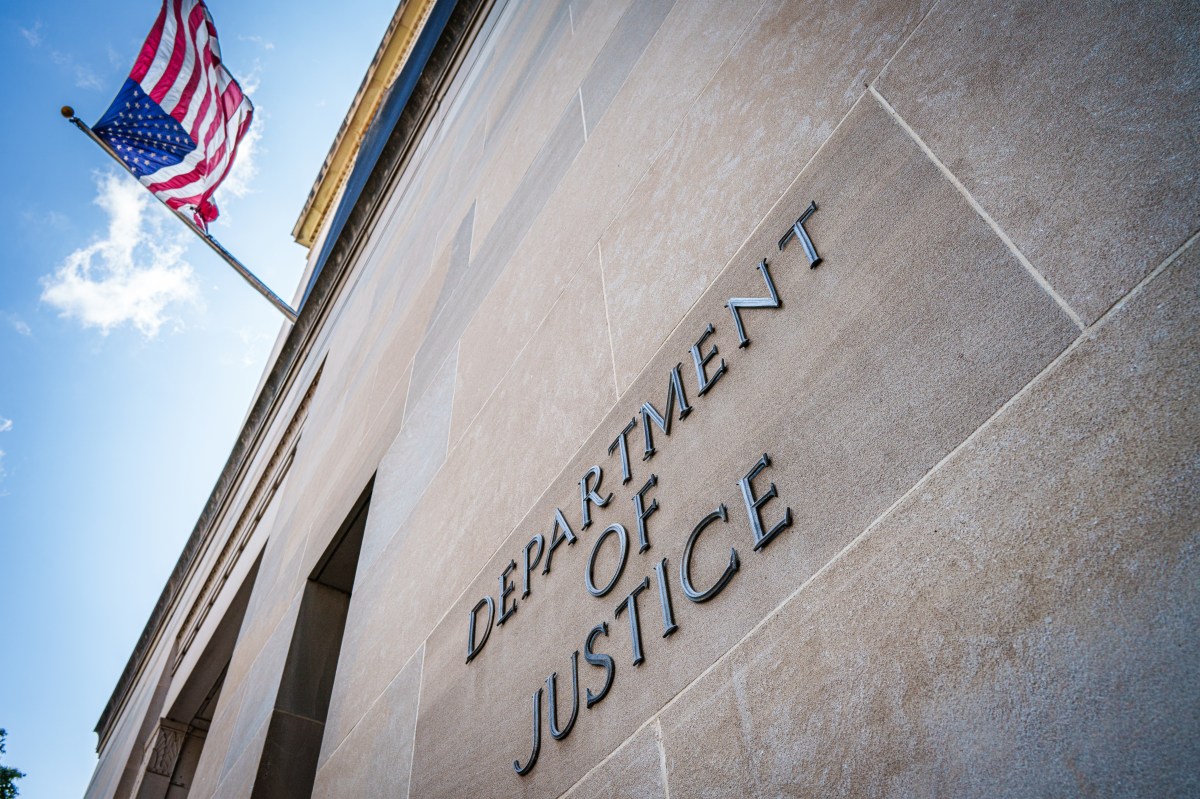
The U.S. Department of Justice is proposing a significant procedural change that could reshape how some survivors of human trafficking obtain green cards, formalizing how they request certification letters tied to criminal investigations.
The proposal, published Tuesday in the Federal Register by the DOJ’s Human Rights and Special Prosecutions Section, would establish a formal system for T-visa holders to request official confirmation that a trafficking investigation or prosecution connected to their case had been completed.
That determination is crucial. Under federal immigration law, such certification can allow eligible T-visa holders to apply for lawful permanent residence earlier than the standard three-year waiting period.
Newsweek contacted the DOJ for comment via email outside standard working hours.
What Is a T-Visa?
T-visas allow eligible victims of human trafficking to remain in the United States for up to four years. Under existing immigration rules, T-visa holders generally must wait three years before applying for lawful permanent resident status. However, they may apply earlier if the attorney general or a designee certifies that the investigation or prosecution tied to their case is complete.
According to U.S. Citizenship and Immigration Services, to qualify for T nonimmigrant status, applicants must generally demonstrate the following:
- They were victims of trafficking involving force, fraud or coercion.
- They are physically present in the U.S. or at a port of entry as a result of that trafficking.
- They can show that their removal from the U.S. would cause them severe harm.
- They have complied with “reasonable requests” from law enforcement for assistance in trafficking investigations.
Minors and certain trauma survivors are exempt from cooperation requirements under federal law.
How Will This Affect Green Card Applicants?
Adam Klein, a former Department of Homeland Security official and co-founder of Globali.ai, said the changes could have a mixed impact, with potential to both streamline and complicate applications.
“A clear process could speed approvals and reduce uncertainty. But whenever discretion is formalized, there is also a risk that new procedural requirements become additional barriers. The details will matter,” Klein told Newsweek.
The Justice Department’s proposal does not change those eligibility criteria. Instead, it creates a new information collection process to standardize how applicants request the certification letters required to demonstrate eligibility for early adjustment of status.
How Many People May Be Affected?
The notice estimates that about 2,000 individuals could submit such requests annually, with each application taking an average of three hours to complete.
Officials said the affected population would primarily include individual T-visa holders, a group drawn from thousands of trafficking victims who have received those visas in recent years. DHS said it approved more than 9,000 T-visas between 2021 and 2025.
The department is seeking public comments for 60 days on the proposed collection—including feedback on whether the process is necessary and how it could be improved or streamlined.
“For trafficking survivors, administrative processes often determine whether relief is timely and meaningful,” Klein said. “Formalizing the certification process can have real-world consequences for access to permanent residence.”
Klein said the move likely reflects an effort to improve consistency, noting that certification practices have historically varied across agencies and offices.
“DOJ seems to be moving an informal process into a standardized framework with clearer procedures and accountability,” he said.
Previously, such certification requests were handled through internal agency practices that were not always transparent or uniform, Klein added, and the proposal seeks to reduce inconsistencies and create a more predictable process for applicants and law enforcement.
What Happens Next
The public comment period ends on August 17. Klein said stakeholders should pay close attention to how much discretion remains in the system, including who can issue certifications, what evidence is required and whether applicants have recourse if requests are denied.
Read the full article here