






The U.S. Food and Drug Administration (FDA) has issued an emergency authorization for nitenpyram tablets, making it the first generic animal drug cleared to treat infestations caused by the deadly New World screwworm.
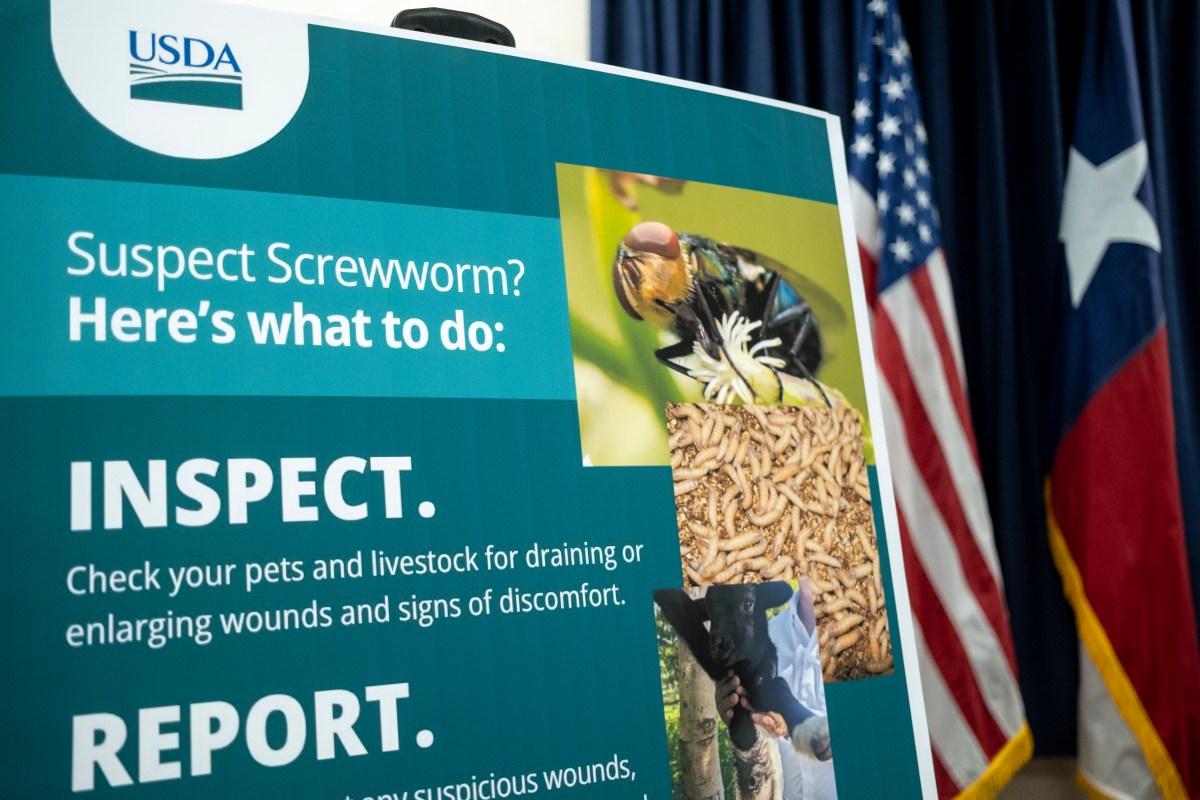
The action comes as federal and state officials respond to the outbreak of the flesh-eating parasite, which has recently been detected in cattle, a goat and a dog in Texas and New Mexico. New World screwworm larvae invade open wounds and feed on living tissue, posing a serious threat to livestock, wildlife and potentially household pets.
Newsweek reached out to the FDA via email for comment on Friday.
What To Know
Under the FDA’s emergency-use authorization, the treatment can be used in dogs, puppies, cats and kittens that are at least 4 weeks old and weigh at least 2 pounds. According to the agency, the over-the-counter medication is intended to kill screwworm larvae quickly, with most parasites expected to die within hours of treatment.
A second dose may be given six hours later if needed, although veterinarians may still need to remove larvae and treat damaged tissue. The FDA stressed that the medicine may not prevent reinfestation if an animal remains exposed to screwworm flies.
“The U.S. government is maintaining an aggressive approach to stop the spread and eradicate this pest,” U.S. Health and Human Services Secretary Robert F. Kennedy Jr. said in the FDA release this week.
“When I signed the initial emergency declaration back in August 2025, we established a proactive defense. Today’s authorization is the latest tactical tool in that ongoing containment strategy — providing an affordable, fast-acting treatment for dogs and cats in affected areas,” Kennedy added.
The FDA fact sheet stresses this medicine is not intended for humans and should be kept away from children.
What Is New World Screwworm?
New World screwworm is a fly that lays eggs in open wounds on animals or their body openings like eyes, genitals, nose or mouth, the U.S. Centers for Disease Control and Prevention says. The eggs then hatch into parasitic maggots that eat the animal’s living tissue.
This is a developing story that will be updated with additional information.
Read the full article here