





WASHINGTON — A federal court Tuesday blocked Republicans’ new congressional map in Alabama that was intended to give them a key pick-up opportunity.
The GOP is expected to appeal the ruling to the US Supreme Court.
The three-judge lower panel ruled that the top court’s related recent decision on Section 2 of the Voting Rights Act doesn’t change their conclusion that the map illegally discriminates against black voters.
“We now face a critical decision on a very tight timeline. We can either allow the Secretary of State to administer Alabama’s 2026 elections with a legislatively enacted districting plan that we found (after a full trial) intentionally discriminated … or we can issue a preliminary injunction,” the panel wrote.
“Ultimately, we cannot see our way clear to requiring Alabamians to cast their votes in the 2026 elections under a districting plan tainted by intentional race-based discrimination.”
The US District Court from the Northern District of Alabama panel was comprised of one Clinton and two Trump appointees.
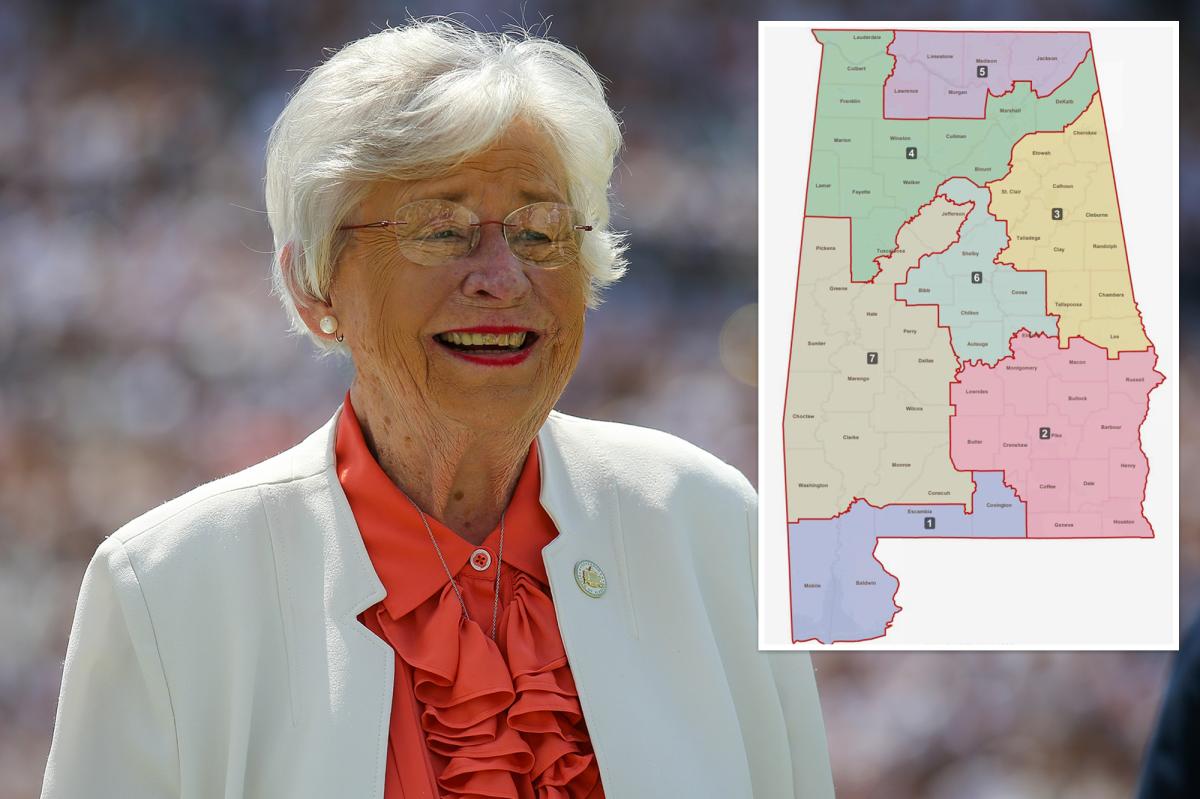
The decision requires Alabama to use a court-ordered congressional map with one majority-black district and one “black opportunity district.”
That panel noted the special master appointed to redraw Alabama’s map did so without displaying “racial demographic data.” It juxtaposed that with the Louisiana case, where a second black majority district was ordered drawn.
The Supreme Court slapped down that Louisiana map last month, concluding it was a racial gerrymander. The high court released an updated framework for determining violations of Section 2 of the Voting Rights Act, which bans practices aimed at suppressing voters on the basis of race.
Republican-appointed Justice Samuel Alito wrote in the majority opinion that race-based redistricting can be used as a remedy to address a racist district, but only after the latter is definitively proven to be the case. He stressed that redistricting for partisan purposes alone can’t be struck down as a violation.
Since that decision, there has been a tidal wave of red states, particularly in the South, hoping to retool their congressional maps.
Back in 2023, the Supreme Court had found the GOP’s Alabama map with one black majority district likely flouted the Voting Rights Act.
Earlier this month, the Supreme Court vacated a lower court ruling to stick with the court-ordered map so that litigation could play our about whether that order complied with its new precedent.
The three-judge panel stressed that it “carefully” evaluated the Supreme Court’s updated Voting Rights Act guidance in the Louisiana case.
“We emphasize that because of the exceptional public importance of this matter, we carefully reviewed the extensive evidentiary record in these cases with fresh eyes in light of [Louisiana v.] Callais,” the panel wrote.
Alabama Attorney General Steve Marshall (R) promptly announced plans to appeal the panel’s ruling to the Supreme Court.
“This is a very fluid situation, and I will do my best to keep the people of Alabama apprised of our efforts. Know this—in my mind, it is not a matter of whether we win this case, only when,” he claimed in a statement.
While voters already participated in the May 11 primaries, Gov. Kay Ivey (R) scheduled special ones for the four congressional districts impacted by the redistricting fight for Aug. 11.
Read the full article here