




At a conference last year, Ford CEO Jim Farley said that artificial intelligence is “going to replace literally half of all white-collar workers in the US.” Just last week, Ford executives said that the automaker had quietly rehired more than 350 of what it internally calls “gray beard” engineers over the past three years to help fix the AI quality-control systems that weren’t getting the job done.
Over the last decade, US automakers have cut more than 20,000 jobs, nearly a 20% reduction in workforce between Ford, General Motors and Stellantis combined. While Ford hasn’t said for sure how many of these gray beard rehires were originally fired to make way for AI and how many are simply returning retirees, Farley’s recent statements on automation-fueled worker replacement certainly paint an awkward picture.
Representatives for Ford and the United Auto Workers union did not immediately respond to requests for comment.
Not getting the desired results
“Artificial intelligence is a fantastic tool, but it’s only as good as the information you use to train it,” Charles Poon, Ford’s vice-president of vehicle hardware engineering, told reporters last week. “Mistakenly, we thought that by just introducing artificial intelligence and ingesting the design requirements that we had, that would produce a high-quality product.”
Kumar Galhotra, Ford chief operating officer, was even more blunt about the realities of AI in manufacturing, saying that Ford had been “relying more and more on automated quality systems and not getting the desired results.”
More than a simple oopsie, automation issues have been costing Ford billions in warranty costs and recalls. A study from iSeeCars, an automotive marketplace and research company, ranked recent Ford models among the most recalled vehicles in the industry. Ford’s statements and the rehiring of experienced workers are essentially an admission that moving too quickly into AI was a big mistake.
Many major corporations in almost every aspect of tech and manufacturing have been naming artificial intelligence as an excuse for large workforce reductions, often without fully accounting for what gets lost when that human factor walks out the door. Entire industries have been crunching the uncomfortable numbers of replacing human judgment with automated systems, with some even backtracking on their decisions when the true cost of AI proves too high.
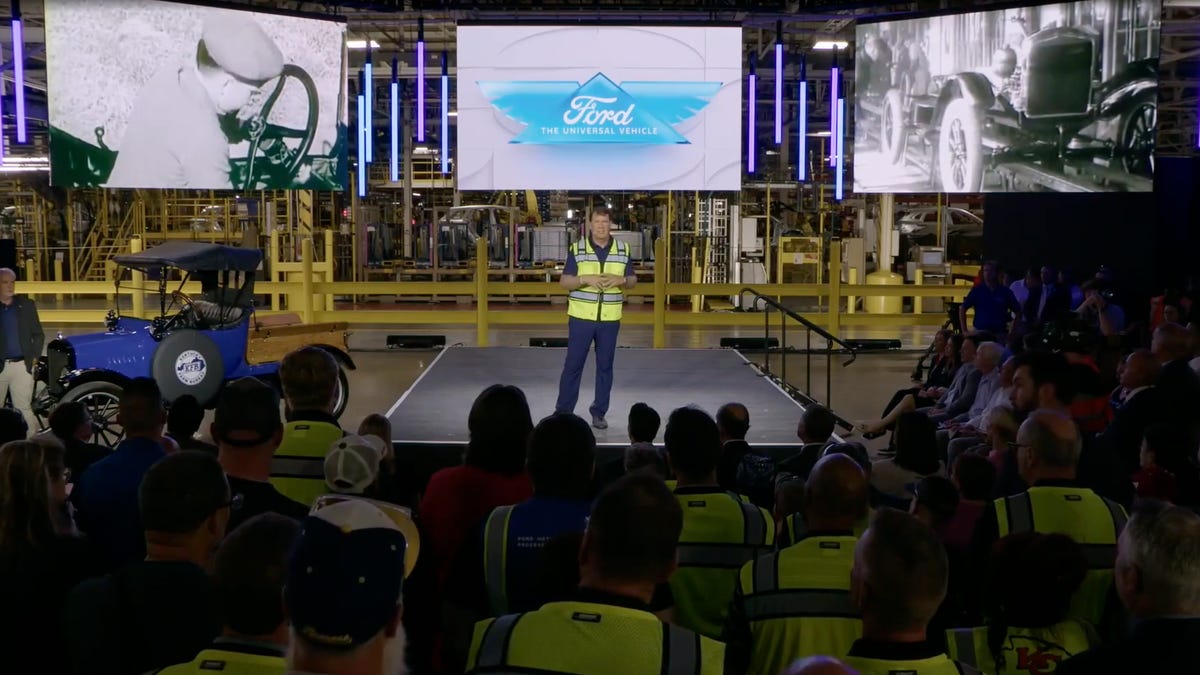
Ford CEO Jim Farley has spoken frankly about how AI tech will lead to a drastic reduction in white-collar jobs.
What happens now?
Last week, Ford announced that, for the first time in 16 years, it had captured the number one spot among mainstream brands in JD Power’s 2026 Initial Quality Survey, up from tenth last year. The automaker credits the rise, in part, to the contributions of the rehired gray beards. But before you get too excited about the triumph of these modern-day John Henrys over the machines set out to replace them, don’t forget what ultimately happened to that folklore hero: He was still replaced by the steam engine.
Galhotra said the rehired specialists — some former Ford employees, others drawn from industry suppliers — were brought back specifically to “hunt for failure points before a part ever reaches the plant floor.”
Ford isn’t abandoning AI. Instead, the returning gray beards are doing two things: training younger staff who never worked alongside those veterans and helping to rebuild the data pipelines that the AI tools run on.
Essentially, they’ve been brought back to fix and train the automated software systems that replaced them. Ford also said it has built a dedicated 40-person software quality assurance team and added more than 100,000 AI-powered automated tests to catch edge cases late in development.
Technology marches on.
Ford just happened to learn the lesson loudly enough to become a case study, but I don’t think it will be the last. There may not always be gray beards to call on to save the day.
Read the full article here