






What began as scattered local opposition to data centers is increasingly becoming a national political issue.
Policy action appears to be shifting alongside public sentiment. A recent Gallup Poll found that seven in 10 Americans object to building artificial intelligence data centers in their community.
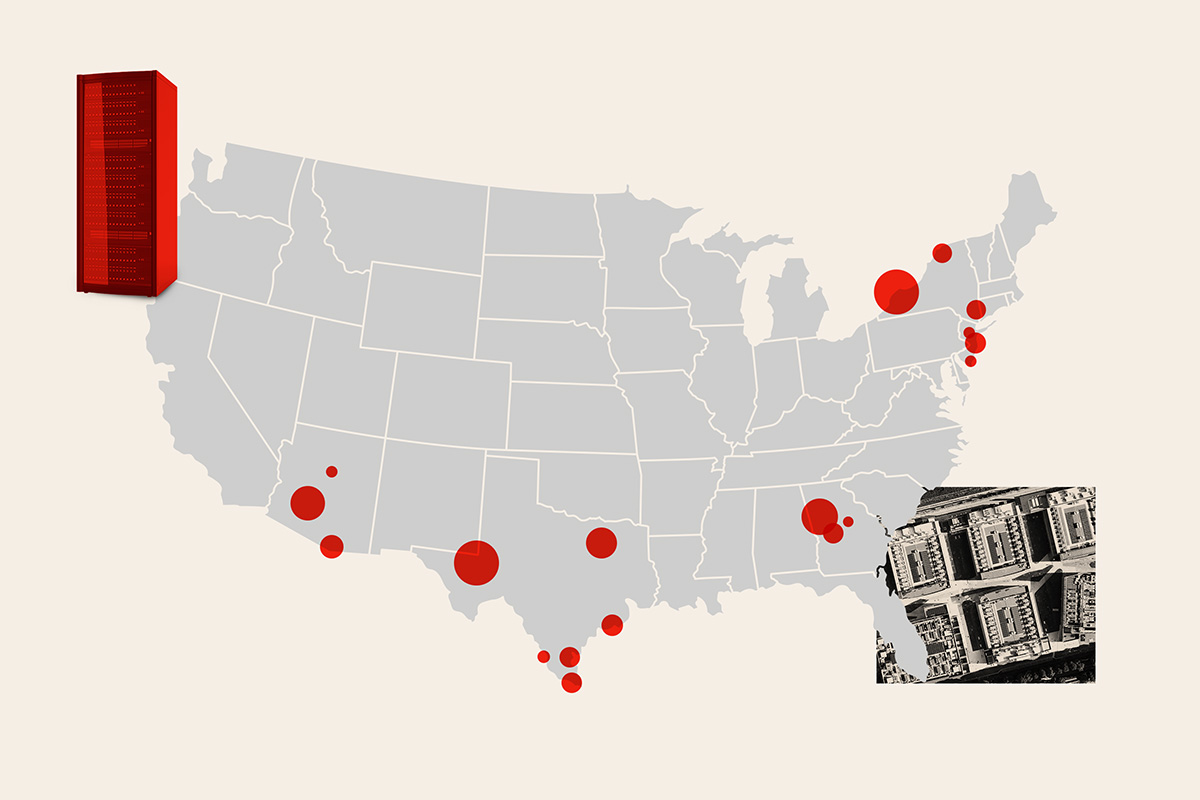
There are now more than 4,300 data centers—built to train, deploy and deliver AI—across the U.S., according to Data Center Map. This includes over 600 in Virginia, more than 460 in Texas, and over 130 in New York.
These developments coincide with the launch of a new website by environmental activist and consumer advocate Erin Brockovich, aimed at tracking data center-related concerns, as the rapid spread of AI-driven facilities increasingly comes into conflict with local communities.
Policymakers Begin to Respond
On Wednesday, New Jersey Governor Mikie Sherrill announced statewide plans to ensure data centers support the grid infrastructure required for their expansion and require them to report on energy and water use.
At the same time, Pennsylvania Governor Josh Shapiro released details on standards that data center developers must meet to receive state support, including demonstrating how projects will benefit local communities, address or offset impacts, and be developed responsibly.
New York Businesses Push for Statewide Moratorium
That pressure is also coming directly from the business community.
Nearly 500 New York businesses have urged Governor Kathy Hochul and state lawmakers to back legislation imposing a temporary statewide moratorium on permitting and building new data centers, warning the “explosive growth” of the sector could hit small firms hardest.
They argue rapid expansion is “generating more fossil fuel pollution, straining water resources, devouring land, and raising electricity prices,” driving up operating costs while “depleting and poisoning the natural resources our businesses rely on.”
The signers say officials have lacked the time to set “essential guardrails,” and caution proposed facilities could push statewide electricity use “potentially exceeding that of all the state’s households combined,” requiring more gas infrastructure and leaving communities with “air, water, and noise pollution” but few permanent jobs.
Newsweek contacted Hochul’s office via email on Thursday for comment on the letter.
Texas Official Calls for Pause
Similar concerns are emerging in other high-growth states.
In Texas, Agriculture Commissioner Sid Miller has called for a “temporary moratorium on new hyperscale data center development in Texas” while the state assesses “long-term impacts on our infrastructure, agricultural economy, and communities.”
He said the “explosive growth” is “rapidly consuming our land, water, and power,” with facilities rising at “breakneck speed” across rural Texas.
Miller argued many centers “consume enough electricity to power entire towns” and draw massive volumes of water for cooling, even amid ongoing drought, forcing rural areas to compete with corporate giants. He called for “breathing room” to craft responsible guardrails “before the industry outgrows our ability to manage it.”

Local Governments Move to Block Projects
Some New Jersey towns have moved to ban them altogether.
As reported by WHYY, East Greenwich Township approved a ban on data centers as an American Tower application for a 17,000-square-foot facility remained pending before the township’s combined planning and zoning board. The outlet also reported that Millville city commissioners unanimously banned data centers at a May 19 meeting.
Newsweek contacted American Tower via email on Thursday for comment.
In Monroe Township, WHYY said officials banned all data centers as defined as facilities tied to artificial intelligence, cloud computing and cryptocurrency operations, and also prohibited land uses considered similar, after residents opposed a proposed 1.6 million-square-foot project.
The outlet added that other municipalities have enacted similar bans, including Andover Township and Logan Township.
Residents Warn of Local Impacts in Arizona and Georgia
On the ground, opposition is often driven by concerns about day-to-day impacts.
Axios reported that some Arizona neighborhoods are pushing back against new data center proposals, but often with limited success. The outlet said opponents argue the facilities can worsen day-to-day living conditions, pointing to concerns about ongoing noise, added strain on water, and an overall decline in quality of life.
Commissioners argued the on-site power component could help the wider grid and described the site as suitable for industrial use, with the nearest neighborhood about a mile away. It also reported the developer held open houses and public meetings, and cited an industry representative who said that kind of outreach can address common worries (including water use) and that data centers are needed for growing digital demand and can generate substantial tax revenue.
In Georgia, the New York Post reported that Georgia Power was pursuing eminent domain and permanent easements to build Project Wansley, a new high-voltage transmission corridor through Coweta and Fayette Counties that it said would support multiple AI-related data centers.
The Post said more than 330 properties fall along the route and that roughly 20 to 30 homes could be demolished, while other owners could face towers placed close to houses. It described residents disputing appraisals and compensation and said some homeowners viewed the process as pressured by the threat of condemnation.
Newsweek contacted Southern Company, Georgia Power’s parent company, via email on Thursday for comment.
Billions Stalled in Proposed Projects
The growing resistance is already having measurable consequences for development.
Miquel Vila, lead researcher at applied AI research firm 10a Labs, told market research and data provider Industrial Info Resources that opposition to data centers at the local level “is rising, and consolidating.”
“Until recently, opposition was fragmented and localized, but it is becoming more mainstream and interconnected now,” Vila said.
The researcher told Industrial Info Resources that last year, 17 proposed projects were delayed and 31 were canceled, with a combined value of at least $156 billion. It added that 11 states have been considering enacting temporary halts on new data centers.
Read the full article here