





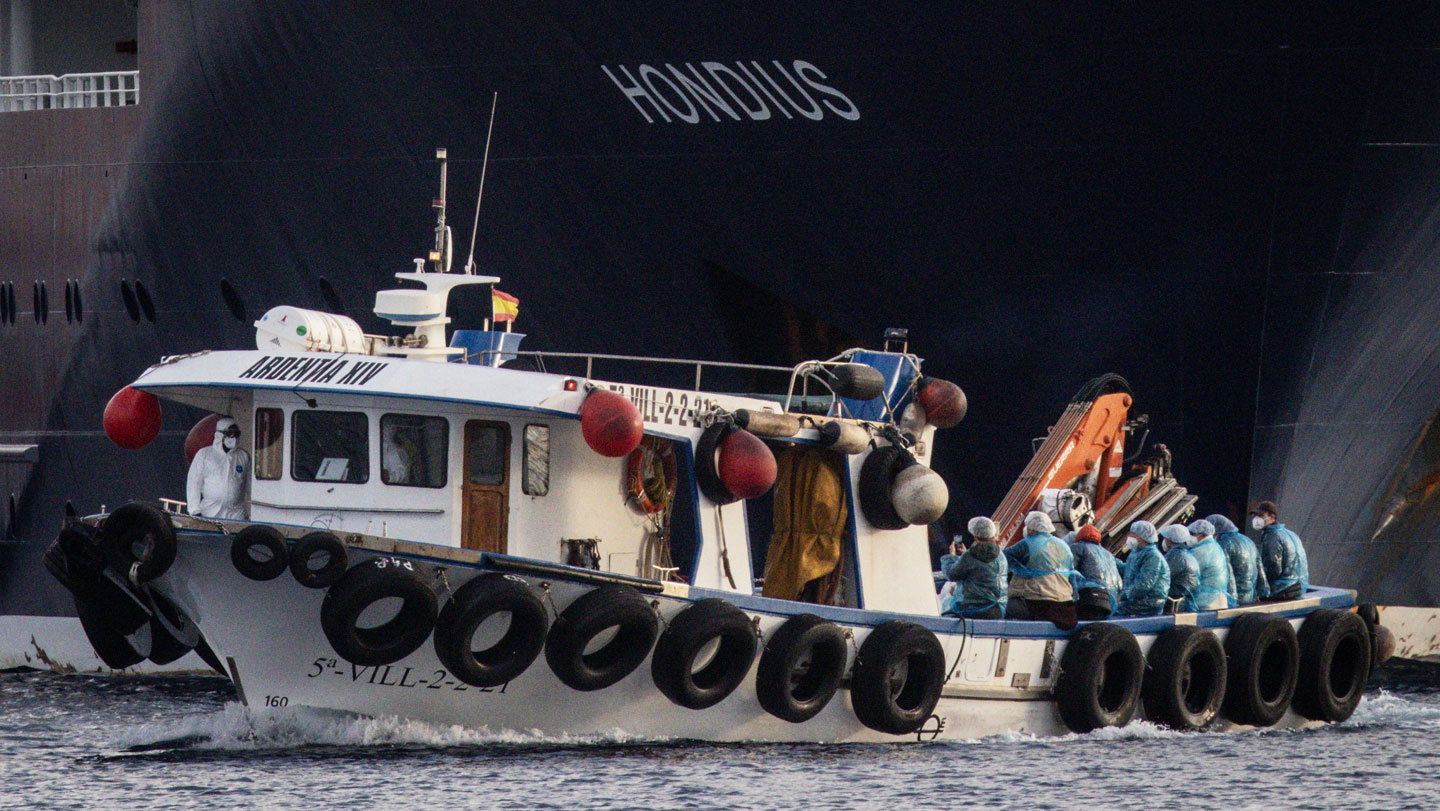
As public health officials around the world monitor dozens of former passengers and crewmembers of the MV Hondius for signs of hantavirus infection, scientists are hoping to learn more about the mysterious and sometimes deadly virus that caused the outbreak.
That virus has been confirmed as the Andes species of hantavirus, the only hantavirus documented to spread from person to person. So far, evidence suggests the shipboard outbreak happened when one or two people were infected ashore and then passed the hantavirus to others on board. As of May 13, the outbreak had sickened at least 11 people, killing three.
Scientists are still trying to decipher what makes the Andes virus different from other hantaviruses. Mysteries include why and how it can spread between humans, and why it can be so deadly. The answers may depend as much on the people infected and the circumstances as on the virus, researchers say.
Many different species and variants of hantavirus have been discovered. And thousands of people are infected annually worldwide. Generally, those cases come from people breathing in dried rodent excrement. A rodent commonly called the long-tailed colilargo or the long-tailed pygmy rice rat (Oligoryzomys longicaudatus) carries the Andes virus.
Often those exposures occur in rural areas and strike campers, people who work outdoors or those who otherwise disturb rodent-infested areas.
But in Chile and Argentina, researchers have previously documented cases in which people were infected with Andes hantavirus by other people at birthday parties and wakes, in hospitals, on car trips and within households. And now, for the first time, at sea. A bird-watching trip near a landfill in Argentina is proposed to have led to the first two cases aboard the ship — a Dutch couple who both died.
Closeness is next to infectiousness
Usually, Andes virus person-to-person spread happens among close contacts. Close means people who swap spit — transmission is more likely among sexual partners and those who engage in deep kissing. Close contacts may also be those who spend long periods of time together or health care workers who take care of hantavirus-infected patients.
But as the ship and other examples illustrate, not everyone who catches Andes virus from others are close contacts. For instance, researchers carefully reconstructed how an Andes virus outbreak in Argentina from November 2018 through February 2019 infected 34 people and killed 11. Four waves of infection were driven mainly by three super-spreaders, the researchers reported in the New England Journal of Medicine in 2020. Those three people gave the virus to 21 others. Some spread happened through casual contact, says Gustavo Palacios, a virologist at the Icahn School of Medicine at Mount Sinai in New York City.
Palacios was part of a team that investigated how properties of the virus and other factors contributed to the outbreak. The team found “some cases where we cannot demonstrate very close contact, as described by transmission of fluids like saliva or semen or blood,” he says. “The only fluid that they might have transmitted is respiratory secretions,” breathing out airborne particles that others can inhale, much like transmission of other respiratory viruses.
Watching for symptoms
About a dozen countries are monitoring passengers and crewmembers who disembarked or were evacuated along the ship’s route, plus people who came in contact with infected or exposed passengers on airline flights or other close-quarters situations. It can take up to six weeks for symptoms to appear after being infected with Andes virus.
As of May 13, lab tests have confirmed nine infections, the World Health Organization says. The Andes virus is also suspected in two other cases: the Dutch man who died on board the Hondius on April 11 (no samples were taken from him as hantavirus wasn’t suspected at the time) and a hospitalized British national who disembarked on the South Atlantic island of Tristan da Cunha on April 14. The island is so remote that British paratroopers, some with medical personnel jumping in tandem, had to parachute in with medical supplies and oxygen to care for the man.


An American citizen who initially tested positive now has inconclusive results; another developed mild symptoms while on a special medical repatriation flight from Tenerife island. Eighteen U.S. citizens from the cruise are being monitored or treated for disease at quarantine and biocontainment units in Omaha, Neb., and Atlanta.
An additional seven ship passengers are in quarantine at home in five states. Those are people who were on the Hondius when the first case died but disembarked before anyone realized hantavirus was aboard. And another 11 Americans who were sitting near an ill cruise passenger on airline flights are also quarantining at home.
In one example, a man briefly attended a birthday party where he sat a different table from the infected person who sparked the outbreak. “He was not there for a long period of time. He got infected by saying hello on the way to the restroom,” Palacios says.
That’s not to say that Andes virus is as infectious as respiratory viruses like influenza or the coronavirus that causes COVID-19. The person who spread Andes virus at that birthday party infected only five people in the large party attended by more than 100, four sitting next to or near him, says Jonas Klingström, a virologist and immunologist at Linköping University in Sweden. “It seems like in some conditions, people might secrete viruses more easily than under normal conditions, but it’s still very, very rare.” Still, those rare cases argue in favor of isolating people exposed to the virus because, he says, “you will never be able to predict who will be spreading the virus, because it doesn’t seem to be connected to how severely ill you are.”
No clue in the genes
Why Andes virus may sometimes pass from person to person isn’t obvious from looking at its genetic material. A few small tweaks in Andes virus’s RNA seem to be associated with person-to-person spread, researchers reported in mSphere in 2023. The genetic makeup of Andes virus isolated from a Swiss passenger on the cruise ship is a close genetic relative to a virus involved in person-to-person spread described in that earlier study.
Analysis of the Swiss passenger’s viral RNA places the Andes virus in the outbreak as close relative of Andes viruses from Chile and northern Argentina. The pygmy rice rat is common in those areas. Argentinian authorities dispute that the outbreak started at the landfill, pointing out that the rodents don’t live in the Tierra del Fuego region of southern Argentina where the Dutch couple joined the cruise and that region has never had a human case of hantavirus.
Changes identified in Andes viruses that have transmitted between humans don’t alter the virus’s ability to reproduce, Palacios says. The virus also didn’t change much from the beginning to the end of the Argentinian outbreak and wasn’t different in the super-spreaders.
If there’s nothing special about Andes virus’s genetic makeup, that might mean other hantaviruses are capable of spreading among humans given the opportunity. “So, you know, maybe this is not about Andes, and every [hantavirus] that is on a rat in a port in every part of the world actually is capable of doing the same,” Palacios says.


Other experts doubt that human-to-human transmission has happened with hantaviruses such as Puumala virus or Hantaan virus in Europe and Asia or Sin Nombre virus in the United States. People contract those viruses from contact with rodent droppings fairly regularly, but no one has documented person-to-person spread. Still, many rodent species carry hantaviruses that have unknown capabilities, Palacios says.
One reason that the Andes virus may spread among people is that it grows to higher levels in humans than other types of hantaviruses do. No one knows why. When Andes virus has established itself in the bloodstream, “there’s virus all over the place. I mean, people are peeing out virus,” says Kartik Chandran, a virologist at Albert Einstein College of Medicine in New York City. “It’s in the kidneys. It’s in the lungs. With Andes, it’s in the oral secretions.”
Klingström and colleagues also found that Andes virus can withstand antimicrobial compounds in human saliva that kill other hantaviruses, even though it’s susceptible to other methods to kill it. Like other hantaviruses, “if we inactivate it with ethanol or anything else, it’s super easy to kill,” he says. “Also, this virus is super sensitive to soap, to light,” so that doesn’t appear to be different.
Perhaps, though, proteins are arranged differently on Andes virus’ surface, allowing it to withstand saliva better. No one has pinpointed why Andes is more stable in saliva, but that property may partially explain human-to-human spread.
Andes virus RNA has also been found in other human body fluids, including blood, breast milk and semen. In one case, a man who recovered from a severe Andes virus infection still had viral RNA in his semen 71 months later, researchers reported in Viruses in 2023. He does not seem to have been infectious after his symptoms cleared up and detecting viral RNA doesn’t always mean that viruses are being made.
The human angle
Characteristics of the people who contract Andes virus may be as important as those of the virus in determining infection. Super-spreaders tended to produce much more virus than others, Palacios and colleagues found. And their livers and kidneys were more affected than people who did not spread the virus or spread it to fewer people.
Timing was important too, Palacios says. People were most infectious from two days before symptoms started to two days after. Those who build antibodies against the virus early may give off fewer viruses than those who take longer to make antibodies, Klingström says.
Behavior may also play a role. “If you happen to be home sick, you’re probably not going to give it to anybody, or maybe you give it to just one person,” Chandran says. But people who attend parties or go to a crowded movie theater may pass the virus to more people during the short window when they are most infectious.
Interplay between the virus and the immune systems of the people it infects may affect who gets severely ill or dies, Klingström says. People whose bodies make high levels of an inflammation-triggering protein called IL-6 tended to have more severe symptoms with Andes virus than people who produced less IL-6, researchers reported in 2017 in PLOS Neglected Tropical Diseases. Andes, like other hantaviruses, also keeps immune cells called T cells from attacking the virus, Klingström says. Whether Andes is especially good at that isn’t known.
Scientists have much more work to do to establish why Andes virus is capable of sustained human-to-human transmission, Chandran says. “We actually currently have zero data on why Andes is special, or indeed, if it is special,” he says. Though, “there are so many cases of Puumala and Hantaan [hantavirus infections] that I think if there were human-to-human spread, I think we would have seen it, and we would have caught it.… So there is clearly something different about Andes.”
Read the full article here