




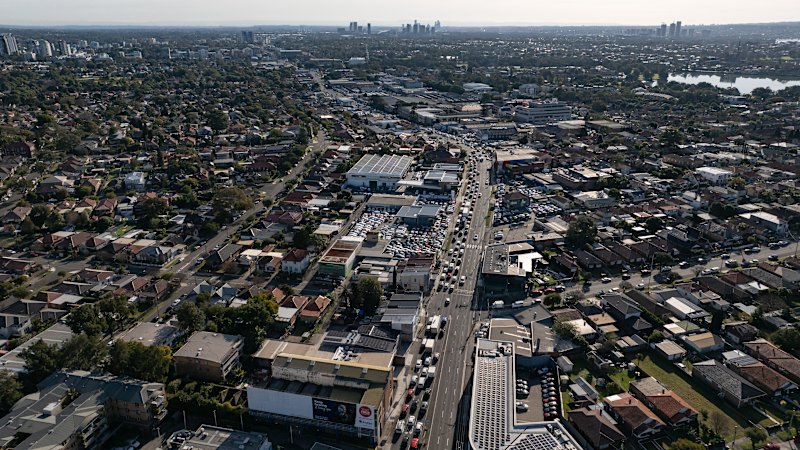
Parramatta Road is ugly in parts, drab in others and generally unpleasant. But it is pulsing with activity, much of it motorised, and it is both fundamental to the economic and social viability of our city and it remains Sydney’s central geographic artery.
It is also Australia’s oldest highway, and the route still closely follows the path chosen by the early colonists. And Sydney proudly sprang up along the way. Two centuries or so later, it is synonymous with the Australian ugliness.
Yet for years, governments, planners, developers and visionaries promised transformation, but complex planning controls, poor infrastructure, fragmented land ownership and council rivalries allowed the short-sighted to rout the long-sighted. For instance, in 2016, the Baird government released the 30-year Parramatta Road Urban Transformation Strategy, setting out how the corridor would grow, but pretty much everyone sat on their hands until 2022.
Now the Herald’s urban affairs reporter, David Barwell, says an analysis of NSW Planning data shows developers are planning to spend $2.76 billion building some 6000 units in high and medium-rise apartments along Parramatta Road, including on land occupied by petrol stations, run-down milk bars, second-hand car yards and graffiti-sprawled shopfronts.
Sydney’s chronic housing shortage crisis offers developers a gilt-edged guarantee that if they build, they will come, and Barwell reports developers have swooped following recently enacted planning changes that are a key part of the Minns government’s promise to build 377,000 new homes in NSW by mid-2029. Massive rezoning changes along the corridor now allow for significantly higher building limits and have sweetened developers’ interests, which could eventually result in 120,000 homes along the corridor.
NSW Planning Minister Paul Scully said the surge in development activity along Parramatta Road was a sign NSW planning reforms were “unlocking development in areas neglected for decades”.
Of course, such a huge uptick in development, mostly aimed at low-and middle-income earners wanting to buy or rent a home or provide affordable housing to the young who unequally shoulder the burden of the housing crisis, is not universally welcomed.
The Minns government’s development changes have frightened some residents in greener suburbs who view the arrival of low and medium-density housing with dread and object on planning or heritage grounds.
But Parramatta Road NIMBYs are different.
Some inner city dwellers have written to Inner West Council objecting to development on grounds of potential traffic impacts, overshadowing and the demolition of current businesses, including one that offered low-cost space to artists.
However, housing is everybody’s problem and Parramatta Road is a giant step towards confronting the crisis.
The most difficult challenges may be the huge increase in population that will inevitably follow.
Development of WestConnex and Sydney Metro should surely go hand in hand with building the thousands of apartments that will sit above them along Parramatta Road. Extending Sydney’s light rail network along the roadway to support anticipated population growth would be a good start.
Experience has taught us that moves to help Sydney get bigger are no longer enough. They must also make Sydney better.
Get a weekly wrap of views that will challenge, champion and inform your own. Sign up for our Opinion newsletter.
 The Herald’s View – Since the Herald was first published in 1831, the editorial team has believed it important to express a considered view on the issues of the day for readers, always putting the public interest first.
From our partners
Read the full article here