




New York City’s tax on second homes, which went into effect on July 1st, has sparked an uproar from billionaires and residents alike. While the city is still working through which properties will get hit, it released an enormous list on Monday including hundreds of thousands of addresses and owner’s names.
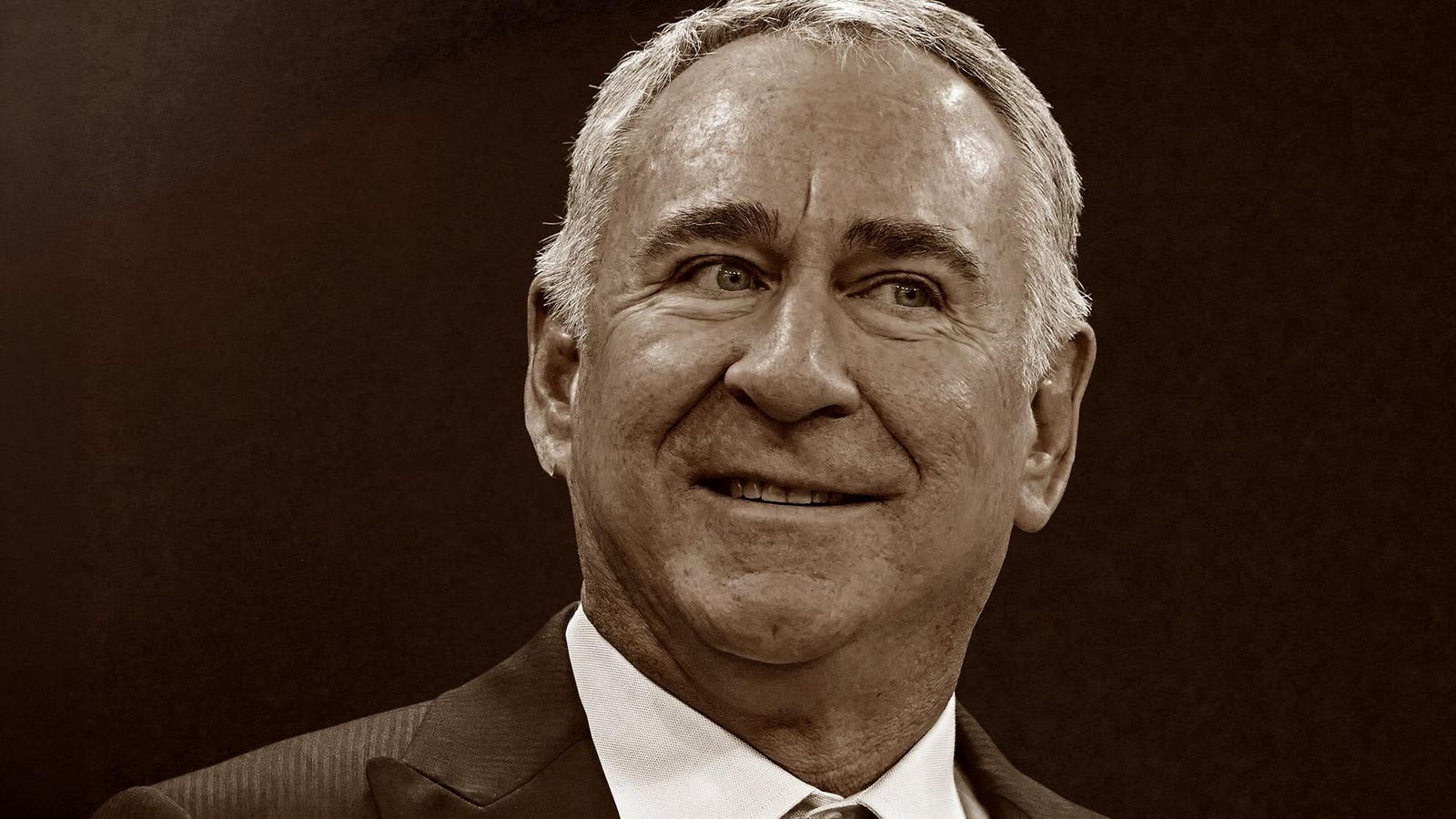
The bad blood has been brewing since April, when Mayor Zohran Mamdani unveiled his plans for the tax by filming a video outside the $240 million penthouse of hedge fund mogul Ken Griffin. “When I ran for mayor, I said we were going to tax the rich,” Mamdani said, leaning into the camera. “Well, today we’re taxing the rich.”
Griffin’s response was equally bombastic, calling the video “creepy” and “frightening.” At the Milken Institute’s Global Conference in May, he added that “Mamdani’s making it really clear, New York doesn’t welcome success.”
Griffin even threatened to pull his firm Citadel’s plans for a $6 billion office tower in Manhattan and instead relocate more employees to Miami, where he moved his firm from Chicago in 2022. His partner on the project, former billionaire and real estate mogul Steven Roth, went as far as calling the slogan “tax the rich” when “spit out with anger and contempt by politicians…just as hateful as some disgusting racial slurs.”
Known as the pied-à-terre tax, it’s set to target homes that aren’t primary residences. That covers both the New York City properties of people who live outside of the city, as well as any additional homes owned by people who do live in the five boroughs. Currently authorized through 2031, it initially targets homes valued at more than $5 million plus condos and co-op units valued at $1 million or more. If the property is leased to a tenant, or it’s the primary residence of the owner or their immediate family, then it’s exempt.
In the first two years of the tax, it will be based on the city’s assessed values—figures that are notoriously far below actual market prices. Ken Griffin, for instance, paid a record $240 million for his midtown Manhattan penthouse in 2019, making it the most expensive home sale ever recorded in the U.S. But per the New York City Department of Finance, it’s assessed at just $15.6 million. The city aims to fix that discrepancy starting in the 2028-29 tax year, when it will revalue the properties based on comparable sales and market values. From that point forward, the tax will only apply to properties worth more than $5 million.
Despite all the drama, the new tax will barely dent Griffin’s or any billionaire’s fortune. (It’s also unlikely to add enough to the city’s coffers to make much of a difference.) Forbes estimated how the tax would impact 10 billionaires that own homes in New York, focusing on the richest people in the world and those who have purchased some of the most expensive properties ever sold in New York. To do so, Forbes used the assessed value for the first two years and the average of the sale price and current market estimates per online real estate sites like Zillow for the following three years.
Based on those calculations, Ken Griffin—who besides his penthouse also owns two units at 740 Park Avenue on the Upper East Side, worth a combined $83 million—would have to pay an estimated $12.9 million through 2031. That’s a drop in the bucket for a man of his wealth: just 0.025% of his $51.4 billion fortune. Or looked at another way, the equivalent of a person worth $100,000 paying $25 in extra taxes, less than the cost of two glasses of wine these days.
It’s an even smaller stretch for Jeff Bezos, the world’s fourth-richest person, who owns nine properties in the city. He would face an estimated $5.1 million tax bill—and several of his apartments, which he purchased back in the 1990s, likely aren’t even valuable enough to be hit by the new tax. For his part, he hasn’t been critical of the tax, which amounts to just .002% of his $247.1 billion fortune. In fact, he told CNBC in May that it’s “a fine thing for New York to do.”
Even for less wealthy billionaires, the tax won’t be much of a burden to bear. Take Joseph Tsai, the cofounder of e-commerce giant Alibaba. In 2021, the Hong Kong resident spent $345.5 million buying three units at 220 Central Park South, an ultra-luxury skyscraper on Billionaires’ Row in midtown Manhattan. Through 2031, it’s estimated he’ll pay roughly $12.4 million under the pied-a-terre tax, or about 0.1% of his $12.3 billion net worth.
“It’s almost like Mamdani’s not even really taxing the rich like he promised,” says Nathan Goldman, a professor of accounting at North Carolina State University who has written about the tax for Forbes. Pointing to the difficulty of valuing these ultra-luxury properties and the extra appraisal work the city will need to do, he adds: “They’re going to have to hire all these additional people to even implement this.”
For members of the three-comma-club who live in the city and have multiple homes in the five boroughs, they might reduce their tax by shifting their primary residence to their most valuable property. Former mayor Michael Bloomberg, for example, lists his most expensive city property—his mansion on East 79th Street—as his primary residence, meaning he wouldn’t be subject to any additional taxes on it.
Similarly, hedge funder Bill Ackman has designated his $91.5 million duplex penthouse at the 1,005-foot One57 tower in Midtown, which he bought in 2015, as his primary residence—a move that could end up saving him some $4.6 million through 2031. His other unit, which is a penthouse in a co-op, is not in the database the city released so Forbes could not estimate the pied-à-terre tax on that property.
Still, Ackman is likely less concerned about the tax as he is the resale value. “The Ken Griffins of the world make NYC high end development viable, driving high-paying construction, brokerage, legal, marketing, and other jobs in NYC,” he wrote in a post on X in April. “I can’t imagine the NYC construction unions are excited about his plan.”
At least one real estate appraiser has called those fears overblown. “Sales will likely slow above the $5 million threshold until the sellers adjust to the new market,” wrote Columbia University professor Jonathan Miller in April. “Once they do, the tax will get baked into the value.”
Real estate taxes are the largest source of funding for the city, contributing $39.6 billion in 2025, or 49.4% of all local tax revenue, per the Real Estate Board of New York. While the Mamdani administration has estimated the new tax could bring in $500 million a year, the city comptroller put the figure closer to $340 to $380 million, taking into account behavioral changes and exclusions for rented units. In either case, it won’t contribute much to Mamdani’s $125.8 billion city budget for next year.
“It’s not that much of Griffin’s money a year, and $500 million a year isn’t going to really do much of anything,” says Goldman. “So then it begs the question of what’s the point of all this on both sides? What’s the point of being upset over it, and what’s the point of implementing it in the first place?”
Read the full article here