



Could Perth become a 24-hour city?
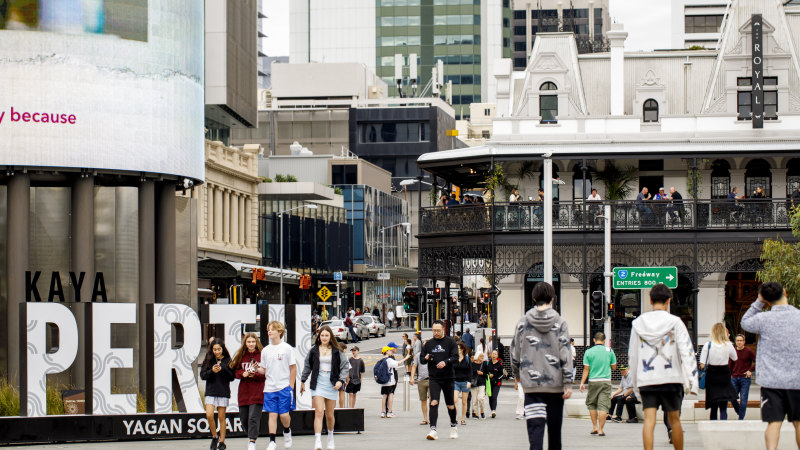
It’s a big dream, but one that Perth Design Week co-founder Sandy Anghie thinks is a possibility if the right moves are made – starting with more amenities and accommodation in the CBD.
While a 24-hour city might spark thoughts of New York, Anghie likens them closer to Vienna in Austria.
“A city that I think of as a 24-hour city with lots of activity is Vienna and it constantly comes up as one of the most liveable cities in the world,” she said.
“Their shops aren’t open on a Sunday, but if you walk through the city, it’s packed with people. They’re just milling about window shopping, [going to] cafes, restaurants and there’s a huge amount of museums. So for a city to be full of life, it doesn’t have to mean that everything’s open all the time, it means that it’s just a great place to hang out regardless.”
According to Anghie, there are many things that could be done to transform Perth into a “living, breathing place”.
“There’s a lot of great projects underway and a lot of projects that have happened like the new [Edith Cowan University] student accommodation. So more people living in the city is really number one,” she said.
“But it’s sort of a catch-22, isn’t it? To get people to want to live in the city, you need the facilities in the city to make them want to live here.
“We need the amenities in the city and the designed infrastructure to attract people to want to live here and then more accommodation to live in.”
More students could soon be living in the city as a result of ECU’s new inner city campus, with 6500 student accommodation beds in the pipeline to be built across the CBD.
Another project announced last year looking to boost the CBD life is Fiveight’s $400 million plan to transform Perth’s derelict Carillon City.
Anghie believes filling a number of vacant buildings and spaces could improve the desire to spend time in the city.
“At the moment there’s just so much empty space to activate. Particularly on the Hay Street Mall, on the actual ground floor plane, the mall level, there’s a high level of vacancy which is not enticing to visitors, to tourists or to residents,” she said.
“So how do we turn that around? I just think there’s so many different pieces of the puzzle and it’s everything from large-scale projects … to little things like activating laneways, street design, making it more approachable and engaging.”
Hassle managing director and design week panelist Natalie Busch said the move is not a quick switch.
“I think it’s not just a switch that we go, we’re nine-to-five, and now we’re 24 hours. I think it’s a careful stretching of what we’ve already got,” she said.
“For instance it might be just stretching [out] the morning a little bit. We know that there’s a lot of people that get up really early to take advantage of that amazing weather. So maybe it’s just about stretching the economic activities that can happen more in the morning.
“Or it might be stretching things a little bit further beyond 5 o’clock in the afternoon, so there are more opportunities for people to do things after hours.”
But ultimately, Busch agrees that the addition of amenities people use in their day-to-day lives will help bridge the gap between the Perth that exists now and the Perth of the future.
“The City needs to consider what amenities it can provide for people if they were to live here,” she said.
“Changes are starting to happen, like new schools, recreation facilities … supermarket shopping and things like that. So we’re starting to see those uses come into the city, but it’s those everyday uses and amenities that I think we have in the suburbs, but not necessarily right in the city.”
Apartment styles to cater to a broader range of lifestyles could also help increase residential numbers in the CBD.
“I think the type of housing that has previously been provided for in the city is pretty one-dimensional. It’s kind of the one [style] apartment that perhaps isn’t as attractive for families or perhaps affordable for students or … people with different budgets,” Busch said.
Busch said a “really clear and aligned plan” between all levels of government was needed so people know where to invest.
“That has come up a lot in discussion with private developers and leasing agents. People want security to know where they should really invest in the city, that’s in line with a longer-term vision and plan,” she said.
The Perth Design Week panel on turning Perth into a 24-hour city will be held on Friday, 6pm at the Liberty Theatre.
From our partners
Read the full article here