



Published on •Updated
The partial results show a neck-to-neck race with the ‘Yes’ at 51.2% and the ‘No’ at 48.8%, with over 87,000 votes scrutinised.
In line with the opinion polls, the ‘No’ is heading toward 60% in more rural regions, whereas initial results from the capital Reykjavík point to around 58% for the ‘Yes’.
The first nearly 10,000 votes scrutinised for the Southern Constituency give ‘No’ a significant advantage with 59.8% of the votes, against 40.2% for ‘Yes’. The Southwest Constituency was equally split with 9,900 votes for ‘Yes’, and 9,900 for ‘No’.
Similarly, with a little less than 6,000 votes counted, the initial results from the Northwest Constituency see the Eurosceptic camp at 60.8%, and the ‘Yes’ camp at 39.2%, whilst the Northeast Constituency with nearly 10,000 votes has the ‘No’ at 56% and the ‘Yes’ at 44%.
By contrast, the initial results for Reykjavík’s south constituency with over 20,000 votes scrutinised have the ‘Yes’ at 55.9% and ‘No’ at 44.1%. The capital’s north constituency has nearly 21,000 votes scrutinised, with the ‘Yes’ at 59.4% and the ‘No’ at 40.6%.
The partial results are consistent with expectations, as rural areas are expected to be more Eurosceptic due to concerns related to fisheries and farming, whilst the capital Reykjavík is expected to be more pro-EU.
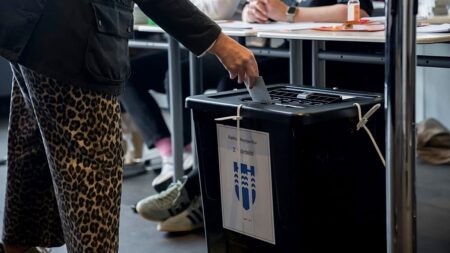
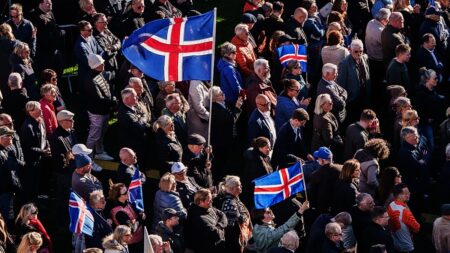
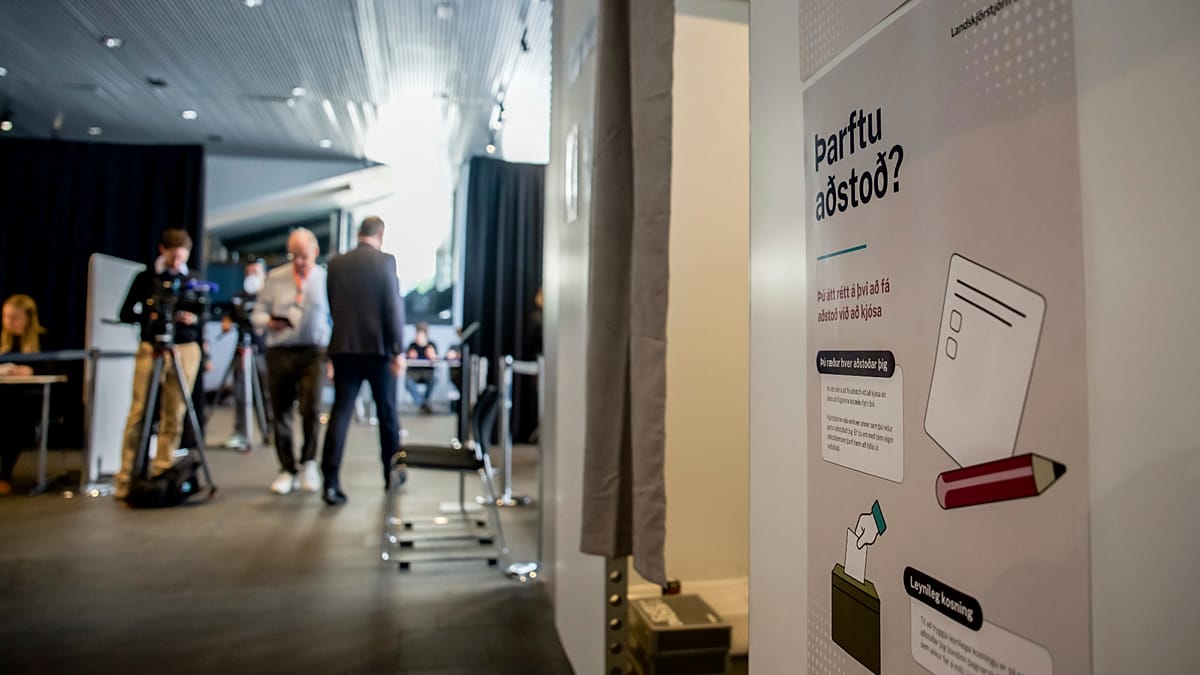
Polling stations closed at 10:00 pm local time on Saturday for Iceland’s high-stakes EU referendum.
On Saturday, Icelanders were called to vote on whether to resume accession negotiations with the European Union or abandon any prospect of joining the bloc for the foreseeable future. Around 272,000 individuals were eligible to vote.
According to preliminary figures, voter turnout was higher than, or at least comparable to, the 2024 parliamentary elections, when it reached 80%, according to local media.
Until a few days before the vote, polls suggested a neck-and-neck race, with the pro-European camp’s advantage steadily eroding.
“Should Iceland resume accession negotiations with the European Union?” was the question on the ballot.
Iceland applied for EU membership following the 2009 financial crisis, but froze the talks after the election of a Eurosceptic government in 2013.
Further results are expected through the night as counting continues.
This is a developing story.
Read the full article here