


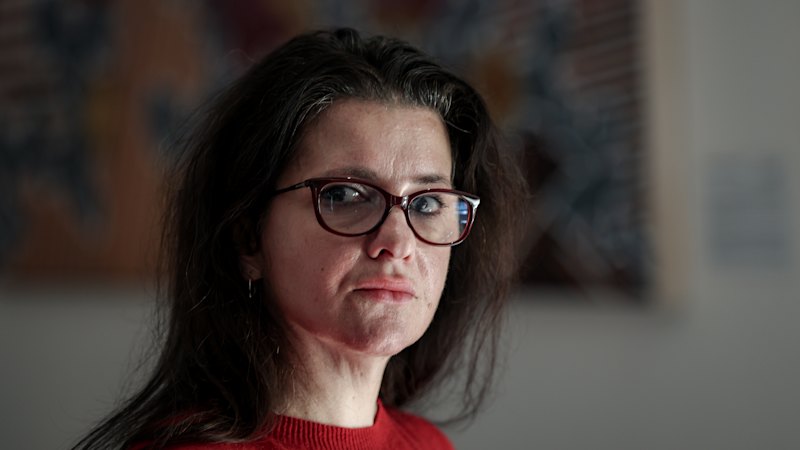
Elvira Tsecoutanis was in the grip of a heroin addiction when she found out she was pregnant with her first child.
“I thought, ‘People like me don’t have babies,’” Tsecoutanis says. “I shouldn’t be a mum.”
Tsecoutanis is not a religious person, but she likens a heroin addiction to being possessed by the devil: an unstoppable, violent force that drags a person into hell against their will. She remembers crying on the way to her dealer’s house, desperate to stop using.
“No one will ever carry as much shame and judgment about ourselves as mothers in addiction,” Tsecoutanis says.
“No one will ever judge or shame us as much as we do ourselves. We don’t want to be doing it.”
The 50-year-old mother of two, who has bipolar II and attention deficit hyperactivity disorder (ADHD), has been clean for more than eight years.
Now she works with expectant mums as a peer support leader at Western Health’s Sapphire Clinic.
The pioneering antenatal and multidisciplinary health clinic at the Joan Kirner Women and Children’s Hospital in St Albans has been running for more than a year.
So far, it has helped more than 130 women during their pregnancies with trauma-informed, non-judgmental healthcare spanning from addiction medicine to obstetrics, midwifery, perinatal psychological support, maternal-fetal monitoring, infectious diseases, dietetics and social work.
Many of the women who come into the clinic are just like Tsecoutanis once was: in the throes of addiction, homeless, sleeping in their cars, or battling complex mental health conditions. Others are desperate to get into rehab so they can kick the drugs or alcohol to get sober for their babies.
“I see the same shame and wariness in them that I felt inside myself,” Tsecoutanis says. “Drugs are illegal, right? They are so judged on a moral level, so there’s this barrier immediately.”
Tsecoutanis tells the women her own story about drug and alcohol use, fleeing violent relationships, of raising her two young children, of falling in and out of addiction for years until she finally stopped.
“So many of them have so much trauma,” she says. “I can see them relax a little bit and then slowly they start to open up because they know I understand.”
It is a Friday morning inside the brightly lit hospital clinic. The phone at the front desk barely stops ringing, and associate midwife unit manager Kylie Charles is working with military precision.
She is making welfare calls to women at home and ensuring all their appointments with specialists are booked for the same day, with minimum waiting time.
“It can be really hard for some of these women to get here, so we want to make it as easy as possible for them,” she says.
Nearby, a young pregnant woman is FaceTiming her father in the waiting area, while another woman sits quietly in a plastic chair, grey hooded jumper pulled over head, eyes downcast, hands resting on her swollen belly.
They are waiting to see GP and addiction medicine specialist Dr Thileepan Naren. Years of working in regional Victoria with Indigenous communities have instilled in him a calling to reduce the prejudice and shame of getting healthcare while grappling with addiction.

“A lot of the women I am seeing are used to being judged, or stigmatised, or treated poorly,” he says.
“Often they don’t feel like they deserve care at all, so it’s about trying to fight against that misconception and say, ‘No, we’re here to support you and your baby.’”
Sometimes, the first step is finding a safe place for them to live.
“There have been cases where we’ve had patients who have come in and been in quite dire straits, whether it be with significant domestic violence or homelessness,” he says.
Others are withdrawing from heroin, methamphetamine, alcohol or nitrous oxide and need help getting into detox or rehabilitation programs.
Increasingly, clinicians are supporting a complex cohort of pregnant patients addicted to GHB, also known as liquid ecstasy.
Weaning off the drug is “like alcohol withdrawal on steroids”, Naren says.
It can trigger a fast-moving storm in the brain and body, which can lead to spikes in heart rate and blood pressure.
In the most serious cases, they end up in intensive care.
Obstetrician Andrea Walker instigated setting up the clinic after noticing there were gaps in the antenatal care being provided to women in the western suburbs.

There have been instances in which a woman has had no healthcare at all during her pregnancy. The first interaction occurs when she arrives at the hospital emergency department in labour.
Walker wanted to create a one-stop shop where babies can be monitored with measures such as rapid access to diagnostic scans and mothers can receive support for everything from opioid replacement therapy to housing, mental health and nutrition.
“Most women with substance use have got so much trauma, so there’s usually perinatal mental health needs too,” she says. “A lot of the women have also got poor nutrition, or they have never been taught to cook, or they’re living somewhere without a kitchen.”
Tsecoutanis always thought as soon as she had her baby she would stop using, but there were many “rock bottoms” along the way.
“I loved my kids so much, but I was in the thick of this addiction that would not let me go,” she says.
The turning point came one day when she walked into a Narcotics Anonymous meeting with her two young children in tow.
“It was the first time I’d ever been able to be honest in my entire life, and I was nearly 42,” she says.
Tsecoutanis hopes to expand the clinic to a post-discharge peer support group for new mothers.
She loves getting text messages from the new mothers, who send her photos of their newborns, and want her to come down to the maternity ward to meet their babies.
Recently, the clinic helped one woman who was homeless, terrified and unable to make eye contact.
“We helped her get into a detox facility, and then longer-term rehab and then into stable housing,” Tsecoutanis says.
“To watch that happen, it’s like, oh my gosh. She and her baby stand a chance now. They might just be OK.”
If you or anyone you know needs support call Lifeline 131 114, Beyond Blue 1300 224 636, or PANDA between 9am and 7.30pm on 1300 726306.
Start the day with a summary of the day’s most important and interesting stories, analysis and insights. Sign up for our Morning Edition newsletter.
Read the full article here