




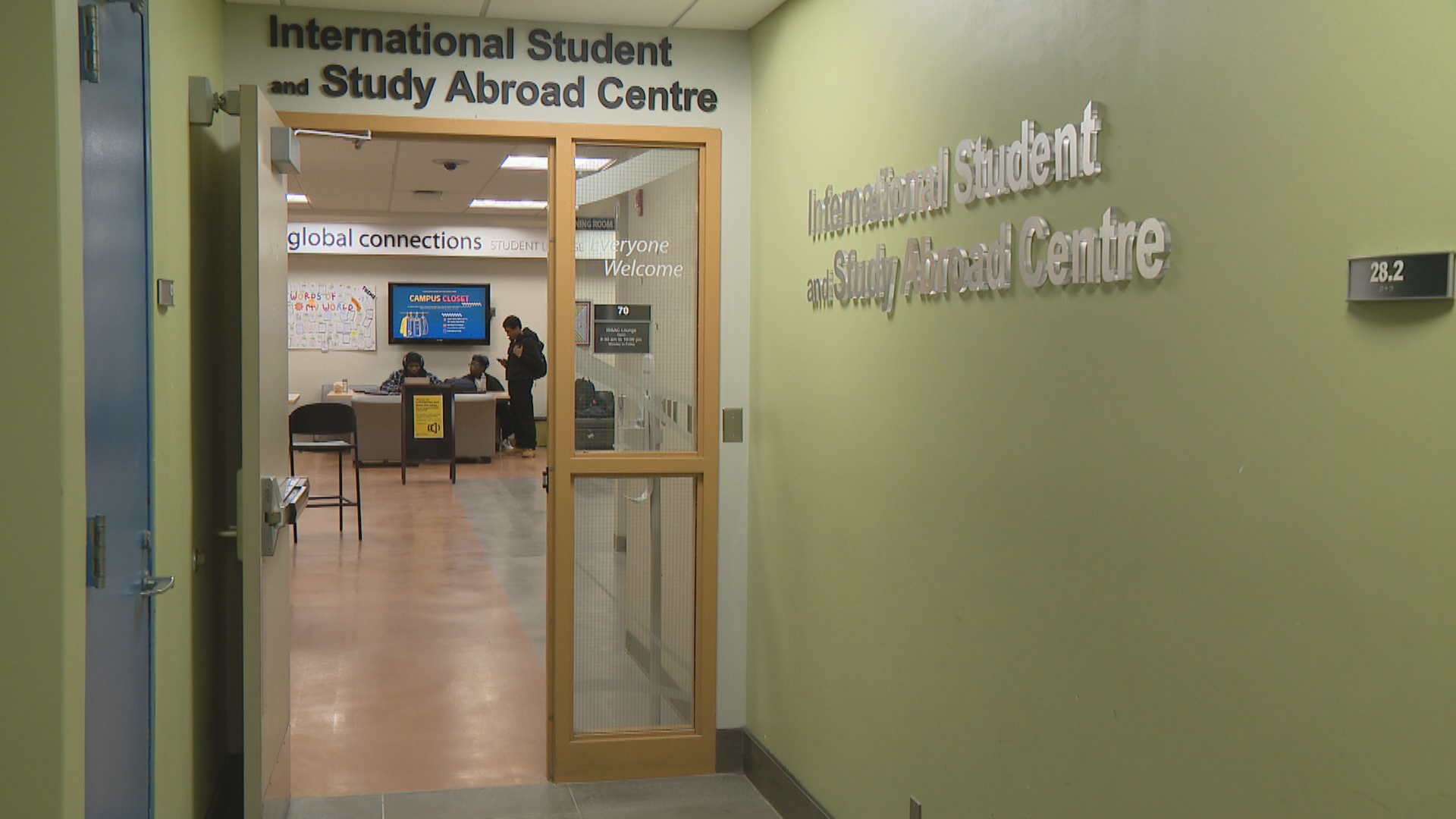
International students at the University of Saskatchewan are voicing their concerns about the cost of tuition increasing nearly every semester. Some say their tuition has nearly doubled from $21,000 since they started at the school four years ago.
Some students, like Isheanesu Nhiwatiwa, are worried they won’t be able to complete their schooling if tuition continues to rise.
“I may not be able to finish my degree here,” Nhiwatiwa said. “I’m currently in my third year but from first to second year it increased about $10,000, from second to this year it increased another $5,000, and I’m not sure what it’s looking like for next year.”
Nganminen Kwashi says he has seen international students leave the university amid the rising costs.
“I remember one of my first friends who I was in the university with, he’s not been in school for the whole year. I think that’s a huge problem.”
Allison Ochigbo says she has also seen international students drop out or move in order to “get a program they can at least finish with and it’s a very, very sad thing.”
The University of Saskatchewan Students’ Union says the increase in tuition is causing many students to face challenges when juggling the rising costs, such as housing instability and food insecurity, and that it’s causing families back home, who may have made sacrifices to send their child to school in Canada, to go into debt.
“A lot of people, when your parents are sending you abroad, there is kind of a calculation of, you are going to spend four years and this is the amount you are going to spend, but when you are spending the money you expected to spend for four years in one and a half years, what’s going to happen to the remaining three and a half years?” said Chidera Nwobodo, social media manager of the Pan-African Students Association at the university.

Get breaking National news
For news impacting Canada and around the world, sign up for breaking news alerts delivered directly to you when they happen.
“You have people’s parents that are about to retire, and they have to look for all this money, and you are already in third year, you have to finish.”
Nathaniel Aubynn says the situation puts stress on the whole family.
Ochigbo says it is hard for students to focus on school when worrying about their families’ financial situations.
“It’s been very difficult,” she said. “I’ve been able to seek income for myself but last year I had a mental breakdown.
“It’s sort of depressing. You feel that guilt, you are their child, they chose to send you here…. You see the stress it takes…. They can’t take you back, it’s a journey they already started and if you go back, it’s all for naught.”
Working multiple jobs to keep up with tuition can add to the burnout, with academics often being pushed aside.
“If they are making sacrifices of their own to meet those tuition costs, then more work, more added stress, it just sort of takes time away from studies and their ability to participate in academic life,” said Emily Hubick, vice-president of student affairs at the USSU.
One student, Pamino Akinjide, says some Canadian post-secondary schools, like the University of Alberta, commit to international students that the tuition rate on their admission letter is the rate they will pay for their four years, allowing students to prepare accordingly.
The U of A confirmed this in a statement to Global News, saying it provides international students with a “guaranteed tuition amount for the duration of their program” at the time of admission and that “full, up-front cost for their programs allows students to apply for student visas and funding opportunities and assists them in making an informed decision when selecting their post-secondary school.”
Akinjide urges USask to institute a similar policy.
Marjorie Delbaere, the University of Saskatchewan’s interim vice-provost, students and learning, told Global News in a statement that the university understands international students’ concerns about rising tuition costs and “how this may affect their ability to continue their studies.”
“The University of Saskatchewan (USask) is committed to providing predictability and support,” Delbaere said. “Our renewed multi-year funding agreement with the Government of Saskatchewan sets tuition limits for the next four years, ensuring stability for students while supporting sustainable teaching, learning, and research. In addition, USask invests $58 million annually in scholarships, bursaries, waivers, and crisis aid, with targeted needs-based funding available for international students most impacted by changes.”
Students still say they don’t see much financial support from the university, leading them to feel unheard.
“We’re not asking for some sort of special treatment, we’re just asking for transparency, and we are just advocating that you also consider our needs,” Aubynn said.
Kwashi says there is a lack of information on tuition increases for both domestic and international students and “that could result to a bigger problem in the future.”
Saskatchewan Minister of Education Ken Cheveldayoff told Global News in a statement that this year, “international graduate student tuition fees in Saskatchewan were among the lowest in Canada.”
Read the full article here