




On Iraqi television, ordinary citizens speak their mind with their customary no nonsense directness. An elderly man in Basra demands to know why global powers are once again bringing destruction to streets he has walked for decades. An old woman in the marshlands pleads for water: “Why are they throwing missiles at each other again when we don’t even have water?”
Across the Middle East and the Gulf, the scenes have been surreal, almost apocalyptic. Silver towers, once held up as symbols of modernity and prosperity, covered in falling debris. Schools, homes, hospitals, shopping malls and hotels are damaged. Airports stalled, passengers stranded in terminals once celebrated for luxury and duty-free shopping. A region that branded itself as a beacon of ambition and progress now stands cloaked in smoke and fear. And through it all, the same question persists. What are we enduring this for?
Ordinary people just want to live. Dignity, stability and the chance to go about daily life have become the first casualties of decisions made in faraway capitals. This war is not driven by those who suffer its consequences—and its continuation, at such immense human cost, is devoid of moral legitimacy.
For decades, wars have come to our region packaged as liberation, stabilization or preemptive defense. Time and again, armed groups are backed, militias empowered and opposition groups encouraged, only to be abandoned when priorities change. Old fault lines, whether ethnic, sectarian and tribal, are exploited, turning neighbors against one another and towns into battlegrounds. We’ve seen this before. The same endless loop repeating itself.
Here in Iraq, it is a story we know too well. Yet, in this latest cycle of chaos, Iraq has the dubious honor of standing out as the only country simultaneously under external attack while also being targeted from within its own borders. The Kurdistan region alone has been struck by more than 450 drones and missiles since the start of the war, including attacks carried out by Iraqi militia groups. At least 14 people have been killed and 85 wounded.
Over the past decades, foreign powers have built military bases in Gulf cities under the banner of security guarantees. These same installations, meant to protect, have become targets for attacks, feeding cycles of violence. Cities once seen as hubs of commerce now find themselves on the front line as defense systems have invited retaliation, raising questions about whether the leadership or citizens ever fully grasped the long-term implications of these arrangements.
The damage does not stop at shattered buildings. Children learn the sound of interception systems before they learn multiplication tables. Tourism stalls, investors pull out and young people begin looking for futures elsewhere. Social bonds disintegrate as sectarian sentiments resurface, along with cynicism toward leadership, both domestic and foreign.
What, precisely, is the objective of this wholesale destruction? Regime change? Deterrence? Redrawing maps? Containing rivals through proxies and pressure? For those living beneath the flight paths and missile trajectories, the strategy is unclear. Two possibilities present themselves. Either there is a grand design, meticulously calculated, in which ordinary people are treated as collateral damage. Or there is no real plan at all, only escalation fuelling escalation, reaction triggering reaction, until events take on a momentum of their own.
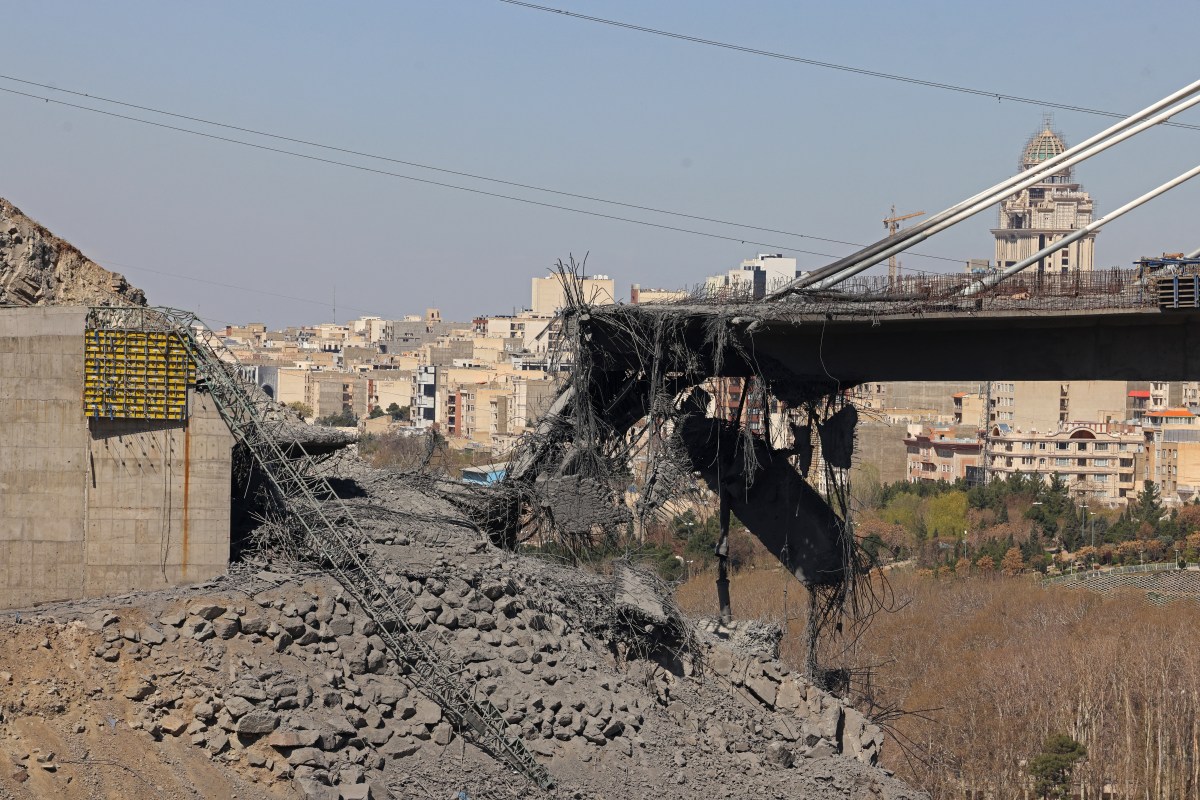
Even declarations of peace from global leaders now carry an air of ambiguity, if not outright malevolence. When campaigning for re-election, U.S. President Donald Trump spoke of wanting “peace,” but one is left to wonder whether the word was truly meant as it was heard. Did he, perhaps, mean “piece”? A piece of land, of a country, of its resources? In his address on April 1, the American president vowed to bomb Iran “back to the Stone Ages” after stepping up attacks, in coordination with Israel, targeting a century-old medical research centre in Tehran, a bridge and steel plants. Whatever one’s political beliefs or ideological bent, to threaten to relegate one of the world’s oldest continuous civilizations, dating back over 5,000 years, “back to the Stone Ages” is not only historically illiterate, but an expression of crude barbarism.
Yet agency does not lie solely elsewhere. Regional leaders have made their own calculations based on short-term gains. Glittering economic modernization has not been matched by political insulation from global rivalries. Across our region, there is an urgent need for honest soul-searching over what sovereignty truly means, whether diplomatic diversification can provide real protection, and whether integration into global power struggles has made disentanglement impossible.
In the end, my thoughts return to the same two voices: the elderly man who has watched decades of upheaval sweep through his streets and the woman in the marshlands who asks why missiles fly when water does not flow. Their plea is not ideological; it is elemental. We just want to live.
If there is a plan behind this destruction, it must be stated clearly. If sacrifice is required, it must be justified plainly. If this devastation is meant to secure some higher purpose, that claim must be demonstrated to those who are paying the heavy price. Recycled slogans ring hollow in societies that have endured war after war. Dialogue is needed, not war.
Our people are not proxies to be mobilized and discarded. Our future is not yours to design. Our lives are not collateral for your strategies.
Shanaz Ibrahim Ahmed is first lady of Iraq.
The views expressed in this article are the writer’s own.
Read the full article here