





Welcome to Brisbane Times’ Queensland public sector column, Public Circus. This week: an early temperature check on two major appointments (one looming and one recently announced), and updates from the world of integrity watchdogs.
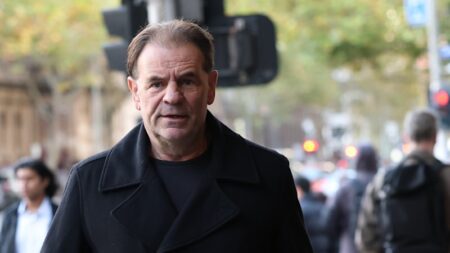
Now the cat’s out of the bag (or John Sosso’s out of the State Development chief role) chatter has turned to his replacement under minister Jarrod Bleijie.
“Lots of people could do it,” Bleijie quipped last week when asked about the sprawling and significant gig, after suggesting he would “announce a permanent replacement in due course”. But who?
The deputy premier shrugged off Circus’ questions last week on who he might have in mind beyond the acting elevation of Shaun Ferris from the deputy director-general ranks.
But, thankfully, our tent is bigger than just Bleijie. And while we’re no betting shop – the shortest odds seem to be on a figure only recently making headlines with Bleijie for other reasons.
That figure would be none other than Public Sector Commissioner David Mackie, who recently had his wedding officiated by Bleijie in an eyebrow-raising turn of events.
That’s not the only history the pair have, with Mackie having served as a deputy in the Justice Department under Sosso during Bleijie’s Newman-era attorney-general stint.
(Mackie also had a brief stint leading Premier and Cabinet during Bleijie and Premier David Crisafulli’s initial two-man ministry – and recently offloaded some potentially tricky shares.)
Judging by the most recent annual reports from 2024-25, the difference in the $700,000-plus total pay packages atop either the commission or State Development seem pocket change.
Would that be enough to keep Mackie where he is? Or would the daily rough and tumble of the much more economic engine-room-oriented department be a pull factor?
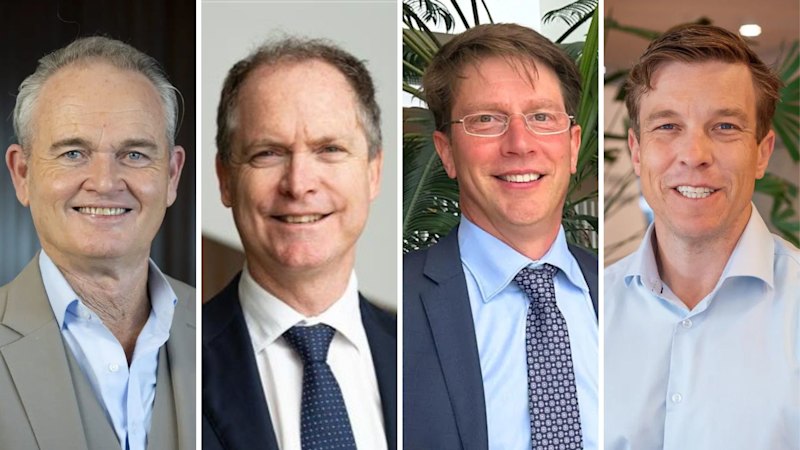
Only Mackie and his inner circle, and that of Bleijie’s – obviously – will know for sure. But we wouldn’t be doing our jobs if we didn’t lay out some of the names we’ve heard floated so far.
Others include: Natural Resources and Mines boss Graham Fraine, currently Premier and Cabinet-parked Customer Services czar Chris Lamont, and even – from some more partisan parts of the tent – former Brisbane councillor-turned-federal Liberal MP-turned-state property developer Julian Simmonds.
Simmonds would be a bold choice (perhaps too much so, Circus imagines) given Premier David Crisafulli’s past public comments around such on-paper partisan picks.
Lamont was described by one State Development source granted anonymity to discuss the internal matter as “whip smart”, with experience in the NSW public service (highly regarded by the Crisafulli LNP), “commercial swagger” and, importantly, no baggage.
Fraine is one of the 2024 election survivors who’s had no shortage of high-profile work since then, and is described by public servants and former government figures who have worked with him as a Mr Fixit, someone who manages up well and its viewed strongly by both sides of politics.
Another question looming over the role is how it will be filled. Bleijie’s office is yet to respond to Circus’ question about whether Sosso’s successor will be handpicked or externally recruited.
The latter, while requiring some cash to make happen, was suggested in the landmark 1989 Fitzgerald Inquiry report as ideal for impartiality – if not always adhered too since.
If Bleijie’s record is anything to go by, he seems to prefer controlling such things himself. Time will tell.
A coronation for the government’s third Youth Justice chief this term
One top bureaucrat now seemingly out of the game of musical chairs atop the public service is newly minted (permanent) Youth Justice chief Michael Drane.
The former youth worker and admitted lawyer, who Circus hears was also involved with his union back in the day, was confirmed in the role via direct appointment last week.
This followed an acting stint after Youth Justice Minister Laura Gerber lost her second director-general in little over a year amid claims of ministerial office “toxicity”.
In Drane’s case at least, Circus hears his direct appointment was an acknowledgement of his ability to handle himself in a key role which had seen off two others before him.
His credentials, too, are said to have helped him sail through the assessment and suitability checks that do still take place for those handpicked for the roles.
(The risk of forking out for external merit-based recruitment to only have such a pick also end up in another office may have been considered by decision-makers, too.)
One of Drane’s first looming tasks in the role? Fronting estimates next Friday, when Youth Justice will have its time in the sun of annual parliamentary scrutiny.
We look forward to hearing more about what’s going on with the government’s flagship early-intervention schemes.
Not even the F-word is enough for Ombudsman’s extra funding request
As this column has repeatedly pointed out, it’s not been a good year for agencies’ ideal budget submission approvals: unless they involve a certain “frontline” position.
But as it turns out, even the F-word is not enough to get things over the line for some of the state’s stretched independent watchdogs.
Two recent 2026-27 funding proposals from now outgoing Ombudsman Anthony Reilly and “QChatter” Information Commissioner Joanne Kummrow have been knocked back by Attorney-General Deb Frecklington.
Under laws governing the agencies, both are required to go cap-in-hand to parliament’s (government-controlled) Justice, Integrity and Community Safety Committee.
The committee then reviews the proposals, prepares a report in consultation with Treasury boffins, and presents this to Frecklington with at least part of this correspondence being tabled publicly.
This is how we know Reilly, whose job was listed under still unclear circumstances in May, put forward a pitch in March for $1.174 million over four years, $305,000 ongoing from 2029-30 and two extra full-time equivalent staff.
Committee chair Marty Hunt told Frecklington that Reilly had advised him the funding was needed “for the intake team to meet an increasing demand for its frontline services”. (Partially) blame AI.
Alas, Hunt’s committee ultimately suggested Frecklington not approve the extra ask on the office’s $20 million budget – a recommendation she duly accepted. And Reilly even used the magic word!
We note with interest that Reilly’s July 9 final day of term has now come and gone, with no public news on his replacement via an (extended) recruitment process. A spokesperson told us Reilly will act in the role until his replacement is appointed. Hmm.
Along with Reilly, Kummrow also had her request knocked back for an extra $2.6 million over four years, $961,000 ongoing and six FTE to address “a significant increase in demand for … services”.
Unlucky, given service delivery statements show Kummrow’s crew ended 2025-26 with an estimated $3.9 million operating deficit due to critical parts of her office’s work being funded by cash reserves.
The percentage of Right to Information external reviews processed also fell well short of a targeted 100 per cent, at only 72 per cent – said to have been caused by an increase in applications.
Government corps duck harsher corruption watchdog light – for now
For a corruption watchdog meant to deliver scrutiny of shadow happenings in the state, the Crime and Corruption Commission has faced quite a bit of recent scrutiny itself.
The latest is perhaps less dramatic than a parliamentary probe or royal commission-style inquiry into its actions, however – but still worth a mention for its findings and calls.
We’re talking here about the most recent five-year review of the watchdog by boss Bruce Barbour’s parliamentary oversight committee, tabled late last month and without much attention to date.
Major takeaways from its 117 pages include recommendations to review (with a view to bolster) security vetting of CCC officers, and further efforts to fix problems in the police disciplinary scheme.
Other points of interest not making it to formal recommendations include a comment from the opposition-chaired but government-controlled committee that the reinstated public reporting powers of the watchdog, while still relatively new, “appear to be working”.
The committee also rejected a push from the police union to carve off the “major crime” function of the watchdog and hand it back to police.
On the long-running sore point of the Richards Inquiry recommended Police Integrity unit, the committee (chaired by Labor’s Mark Furner with the LNP’s Amanda Stoker holding deputy duties) insightfully noted there was consensus the police discipline system needed reform and suggested the government make its intentions and plans clear.
A statement of reservation from opposition MPs called for funding to be set aside to have the body up and running before October 2028. Never mind the unit was recommended to be operating by mid-2023.
Also on the opposition’s informal wishlist: an expansion of CCC powers around government-owned corporations, citing support for such a move by stakeholders including Auditor-General Rachel Vagg.
“In my opinion, this represents a gap in the existing integrity framework that should be addressed,” Vagg wrote in her submission, noting she herself currently had to rely on the corporation chief or Under Treasurer Paul Williams to pass on any of her concerns.
In a lengthy comment from the (did we mention government-controlled) committee in its report, it was noted “commercial and competitive sensitivities” of the corporations had to be taken into account with any integrity safeguards, and none of the bodies been consulted.


From our partners
Read the full article here