




Kumanjayi Little Baby didn’t speak much. She used her hands to gesture, and would occasionally make sounds to attract her family’s attention.
But when it came to one tiny tabby kitten, she was able to utter one word – “Yellow”.
She named the kitten that wandered through the home in Old Timers Camp in Alice Springs after the colour, and doted on her. It was her little friend, her relative Rose Spencer remembers.
Kumanjayi Little Baby was thoroughly loved by her family. Her brother, Ramsiah, was older than her and unlike most older brothers, adored her. Every time she would hurt herself, he was there to give his little sister a hug and plead with her to cheer up.
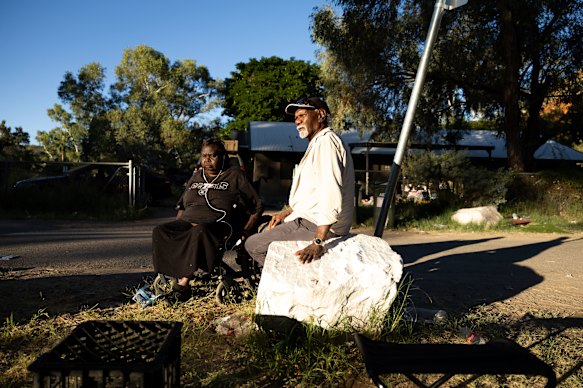
Peggy Rockman remembers her granddaughter searching for her hand to hold, and how they would walk together between houses in their camp. She loved babysitting her, she said, because she was a happy little girl.
Her grandfather Robin Granites said she would gesture at him to let him know she was hungry by pointing to her little belly, and how she would wear dresses that would make her look like a queen.
She loved her iPad and YouTube, and would sit glued to it for hours. She loved her mum and her dad immensely, and when she was able to verbalise the word “mummy”, her relatives remember lighting up with joy.
Relatives said she was such a happy child her skin seemed to “glow”.
The night in question
On the evening of Anzac Day, a man is alleged to have taken her, sparking a national outcry, broke the hearts of millions of Australians, and a spurred a riot in Alice Springs.
Kumanjayi Little Baby was at her family’s home in Old Timers Creek about 11pm on the Saturday when 47-year-old Jefferson Lewis allegedly approached her.
Lewis mainly had ties to the community of Yuendumu, hundreds of kilometres to the north-west of Alice Springs.
He had gone to stay at the house on Marshall Court in Old Timers Camp, where a graffiti drawing of a young girl had been scribbled on the side wall.
He drank with the girl’s family, and sat with them. They trusted him and treated him like family, they said.
The family said Lewis had also been acting strange, but did not think much of it when they saw him holding hands with Kumanjayi Little Baby on the evening of Anzac Day.
Police did not say whether he was leading her anywhere, and she was wearing a dark blue, short-sleeved T-shirt with a white ring stripe around the neck and cuffs when she was put to bed in the living room of the house.
Some time after that, the family allege, Lewis went into that loungeroom and got Kumanjayi Little Baby to come with him.
He led her out of the back door, family say, through a gap in the fence in the yard of the property and out into the vast, overwhelming quiet of the Ross River bed.
It was the last time she was seen alive.
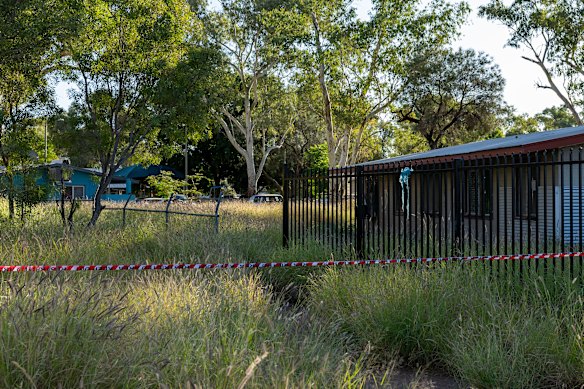
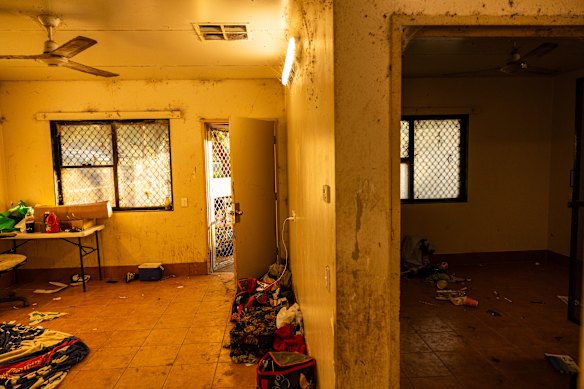
What followed was a series of cascading events culminating in tear gas and pepper spray being fired into a riot outside Alice Springs Hospital, where Lewis was being treated under police guard, on Thursday night.
Kumanjayi Little Baby’s family phoned police around 1.30am on Sunday when they realised their baby girl was gone.
They thought she could have wandered off, but as they searched for any sign of her, they soon realised Lewis was also missing.
Officials quickly formed the belief Lewis had abducted the little girl, and an urgency took hold throughout Sunday and Monday.
Searchers worked for days looking through buffel grass that towered over some of the tallest policemen, checked horse stables of Alice Springs locals, and poked through horse feed just in case.
They climbed fences and battled camp dogs to thoroughly search properties in the hopes of finding any sign of the five-year-old.
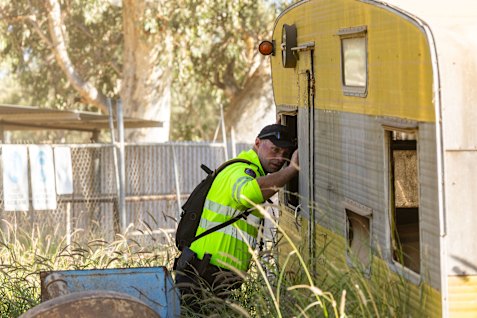
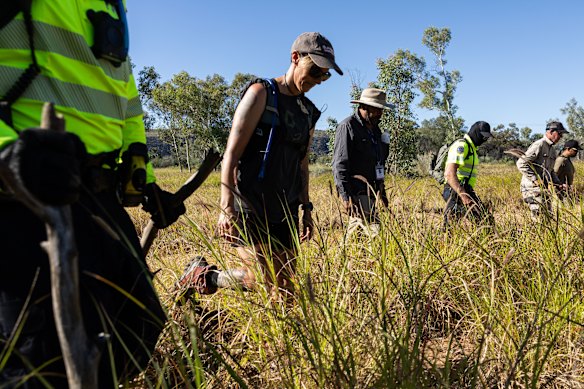
At one point, authorities were successful – locating a doona and clothing, including Lewis’ distinctive T-shirt, in the river bed behind the property, which were sent off for forensic testing.
Volunteers and officials would occasionally gather at a checkpoint on the outskirts of town where local businesses had set up to keep them fed and hydrated in the hot and harsh conditions.
A portaloo was even set up, and sausage rolls were donated by the local bakery.
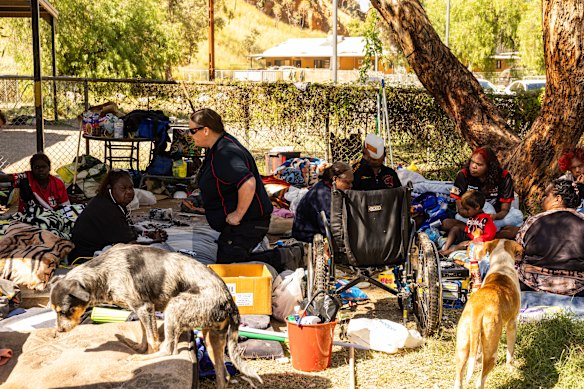
All the while, Kumanjayi Little Baby’s family waited at camp for any news.
A picture of the girl’s family is jagged. Her father Raphael was due to appear in court on the fifth day of the search, but had to remain behind bars while overstretched Alice Springs authorities worked through the night to find his daughter.
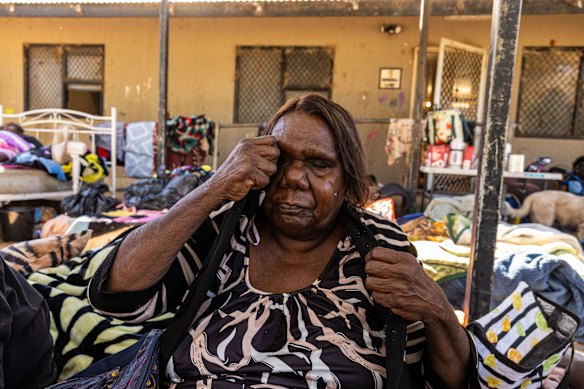
Her mother, Jacinta, was taken by her family to the local watchhouse for her own safety.
“It’s not good for her to be here,” Robin Granites said.
Family travelled in from Yuendumu and other communities to lend their support and help where they could.
Then, at midday on Thursday, the searchers were all called in.
Dreaded news turns grief to rage
The lunchtime recall raised few concerns. But then the whispers started.
Police officers, on a land search, just outside where volunteers had looked the day before. They had found something.
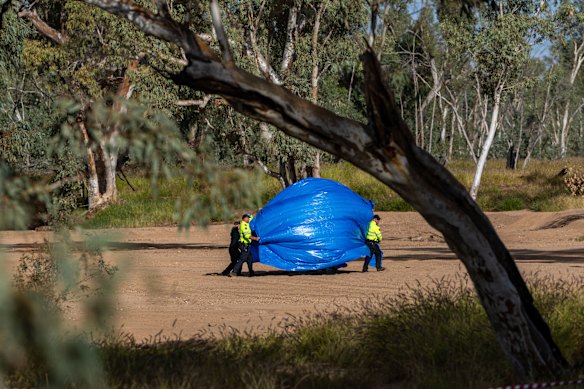
A press conference was called, where Northern Territory Police confirmed the worst. That afternoon, the girl’s tiny body had been found in scrub five kilometres south of the camp where she’d gone missing.
The little girl who had a cat named Yellow and skin that glowed was dead. There was no sign of Lewis, except for a DNA profile on the clothes that had been sent for testing.
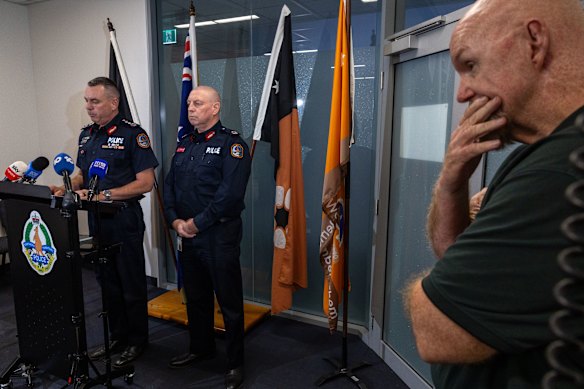
NT Police Assistant Commissioner Liam Malley seemed to fight back tears as he made a promise to Alice Springs locals.
“I say to Jefferson Lewis: we are coming for you.”
Wails rang out from the camp – goosebump-inducing and filled with the worst pain a person could feel. It was an outpouring of grief.
Families came and laid flowers at the entrance of Old Timers Camp and to pay their respects. They went around and shook the hands of every family member who was sat at the Marshall Street address.
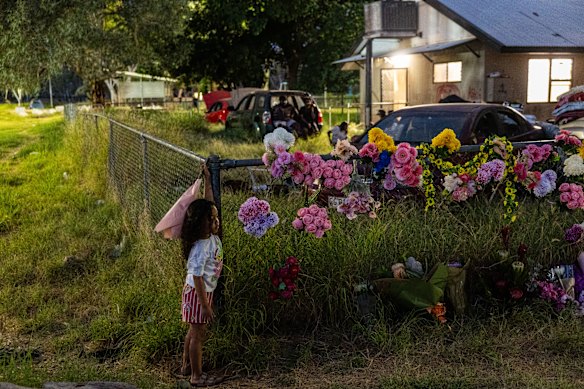
A man sat crumpled in the corner crying, as an elderly Aboriginal liaison officer helped the family choose who could come and go.
About 10pm that night, hours after Kumanjayi Little Baby’s body had been found, a man’s shout rang out on the empty Alice Springs main street.
“They got him! He’s at the hospital!” he yelled, taking off down the corner.
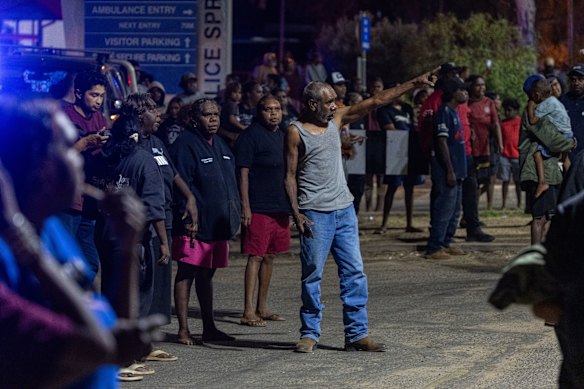
Heads emerged from hotel rooms one by one. There was a livestream, someone said, at the Alice Springs Hospital. People were gathering.
Police then put out a notice: they had arrested Lewis.
Crowds immediately descended on the doors of the unfenced Alice Springs emergency department, demanding that police hand over the criminal for them to deal with.
The scene was lit only by police lights, the occasional flare, and hundreds of mobile phone cameras up and filming what was unfolding.
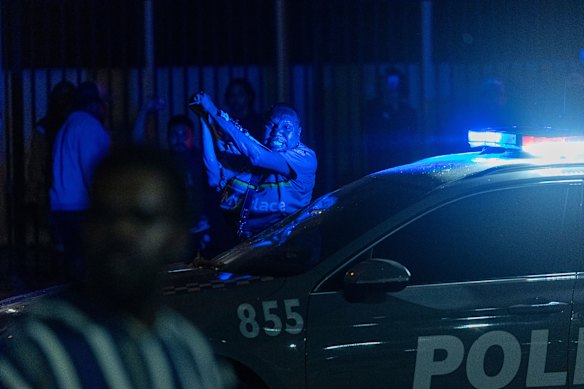
Word spread through the crowd that Lewis had been picked up at a nearby community, but not before its members could get their hands on him.
He had beaten black and blue, and was unconscious when police arrived to take him into custody.
The temperature went from a simmer to a boil over in a matter of minutes, the crowd swelling and upset at the idea that police were protecting Lewis.
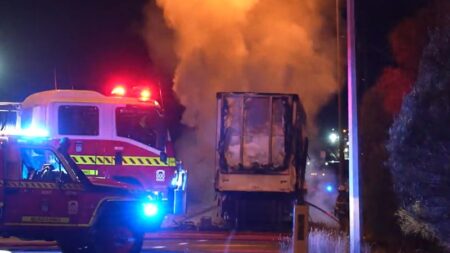
Officers took cover as people hurled bricks, smashed in the windows of a nearby petrol station, and set fire to a police car.
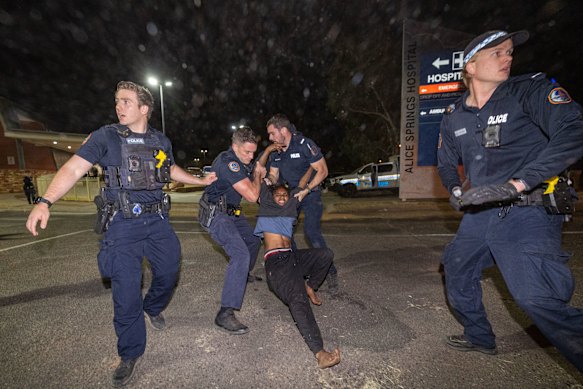
Ambulance crews barricaded themselves in the front entrance of the hospital as officers became increasingly frustrated. A man attempted to run past them but was quickly stopped.
Police threw tear gas into crowds, with children screaming as their parents directed them to run.
Rubber bullets were fired; people chanted “f— the police” in response.
Every time it looked close to dispersing, the crowd would be whipped up again and push forward.
At one point, officers made a break for it to collect a woman who had been driven to the hospital, unable to stand and in agony in the throes of labour.
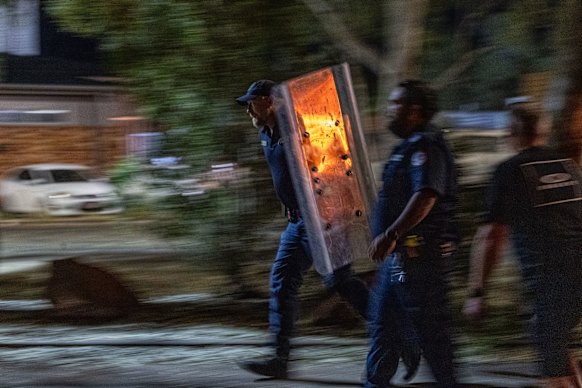
They surrounded her with riot shields and jogged quickly with her in their arms to find her a wheelchair.
Still, rocks rained down on the police cars and tear gas began to creep up the street, with no wind to carry it away.
The wails of grief turned to cries of anger. A young boy held his head back, crying for his mother, as a group of adults surrounded him, pouring water over his eyes.
It took police hours to quell what had felt like an uprising.
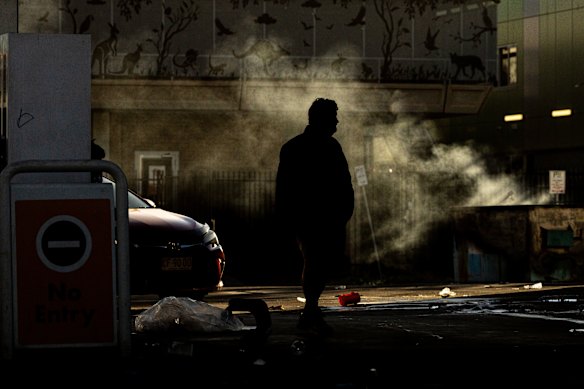
It was only at 3.30am on Friday, when the crowd had finally started to disperse, that Lewis was quietly taken from the hospital and flown to Darwin. The risk to his safety was too great, police said.
Surveying the damage in the harsh light of day, Alyawerre man Michael Liddle said it was akin to waking up after a cyclone had passed through.
The events of Thursday evening were not a true reflection of what it meant to be a local.
“All week the community of Alice Springs has come together … searching for a little lady – a little baby – that was taken by a monster,” he said.

“That hard work was undone last night by some people who are very angry with the system.”
Liddle and other traditional owners said the event’s of April 30 would take a long time for the community to recover from.
Spot fires still burned near the hospital in the morning, wails continued to echo through the streets, and many locals would be sought by police for their roles in the evening’s unravelling.
But while the town grappled with what some described as its greatest tragedy, something else happened on Friday morning.
Lewis was awake, in the custody of Northern Territory police, at last, and a family was grieving.
As Robin Granites said: “It is time now for sorry business, to show respect for our family and have space for grieving and remembering.”
Start the day with a summary of the day’s most important and interesting stories, analysis and insights. Sign up for our Morning Edition newsletter.
Read the full article here