





Published on
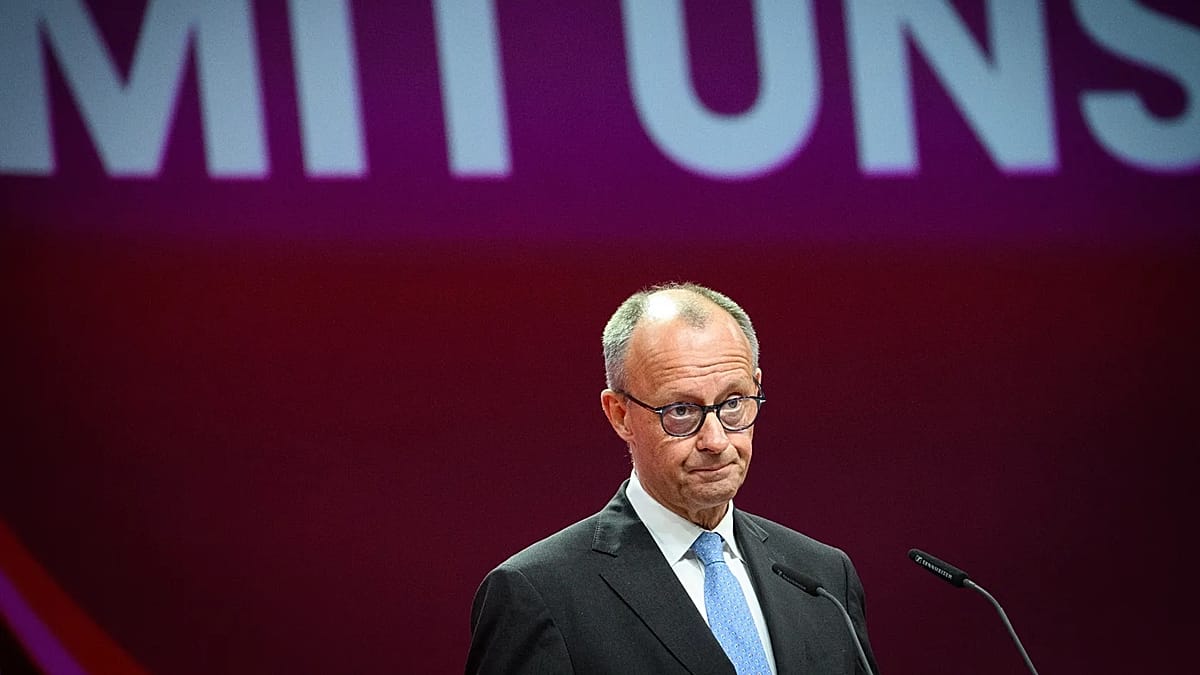
German Chancellor Friedrich Merz said on Thursday that joint debt was not an option to finance the European economy, speaking at a ceremony awarding former European Central Bank President Mario Draghi the Charlemagne Prize.
In his speech at Aachen Cathedral, Merz echoed Draghi’s call to boost European competitiveness, but differences remain over how to finance it.
“Some now believe we can evade this painful task by taking on new debt, European debt, by financing regular spending through debt. Germany cannot follow this path for constitutional reasons alone, and, ladies and gentlemen, we also need resources for future crises,” Merz said on Thursday.
The German Chancellor had already expressed his opposition to joint borrowing, a proposal to finance the bloc’s economy that was revived by Draghi in his 2024 report on European competitiveness.
In his report, Draghi has called for joint EU borrowing as a necessary tool to mobilise an additional €800 billion in annual investment if the bloc is to remain globally competitive. Part of the financing would come from private funds, but public investment would also be needed.
“The reality is that excessive debt threatens sovereignty and limits our ability to act. Let me state it frankly: some countries are already spending more on interest payments than on defence due to their immense debt,” the German Chancellor added.
But Merz’s speech is set to put him at odds with countries such as France, Spain, and Greece, which have called for the issuance of new eurobonds—a form of joint European borrowing—to support the bloc’s economy amid the fallout from the war in the Middle East, including rising energy prices.
The issue of how to finance the bloc’s economy and how to tackle the challenge of soaring energy prices will be at the center of discussions surrounding the upcoming EU long term budget (2028-2034), in particular during the European Council in Brussels that will take place on 18-19 June.
The International Charlemagne Prize has been awarded since 1950 to individuals or institutions for their services to Europe and the continent’s unity.
Last year, the prize was awarded to European Commission President Ursula von der Leyen.
Read the full article here