





Manitoba has gained a net 4,725 health-care workers since October 2023, according to the provincial government.
Among the new full-time and part-time workers were 370 physicians, 1,464 nurses, 2,152 health-care aides and 607 allied health professionals, the government said in a news release.
Fifty-nine new medical residents, 67 physician or clinical assistants and six midwives have also joined Manitoba’s health-care force.
These net figures subtract health-care employees who resigned, retired or transferred out, the province noted.
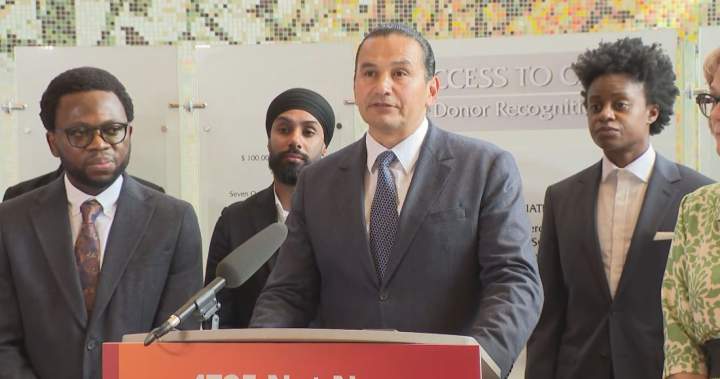
“So, you put that altogether, there are many more people working on the frontlines of our provincial health-care system,” Premier Wab Kinew told reporters at a news conference at Seven Oaks General Hospital Tuesday.
“We also know that there’s a lot that needs to be done. There are still many things to do when it comes to wait times in emergency rooms and urgent cares and surgeries and diagnostics, but we also know that anything that we want to do in those areas has to start with the staffing.”
The premier pointed to his party’s campaign platform on health care, saying that he sees the progress he promised voters, but a growing population means an increased demand — and strain — on its services.


Get weekly health news
Receive the latest medical news and health information delivered to you every Sunday.
“People are sicker today. And anyone on the frontlines, I’m sure, has seen this,” he said, adding that the province will continue working to hire new health-care staff and address shortages in the system.
Manitoba’s health minister said the staff hopping on board proves the province is attractive to health-care workers and that it is currently training a record number of them.
“We were a flyover province. I heard that from so many people when I would go to other jurisdictions,” the provincial Minister of Health, Seniors and Long-term Care Uzoma Asagwara told reporters.
“What I hear now from folks is that they are choosing Manitoba first. They’re making Manitoba home.”
Dr. Ayomikun Soyombo, an emergency medicine physician, arrived in Winnipeg from the United Kingdom Sunday. He said he has been waiting 16 years, since he was a medical student in Nigeria, for the opportunity to work in Manitoba.
“I packed my bags, my parents, my stepdad and my mom, they bought me a flight ticket, which was very expensive then. They got me a very warm jacket because I heard about the snow,” Soyombo said, recalling his original plan to work in the city while he finished his schooling.
Ultimately, the would-be doctor didn’t make it to Winnipeg in 2010, as his visa was denied.
“I could not imagine that 16 years later, Manitoba would come calling again,” Soyombo said. He is joining the urgent care team at Seven Oaks, working at Grace Hospital.
The president of the Manitoba Association of Health Care Professionals (MAHCP) said that the number of staff working is not the measure the government should be using.
“Manitoba is still facing critical allied health staffing shortages that are driving up wait times for emergency medical response, testing and treatment. The metric that matters is whether Manitobans wait less time for care tomorrow than they did yesterday, while also maintaining the highest standards of care,” MAHCP president Jason Linklater said in a news release.
The province must address the extended wait times for the testing that leads to treatment by hiring specialized personnel, including MRI and CT technologists, who can perform diagnostic testing, Linklater said, adding that rural paramedics and respiratory therapists also have “high vacancy rates.”
“Without coordinated solutions, including a comprehensive allied health workforce plan for all specialized professions, Manitobans will continue to wait too long for many of the healthcare services they rely on,” MACHP’s president said in the release.
Read the full article here