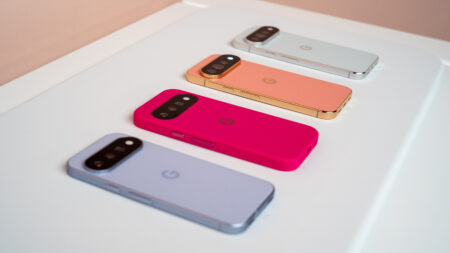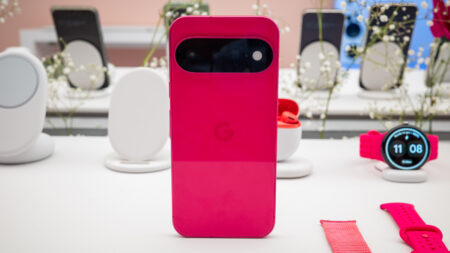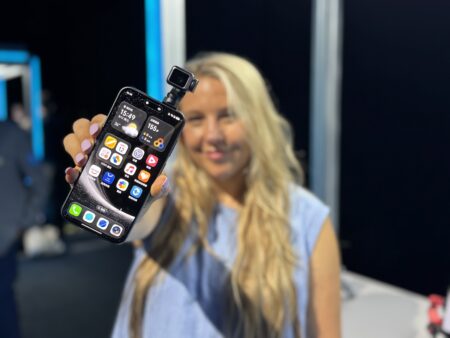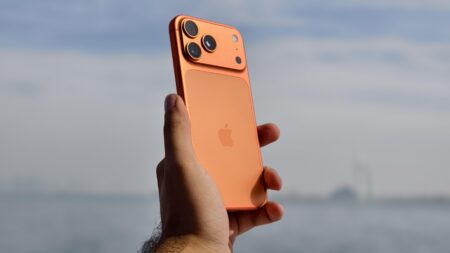





Google showed off its new Pixel lineup at its Made By Google 2026 event on Wednesday in New York City, but it wasn’t a typical big-tech announcement that gave the public its first look at new devices — that happened in the morning.
Perhaps Google chose to show its Pixel products off hours ahead of its event because a lot of details were leaked in advance, possibly leading the company to avoid following the traditional 10 a.m. PT show. Official details of the Pixel 11, Pixel 11 Pro and Pro XL, Pixel 11 Pro Fold foldable, Pixel Watch 5 smartwatch and Pixel Tag tracker were released at 7 a.m. PT, letting people get good looks at all the devices before they were officially announced during the show, which started at 6 p.m. ET.
Be sure to check out all of CNET’s coverage, including hands-on experience and Andrew Lanxon’s exclusive photo walk through Paris with the Pixel 11 Pro XL. After you’ve loaded browser tabs with each of those, let’s move on to what stood out today.
Live human presenters who can think on their feet
Apple has switched to almost entirely prerecorded keynotes, and while Samsung’s Galaxy Unpacked had live presenters on stage in front of an audience, they mostly delivered rehearsed and teleprompted scripts as they debuted their new devices.
Google remembers that a product release is a show and brought hosts who can be entertaining.
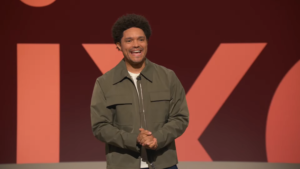
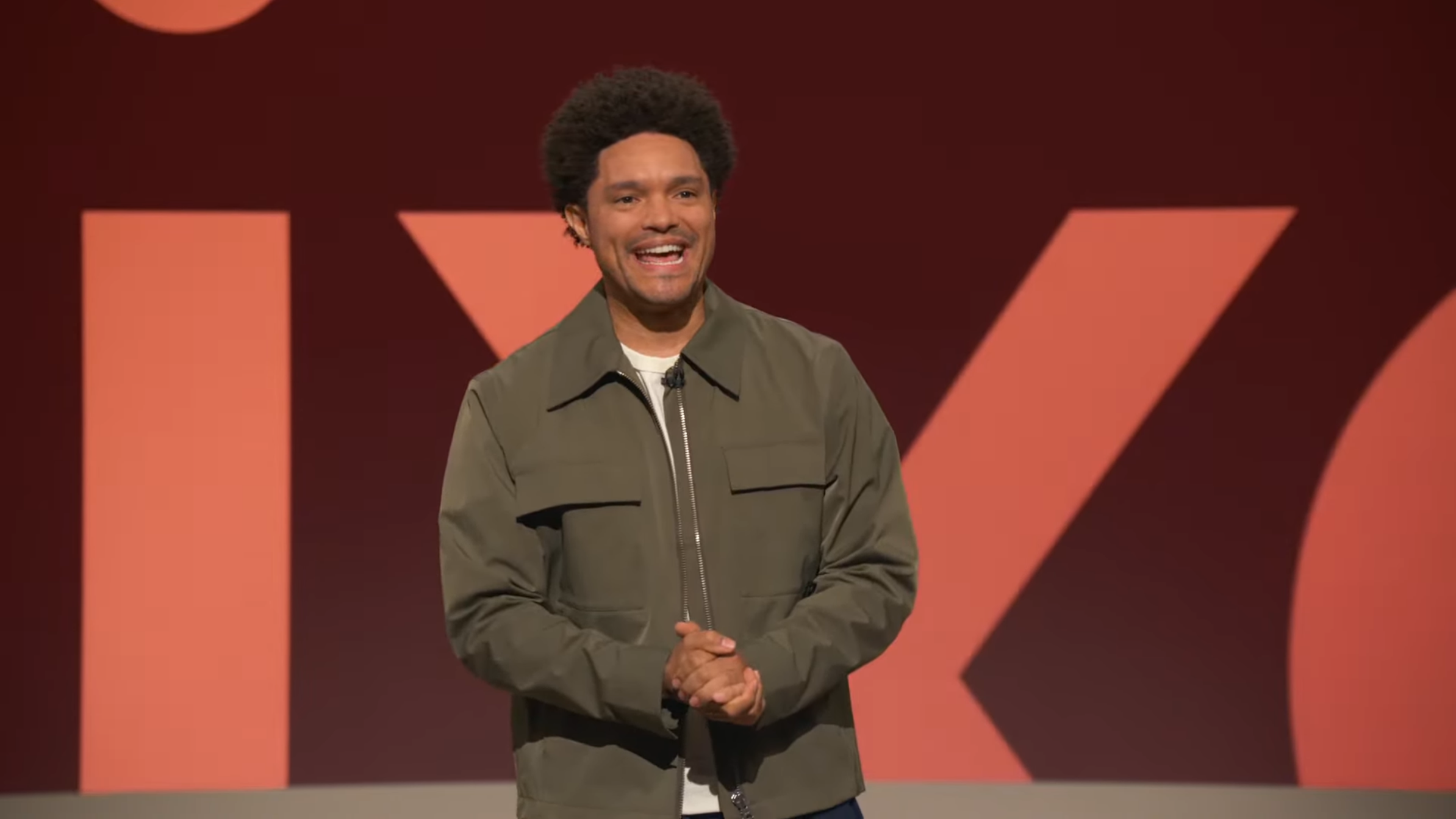
Last year, Jimmy Fallon bounded around a set that felt more like his Late Night studio than an auditorium. This year brings comedian (and former late-night talk show host) Trevor Noah as host, who also interviewed people from Google in a multi-camera talk show environment.
Although some of Google’s folks did have a measure of polished presenter training going on, they had to bounce off Noah’s impromptu interjections. At one point, he said, “I’m the one who’s supposed to make sure nothing goes wrong. I mean it’s live – I’ll make sure everything goes wrong.” There were some awkward moments, to be sure, but I spent the time always curious just how Noah would react.

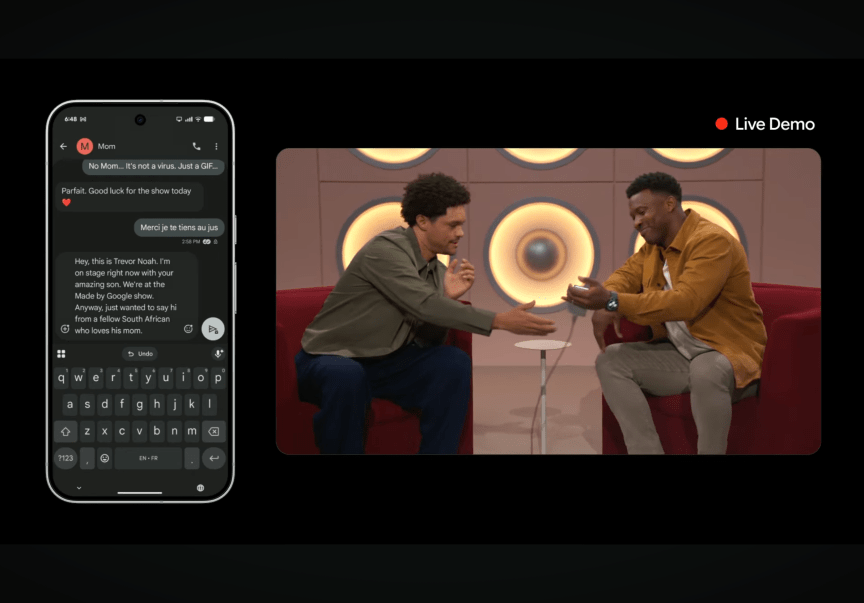
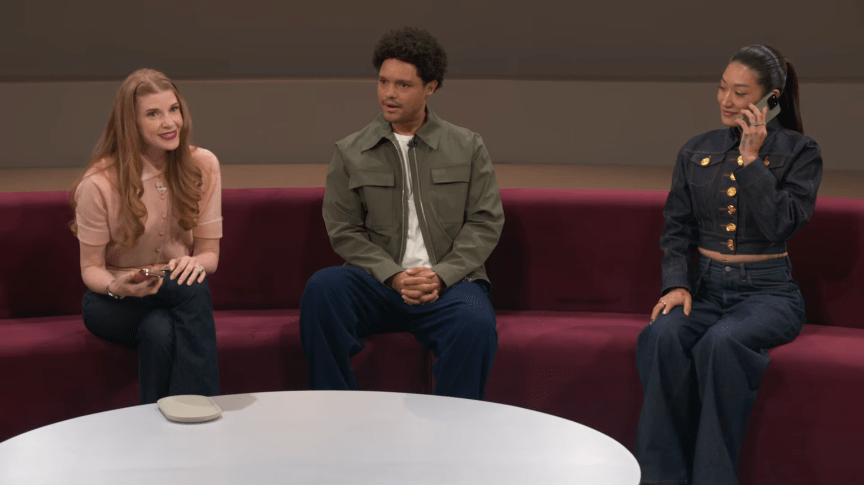
But a demonstration of the Rambler dictation feature with Google’s Joël Yawili, where Yawili got Noah to text his mother in English and French, was conversational and funny. Yawili surprised Noah by saying that he was also originally from Johannesburg, and at times, it looked as if they needed to remind themselves they were there to show features, not just banter among themselves.
Live demos
Live demonstrations of technology can be the third rail of product announcements — crucial to see, but sometimes disastrous if they fail in front of viewers. But Google included several live demos during the event of new features debuting on the Pixel 11 series. That led to some fun moments, such as when Noah used his finger to wiggle the screen when using the new Rambler technology saying, “Wait, so are you guys seeing the screen with me? I’m controlling. Oh damn, that’s me.”
Also great was the demonstration of American Sign Language-to-text, where Google director of product inclusion and equity Annie Jean-Baptiste had a conversation with deaf actor Daniel Durant, who communicated in ASL.
Magic Capture does even more of the picture-taking for you
Is pressing the shutter button in the Camera app too haaaarrd? Have you wished the camera in your smartphone could do even more of the work, not just come up with well-exposed photos in all sorts of lighting conditions? Well, you’re in luck, because Magic Capture will do it all.
I hope my sarcasm as a photographer came through there, because now I’m going to tell you about the reality of picture taking: We miss shots all the time. We realize later we could have framed them better and crop them so everyone things we nailed it on the first try. We sometimes aren’t as quick with the shutter press to grab the shot we really wanted.
That’s a big part of why photography is appealing: it’s work, it takes practice and making a quality photo is a great feeling.
But most people just want to point their phone at a subject and snap a good picture. Magic Capture is another tool to help them do that without stressing over capturing the perfect moment. You point the camera at a scene, and the feature grabs shots for you, no shutter button-mashing required.
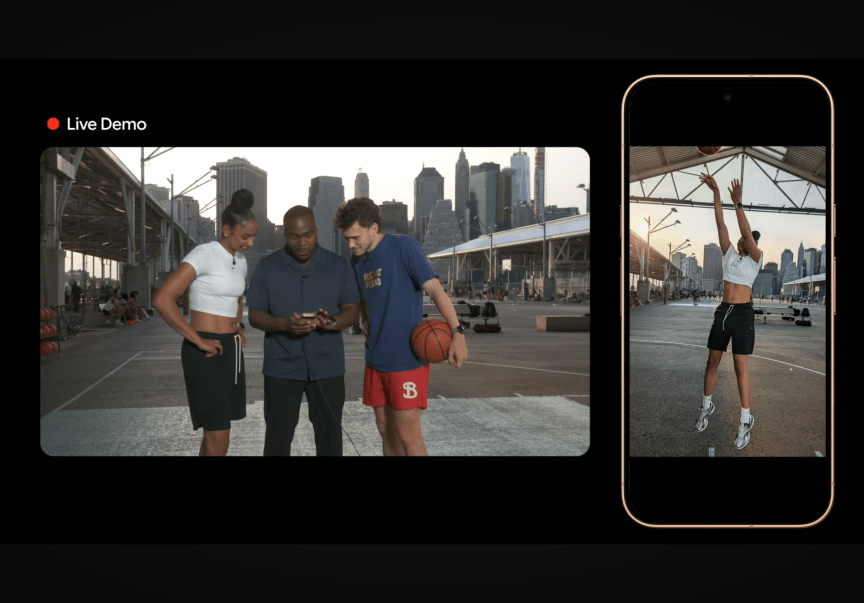
Smartphone cameras are already making dozens of micro-captures for every shutter press, so Magic Capture is a logical extension of that process. It records video and then pulls out the best frames as still photos. At the event, it was demonstrated by Google’s Kenny Sulaimon live from Brooklyn Bridge Park with YouTuber Jesser and college basketball star JuJu Watkins shooting hoops and capturing stills of the action.
I’m reserving my full opinion about Magic Capture until I’ve had a chance to try it out – is it really making smart decisions about what to capture? – but for now, I’m going to embrace Magic Capture as a way to help non-photographers make better photos.
Pixel Tag, you’re it
The Apple AirTag has been a quiet giant success for years, but AirTags don’t work as well with Android phones as they do with devices in the Apple ecosystem. And though Android-compatible portable trackers have also been around for a while, the ability to use distributed networking to make them work better is a recent development.
Google, as the primary author of Android and its ecosystem, developed the Find My Devices technology used by the Samsung Galaxy SmartTag 2 and Motorola Moto Tag, as well as numerous third-party devices. Now it has its own hardware, the Google Tag.

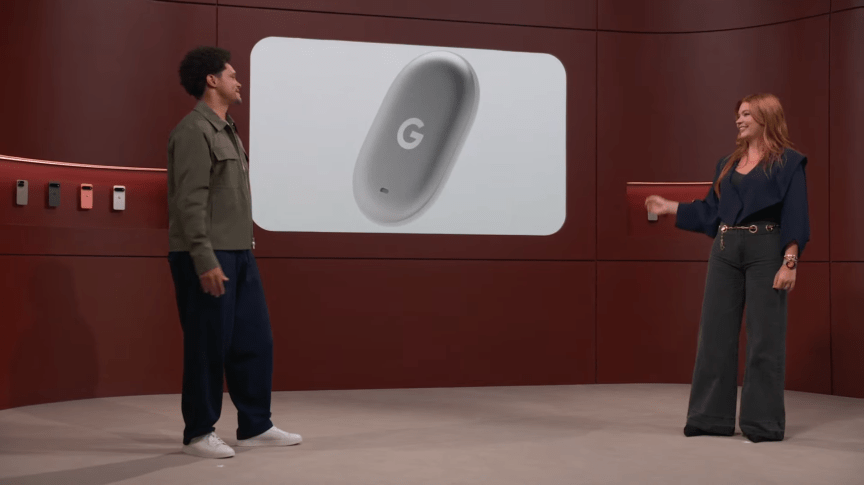
Even if the Google Tag doesn’t reach the same saturation as Apple’s tracking pucks, the little oblong locators with a prominent G stamped onto them are no doubt worth doing. AirTags have a 50% to 60% profit margin, according to some estimates, so as long as Google can manufacture them reasonably, they’ll join the worldwide Find Hub network, helping people locate all the stuff we lose every day.
I’m a ramblin’ man
I know people who dictate most everything – texts to friends, web searches, articles – and they’re remarkably smooth. I’ve never had that gift. When I try to dictate, I invariably devolve into sentence fragments, grunts and swear words.
Rambler, a new Gemini feature originally demoed at Google I/O 2026 in May, is a much more patient listener than most transcription apps or AIs. It understands those bits and pieces of conversation and threads them back into usable text.
I’m looking forward to seeing if I can stump it. I suppose I could also work on my speaking skills, too.
AI can translate ASL to text
Google demonstrated its sign-language-to-text (SL2T) language model, a way for people to communicate in American Sign Language by translating and transcribing their body motions.
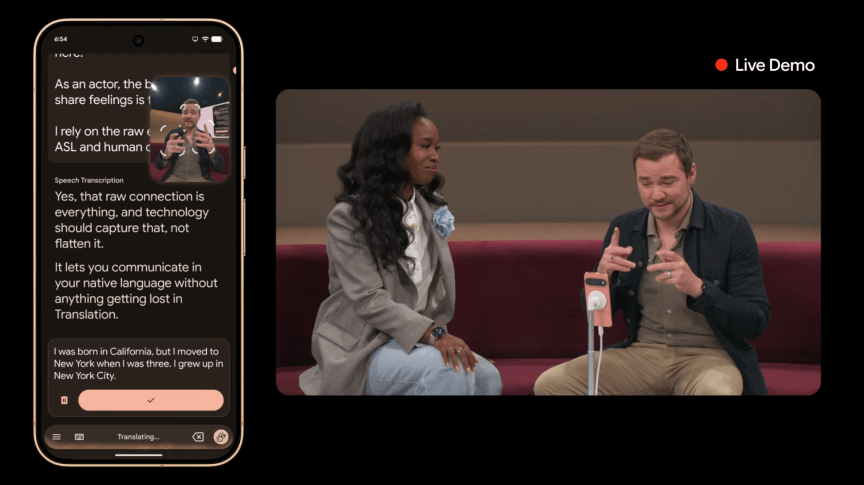
This is a very cool feature, but I’m more impressed with how it’s executed. The phone records a person using ASL, which sets off privacy bells and has me wondering what the company might do with that video.
But in fact, the “on-device model tracks the location of points on the signer, and only those geometric coordinates are sent to the server for translation,” according to Google. The video is immediately discarded while the sequence is translated into text.
HiLight starts at a surprising low point
HiLight looked like it would be an actual highlight of the Pixel 11 Pro line, but I have to admit I’m a little slack-jawed at what Google is shipping. I think the crowd at the event and even Noah were underwhelmed, too.
Replacing the temperature sensor on the Pixel 11 Pro, 11 Pro XL and 11 Pro Fold – I forgot that feature was there, sorry – HiLight is a circular LED near the cameras that can light up more than a typical smartphone flash. Reminiscent of Nothing’s inventive Glyph, the HiLight can light up in other colors and act as a notification alert when the phone is face down.
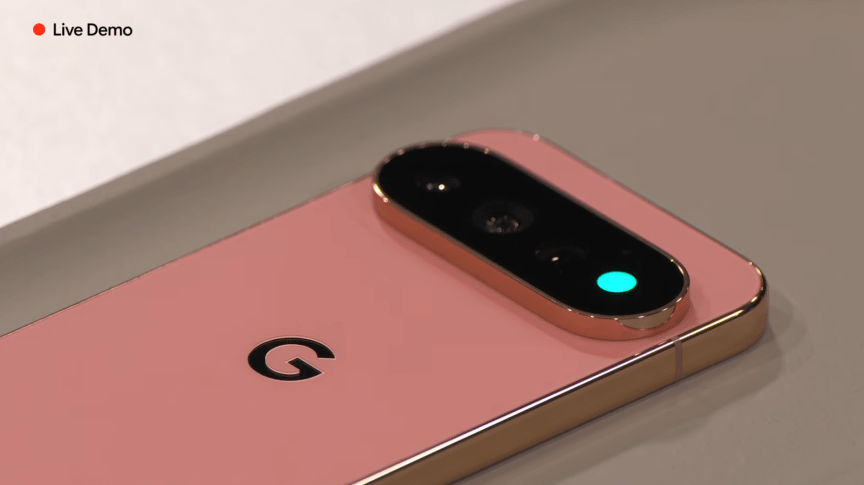
But all it can do right now is display an assigned color when one of your contacts calls you – purple for your partner or orange for your parents, for example – and light up in a swirl of colors when you activate the Gemini assistant. Surprisingly, the presenter said that it can’t do the color red.
Yeah, that’s it. Colors for phone calls, not texts, and an indicator that you’re using Gemini when you presumably just made a request of Gemini.
Let’s hope Google just ran out of time and that there will be additional features that take advantage of the HiLight, and a way for developers to create their own interactions.
That little circle is just begging for a port of Doom. And to play The Odyssey the way Christopher Nolan intended.


See full bio
Read the full article here