




Opinion
When I introduce myself as the president of the Airport West History Group, quizzical looks hint at the obvious question, “What history?” My suburb is wedged between Keilor and Essendon, both with rich histories involving villages, heritage buildings, grand old churches, historic bridges, windy hills, and pilgrimages to the goldfields. My suburb has none of this.
Nevertheless, we started our own history group because we had a hunch that there was some interesting stuff just waiting to be dug up, probably with an aviation flavour given our location – west of Essendon Airport.
This comparatively young suburb lies west of what used to be Essendon Aerodrome. At the time this was Melbourne’s international airport. The suburb started as an industrial pocket of businesses supporting the airport. Originally, we were meant to be part of Niddrie, but the local businessmen petitioned for a name that would adequately describe the nature of their precinct, thus benefiting their aviation-related businesses – something like Airport West.
No, it’s not an especially exciting name, and as time has rolled on, people often assume we’re further north, next to that other airport.
Famed Airport West resident Brian Mannix unleashed on the name in an interview with The Age a few years ago, saying he had a great house here but “I hate the name of the suburb. There’s a big Sexyland on the corner of my street – it’s like the Bunnings of dildos. Why don’t we just call the whole suburb Sexyland? That’d put an extra 20 or 30 grand on the value of the house right there.”
After the airport next door changed its name to Essendon Fields, Mannix wasn’t the only one who thought that our suburb might get a boost from a rebrand. But when the push to cash in on the prestige of neighbouring Essendon went to a vote in 2009 the answer was a resounding “no”. Airport West suits us fine.
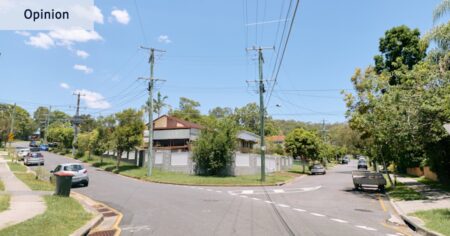
In the ’50s and ‘60s the muddy quarter acre blocks of land on these streets were eagerly snapped up by airport workers. Many new Australians set about building their houses themselves. So, from the beginning our suburb had a working-class look coloured by a rich cultural diversity reflecting the wave of postwar immigration comprising Italians, Maltese, Polish, Dutch and many others. When our history group interviewed some pioneers from this time a common theme emerged of everyone pitching in and helping each other build their homes and their lives. Today these streets are jammed with tradies’ utes as those little weatherboard houses are replaced with units – three per block. The old warehouses and workshops are also taking on a new life as cafes, gyms and one of the biggest op shops in Melbourne, appropriately called “Helping Hands”.
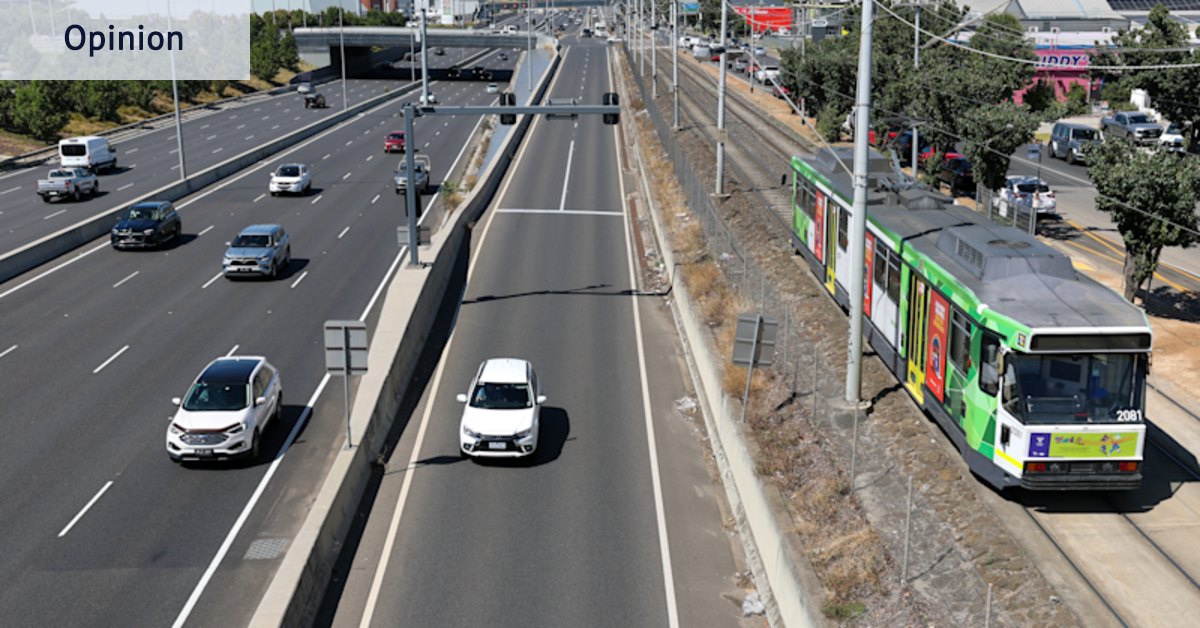
The modern Airport West is a bit like an island, a triangle-shaped suburb girt by two freeways and a railway line. I was at a council meeting once where a town planning guy proclaimed that the problem with Airport West was that nothing actually passes through it, everything goes around it. As a resident, I spoke up, “Why is that a problem?”
I grew up in Airport West and moved out of home when I turned 21 to explore the world that lies east of the airport. Ten years later with my own very young family in tow, my wife and I travelled around Melbourne looking for the right place, only to land back in Airport West. We could see that it was affordable and self-contained, with everything a growing family needs. That is: a kindergarten; two primary schools (used to be three until Jeff Kennett closed one); two churches (used to be three); a footy club (used to be two); a secondary school; four parks; more sports clubs; a Westfield shopping centre (ultra-marathon hero Cliff Young was married in the food court!); a cinema complex; a pub; and once a year the circus comes to town.
You probably didn’t realise that the tram reaches us here. We are the destination for the number 59 after it runs up Mt Alexander and Keilor roads. It was extended in 1943 out to the aerodrome to transport the workers servicing the Australian and American air force planes. In the not-too-distant future there will possibly even be a railway station here en route to a different airport to our north. Being so close to Tullamarine Airport, taxi drivers are reluctant to take a fare to Airport West, so catching a train for the one-stop home after a long flight would be brilliant.
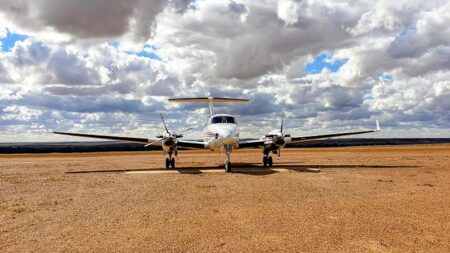
The streets of my suburb are a celebration of Australian aviation history – a reminder of the sort of brave souls who flew Sopwith Camels over Europe engaging in dogfights with the Red Barron and his cohort. The roads of the first industrial subdivision were named after Australian World War I aviators, like the very busy Matthews Avenue, after Captain George Matthews, who served at Gallipoli and in 1917 joined the Royal Flying Corps. King and Hawker streets were named after Elwyn King, a fighter ace who achieved 26 victories in aerial combat with the Australian Flying Corps, and Harry Hawker MBE, chief test pilot and designer for Sopwith.
After the war, prime minister Billy Hughes thought it would be a good idea to get some of those newfangled aircraft to Australia where they could be quite useful. He offered a prize of £10,000 to the first Australians who could fly one from Britain to Australia. Of the six planes to attempt the journey only two completed it intact. First to arrive in Darwin were the Smith brothers. Inexplicably, we don’t have a Smith Street. However, in second place were Australian Flying Corps officers Ray Parer and John McIntosh, and we have a Parer Road and a McIntosh Street – side by side – along with others honouring numerous pilots who died while attempting those dangerous early flights.
The next batch of streets that opened up in Airport West continued the theme, taking the names of Australian airmen killed in WWII bombing raids over Europe. Add to these Squadron Leader Bernard Cresswell whose Kittyhawk fighter was shot down over New Guinea by Japanese Zero fighters. We even have a Kittyhawk Street. Who said there’s no history here? I’ve discovered that locals have loved finding out the origin of their street names when there are such rich aviation stories attached.
Our local history group isn’t only interested in aviation. We even tried to interview Brian Mannix, but the former pop star seems to have moved onto sexier pastures on the Gold Coast. Other celebrities we did talk to – musician Ash Naylor, AFL umpire Hayden Kennedy, footballers Simon and Justin Madden, netballer Chris Harris and Deputy Premier Ben Carroll – all preferred to focus on the sense of community they experienced growing up here. It turns out there’s a bit more to this wedge of overlooked suburbia, after all.
John Tait is a freelance writer and a former president of the Airport West History Group.
 John Tait is a freelance writer and a former president of the Airport West History Group.
From our partners
Read the full article here