




Good morning from Brussels. I’m Mared Gwyn.
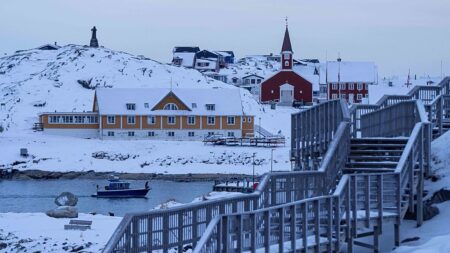
The European Union is sharpening its response to a deepening crisis over Greenland, a self-governing territory belonging to Denmark which the US President continues to insist he needs to acquire.
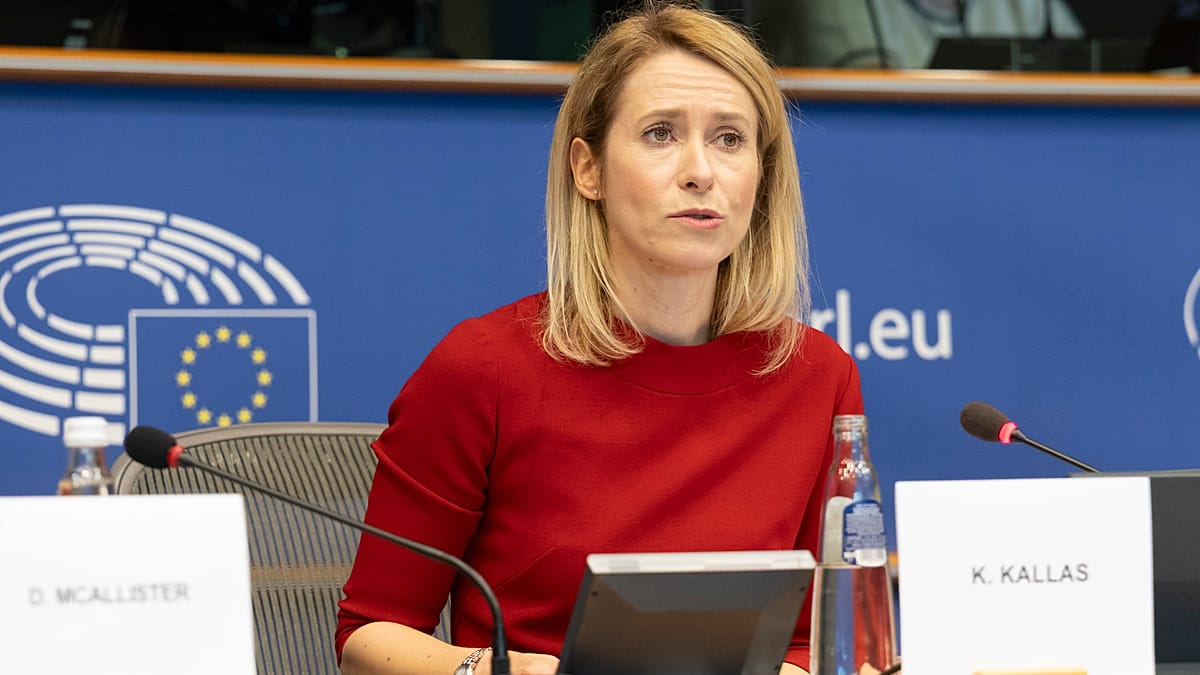
In a closed-door meeting with the European Parliament’s political leaders on Wednesday, the EU’s foreign policy chief Kaja Kallas urged the EU and its member states to throw their weight behind Greenland, our parliament reporter Vincenzo Genovese reports.
Sources told Vincenzo that Kallas had advised against talking about the potential “end of NATO” should Trump use force to take over the territory, warning it could reinforce the hostile narratives of US Vice President JD Vance. Several leaders, including Denmark’s Mette Frederiksen, have warned a US military takeover of Greenland could destroy the military alliance.
JD Vance is known for his animosity towards European allies, and personally visited Greenland in March last year amid the administration’s takeover threats.
His surprise presence in a high-stakes White House meeting with the Foreign Ministers of Greenland and Denmark Wednesday ignited fear on this side of the Atlantic that he could exert hardline influence on the talks. More on that meeting below.
After hours of high alert for a potential US strike on Iran on Wednesday, Donald Trump has toned down his rhetoric, arguing last night that the killings of protesters have stopped, without elaborating or providing evidence.
Trump claimed “very important sources on the other side” had signalled planned executions would not go ahead, suggesting easing tensions. Iranian Foreign Minister Abbas Araghchi said in an interview with Fox News “there are no plans for hangings at all.”
Still, the region remains on edge. Staff at US military bases in the region – including the strategically located Al-Udeid base in Qatar – have been asked to evacuate or exercise caution, while the Iranian military is still on high alert.
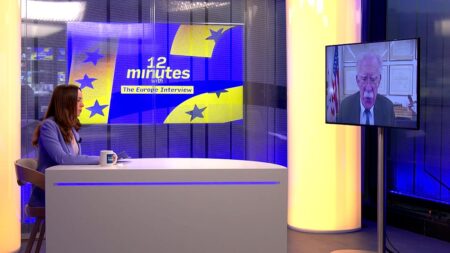
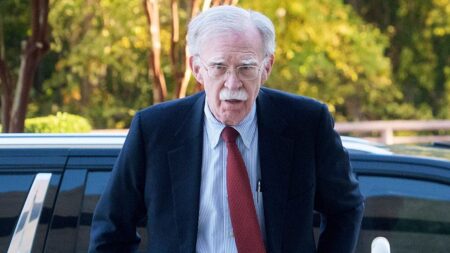
Speaking to Euronews yesterday, former National Security Advisor John Bolton, who advised Trump on foreign policy during his first term, said he believed the US would opt for targeted strikes on Iranian military and nuclear sites, saying it could destabilise the regime.
“Military action by the US could have a decisive effect on the dynamic inside Iran,” Bolton told Euronews. “In the face of this brutal repression, (…) it would give the opposition clear indication that the US and the rest of the outside world are watching.”
Meanwhile, the death toll in Iran is approaching 3,500 according to the Norway-based Iran Human Rights (IHR) NGO. G7 foreign ministers condemned the violence on Wednesday, urging restraint and vowing further “restrictive measures” if the crackdown continues.
We have more on the pressure that’s mounting on the EU to tighten sanctions below.
Denmark fails to convince Trump to ‘back off’ from Greenland
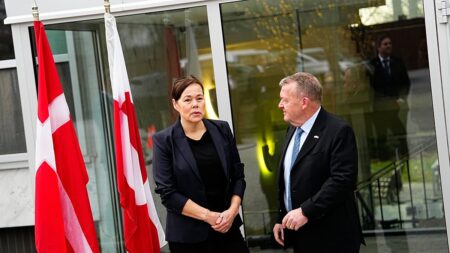
Denmark’s Foreign Minister has said a “fundamental disagreement” with the US remains after “frank” talks with White House officials including Vice President JD Vance and Secretary of State Marco Rubio on Wednesday, our EU and NATO correspondent Shona Murray reports this morning.
“We didn’t manage to change the American position,” minister Lars Løkke Rasmussen told reporters in Washington. “It’s clear that the president has this wish of conquering Greenland.”
Rasmussen rejected Trump’s claims that the semi-autonomous island will have “Chinese destroyers and submarines all over the place” if the US doesn’t control the territory, but also suggested the face-to-face talks had taken down the temperature.
“We had the opportunity to challenge the narrative of the president,” he said, while also confirming a “working group” had been set up to find a “common way forward” after the talks.
Yet, Trump’s narrative seems largely unchanged.
The US President told reporters there was “not a thing that Denmark can do about it if Russia or China wants to occupy Greenland, but there’s everything we (the US) can do.” A provocative X post from the White House after the meeting doubled down on the notion that Greenland faces a choice between the US or its global adversaries.
It comes as Europe aims to put on a united front. A raft of countries, including France, Germany and Sweden, announced yesterday they are dispatching military personnel to Greenland to bolster the Danish military’s heightened presence there.
In a statement, the German government said the mission was intended to “explore the framework conditions for possible military contributions to support Denmark in ensuring security in the region.”
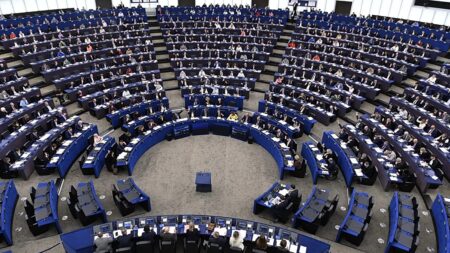
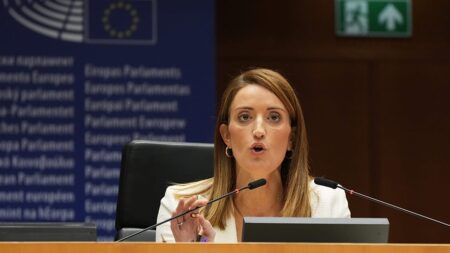
Meanwhile the European Parliament “unequivocally condemned” the statements made by Trump about the territory in a formal statement adopted on Wednesday, calling for more “concrete and tangible support to Greenland and Denmark.”
Read Shona’s full article.
Pressure mounts on EU to blacklist Iran’s Revolutionary Guards
Iran’s violent crackdown on protesters has reignited a long-running debate within the European Union over designating the Islamic Revolutionary Guard Corps (IRGC) — widely seen as a key force behind the repression — as a terrorist organisation, my colleagues Maïa de la Baume and Maria Tadeo report.
Diplomats in Brussels say countries like Germany, the Netherlands and the Baltic states are pushing to revive talks on the issue. While a broad discussion took place during a meeting of ambassadors on Tuesday, no formal proposals were presented in writing, a step seen by some member states as required before making a formal decision.
The bloc has historically cited legal hurdles for not blacklisting the IRGC, as the procedure requires a court ruling against the organisation in a EU member state or third country.
In March 2024, a German regional court’s ruling that a 2022 attack on a synagogue in Bochum had been orchestrated by an Iranian state agency raised expectations that the EU might finally have sufficient legal grounds to proceed, even if cautiously, Maïa and Maria report.
But political considerations have also played a crucial role. Some diplomats say France and Italy had been reluctant to fully sever ties with Tehran factoring the fate of their nationals detained in Iran. Any decision on the listing of the IRGC would need the unanimous backing of all 27 leaders.
“We need consensus among the 27 member states, and obviously there are a few member states to have a different opinion,” the chair of the European Parliament’s foreign affairs committee David McAllister told our live morning show earlier, urging countries to “call a spade a spade.”
Some are calling for the EU to go even further.
Earlier this week, my colleague Marta Pacheco sat down with Olivier Vandecasteele, a Belgian humanitarian aid worker who was formerly held hostage in Iran. He said that the EU and its member states have not gone far enough in its response to the recent crackdown, urging the bloc to sever diplomatic ties with the Islamic Republic.
“The playbook scenario repeats itself with impunity: crackdown, blackout, killings, mass arrests, and executions. We need to change gear,” Vandecasteele told Marta, arguing that a different and more decisive response is now warranted against what he said could amount to crimes against humanity.
Von der Leyen and team of Commissioners in Cyprus to kick off rotating presidency amid escalating geopolitical tensions
European Commission President Ursula von der Leyen and her team of Commissioners are expected in Limassol, Cyprus, later today to mark the start of the country’s six-month rotating presidency of the EU Council – and it couldn’t come at a more charged geopolitical moment.
Issues on the agenda for the visit will be split into four clusters, with the first focused on security, defence and foreign policy.
Cypriot officials argue they’re in a privileged position to understand Russia’s war on Ukraine due to their experience under Turkish occupation. The island country wants to promote a “creative” approach to advance Kyiv’s EU accession bid and is sceptical about the idea of reopening dialogue with Vladimir Putin, as recently advocated by France and Italy.
“There is a negotiation taking place that is driven by the United States. There is a clear methodology to that negotiation. The Ukrainian side is participating in those negotiations,” Cypriot Foreign Minister Constantinos Kombos told a group of visiting journalists on Wednesday, including Euronews’ Jorge Liboreiro.
“I don’t think it’s the right time to try and find new ways of changing the whole structure and methodology. At least from the information we’re having, (the talks) are progressing in a direction that Ukraine says is creating some serious hope.”
Jorge is on the ground and has all the details.
Far-right Patriots table no confidence votes against Commission chief von der Leyen
The far-right Patriots for Europe group – which hosts the likes of France’s National Rally (RN) and Hungary’s Fidesz – has tabled a no confidence vote against the European Commission of Ursula von der Leyen after gathering 104 signatures (the minimum threshold is 72), my colleague Vincenzo Genovese reports.
The motion, first reported by Vincenzo on Monday, is seen as retaliation for the EU-Mercosur trade deal, which should be sealed at a formal ceremony in Paraguay’s capital of Asunción on Saturday.
The bid to topple the Commission is more or less guaranteed to fail and seen as a political manoeuvre. The motion would require the support of at least two-thirds of the votes cast in the European Parliament on a given day, representing a majority of all sitting MEPs: a high threshold that is very difficult to reach.
The debate will be held on Monday 19 January and the confidence vote on Thursday 22 January, in Strasbourg.
More from our newsrooms
Gaza is entering second phase of Trump’s 20-point ceasefire plan, envoy Witkoff says. The United States said on Wednesday that it is moving into the next phase of a Gaza ceasefire plan that involves disarming Hamas, rebuilding the war-ravaged territory and establishing the group of Palestinian experts that will administer daily affairs in Gaza under American supervision. Read.
Venezuela’s acting president vows to continue releasing prisoners detained under Maduro. Delcy Rodríguez vowed on Wednesday to continue releasing prisoners detained under former President Nicolás Maduro, adding that the Venezuelan government was entering a “new political moment”. Gavin Blackburn has the details.
We’re also keeping an eye on
- Cyprus’ President Nikos Christodoulides and European Commission President Ursula von der Leyen deliver press conference from Limassol
That’s it for today. Vincenzo Genovese, Shona Murray, Maïa de la Baume, Maria Tadeo, Marta Pacheco and Jorge Liboreiro contributed to this newsletter. Remember to sign up to receive Europe Today in your inbox every weekday morning at 08.30.
Read the full article here