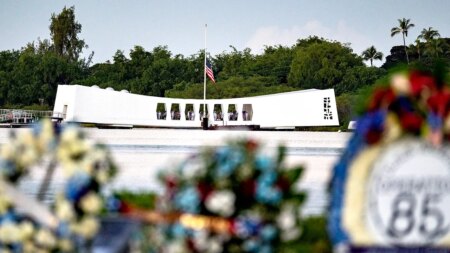





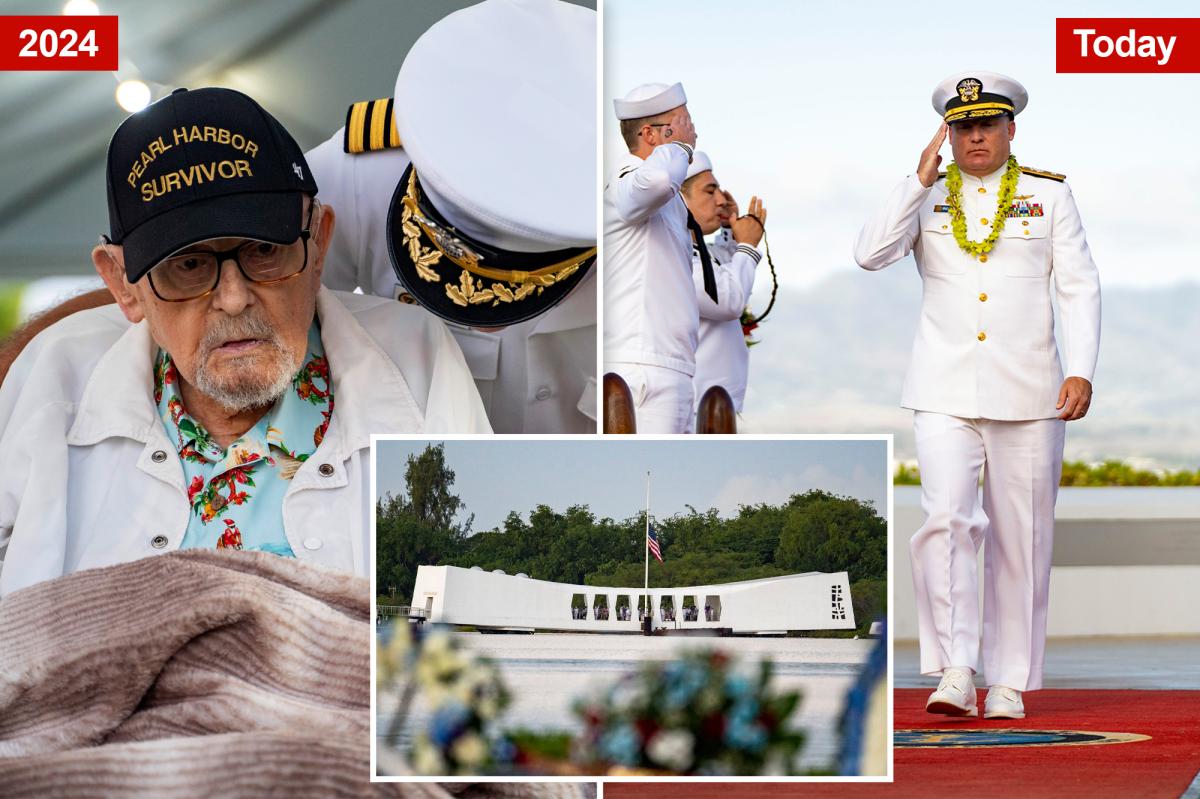
None of the 12 surviving US military members from the Japanese bombing of Pearl Harbor — all of whom are more than 100 years old — were able to attend this year’s ceremony in Hawaii.
It’s part of a sorrowful trend that has seen fewer and fewer survivors able to come out to memorialize the day that lives in infamy, with this year being the first to see no survivor showing up, not counting in 2020 during COVID, when there was no public ceremony.
“The idea of not having a survivor there for the first time — I just, I don’t know — it hurt my heart in a way I can’t describe,” said Kimberlee Heinrichs, whose 105-year-old father Ira “Ike” Schab had to cancel plans to fly in from Oregon after falling ill.
An estimated 87,000 troops were stationed on Oahu on Dec. 7, 1941, when the American naval base was attacked by Japanese kamikaze planes, killing more than 2,300 soldiers and flinging the US into World War II.
During the 50th anniversary of the attack in 1991, about 2,000 survivors reunited to pay their respect to their fallen comrades.
Last year, only two survivors were able to make the trip, including Schab, who touted that he was able to stand on his own two legs to salute sailors during the ceremony.
“I was honored to do it. I’m glad I was capable of standing up,” he told The Associated Press at the time. “I’m getting old, you know.”
Earlier this year, Vaughn P. Drake Jr., the oldest Pearl Harbor survivor, died at 106 years old.
Tapes have been created to keep the stories alive of Pearl Harbor survivors, similar to what was done to record the histories of veterans in the Civil War and World War I.
During a 1998 convention, retired National Park Service Pearl Harbor historian Daniel Martinez conducted nearly 800 interviews with survivors in the span of just three days, some of which can be accessed at Hawaii’s Pearl Harbor museum.
The Library of Congress also has a trove of interviews, letters, photos and diaries from 535 survivors, the bulk of which is available online.
The Sons and Daughters of Pearl Harbor Survivors group works around the country to share the harrowing stories of their loved ones.
“When they’re all gone, we’re still going to be here,” said Deidre Kelley, the leader of the group’s California chapter. “And it’s our intent to keep the memory alive as long as we’re alive.”
With Post Wires
Read the full article here