





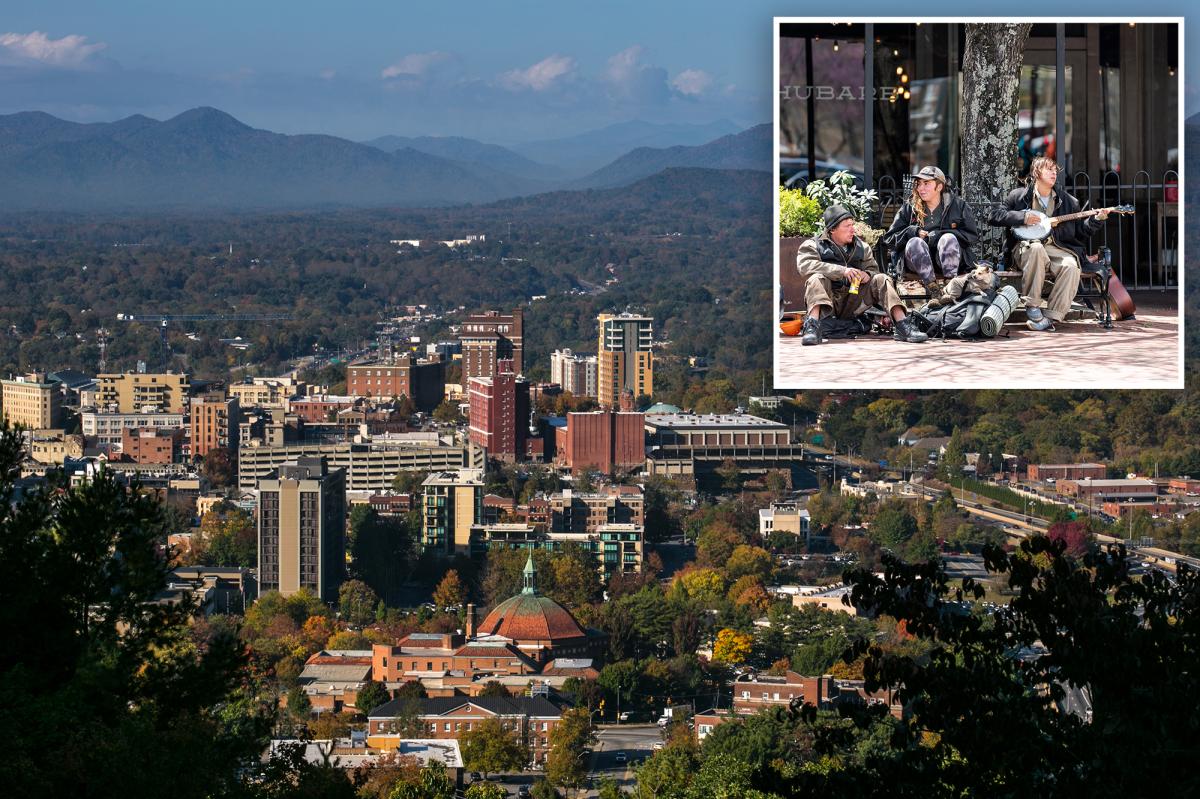
For years, Asheville, North Carolina, marketed itself as a mountain escape known for breweries, boutique hotels and Blue Ridge views.
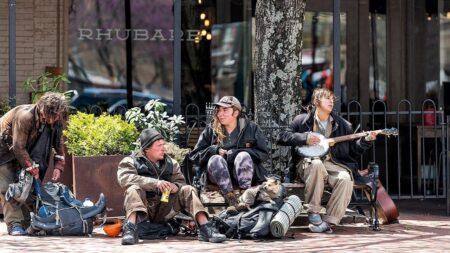
But residents and critics say a different reality has taken shape in the wake of Hurricane Helene: panhandling at intersections, public intoxication, encampments and an unsafe downtown.
Carl Mumpower, a private practice clinical psychologist, lifelong Asheville resident and former City Council member who served from 2001 until 2009, said the city’s current challenges stem from decisions made over decades.
“Asheville began its efforts to address homelessness at least three decades ago. This effort accelerated in the early part of this century with the first ‘Ten Year Plan to End Homelessness,’” Mumpower told Fox News Digital.
“That plan was ill advised but passed with a super-majority. At the time, I suggested to the council that any plan that removed personal accountability from the helping equation was doomed to fail.”
Mumpower said the city has continued down the same path ever since.
“That plan and subsequent plans have failed with equal enthusiasm. Homelessness, drug abuse, and related crimes have increased relentlessly under the watch of local homelessness experts and a governing body that is dominated by liberal Democrats and those with an even more extreme view to the left. That lack of balance — the last conservative on the council was in 2009 — has led to a myopic repeat of errors.”
He also argued that city leaders relied on ideas that were not grounded in practical solutions.
“As regards homelessness, Asheville has a persisting history of pursuing fantasized interventions over more realistic, measurable and trackable solutions.”
The Asheville-Buncombe Continuum of Care, the local, government-supported coalition responsible for coordinating federal homelessness planning and services in Asheville and Buncombe County, said homelessness in the region is at its highest level on record in its latest count.
Data from the group’s 2026 Point-in-Time survey found 824 people experiencing homelessness, a 9.1% increase from 2025. That included 334 people living unsheltered, up 1.8% from the prior year. Nearly 500 others were in shelters or transitional housing, a rise the Continuum of Care attributed partly to expanded emergency shelter and transitional housing capacity.
These “fantasize interventions,” Mumpower said, were accompanied by the city’s pursuit of defunding the police department.
“The council’s political dismantling of the police department — resulting in a 40% reduction due to retirements and resignations — has had a dramatic impact on crime in Asheville,” he said. “Most ‘smaller’ crimes are no longer enforced or realistically tracked, and return on investment costs have skyrocketed. We have officers who earned over $150,000 in overtime last year due to manpower shortages. Enforcement is not possible without adequate, motivated personnel.”
“The direct impact on residents is increased and unenforced crime, direct exposure to intoxication and violent street behaviors, and burdensome taxes and fees to chase the recycled program pretenses.”
Mumpower said many local residents have simply stopped going downtown.
“The single most common phrase uttered by county and surrounding area residents is ‘I don’t go downtown anymore – it’s nasty, crazy, and scary,’” he said.
He said tourism also suffers when disorder becomes more visible in the city center.
“Tourism is impacted, and those we attract are often coming here not as families, but as partiers seeking to join the fray.”
The issue has taken on added urgency in the aftermath of Hurricane Helene, which devastated parts of western North Carolina in September 2024.
Michael Whatley, a Republican candidate for U.S. Senate in North Carolina, said the storm worsened hardship in the region and exposed failures in the government response.
“The biggest issue set that we’ve been dealing with, obviously, is the hurricane relief coming on the heels of Hurricane Helene and the fact that the Biden administration and Roy Cooper, when he was governor, failed miserably to help that situation in terms of following the hurricane,” Whatley told Fox News Digital.
Whatley said that the administration’s clearance of relief funds will assist residents to get back on their feet.
“As part of President Trump’s government response, $1.4B was made available by HUD for housing relief,” Whatley said. “And there also has been over the last month or so a lot of movement with FEMA in terms of the disaster relief that they’re providing to homeowners there.”
“We’re certainly not ready to hang up a mission accomplished sign by any stretch of the imagination. But federal relief that has been put into Western North Carolina is substantially more than has ever been given into North Carolina as a result of any storm by the federal government.”
In a statement to Fox News Digital, the City of Asheville said that officials continue to focus on public safety.
“This month we launched the Asheville Police Department’s Downtown Plan which will essentially double police patrols downtown – increasing day and overnight patrols and, in some cases, responding along with trained mental health counselors. Our REST Team program is an operational response to mitigate the effects of homelessness,” the city said. “It uses specially trained Asheville Fire Department staff to engage with concerned residents and people experiencing homelessness to problem-solve and connect them to resources.”
A city spokesperson also noted that officials expanded their panhandling ordinance and continue working with community partners like the Asheville Downtown Association and its ADID program.
Fox News Digital has reached out to Cooper’s campaign, the Asheville’s mayor office and the police department for comment.
Read the full article here