





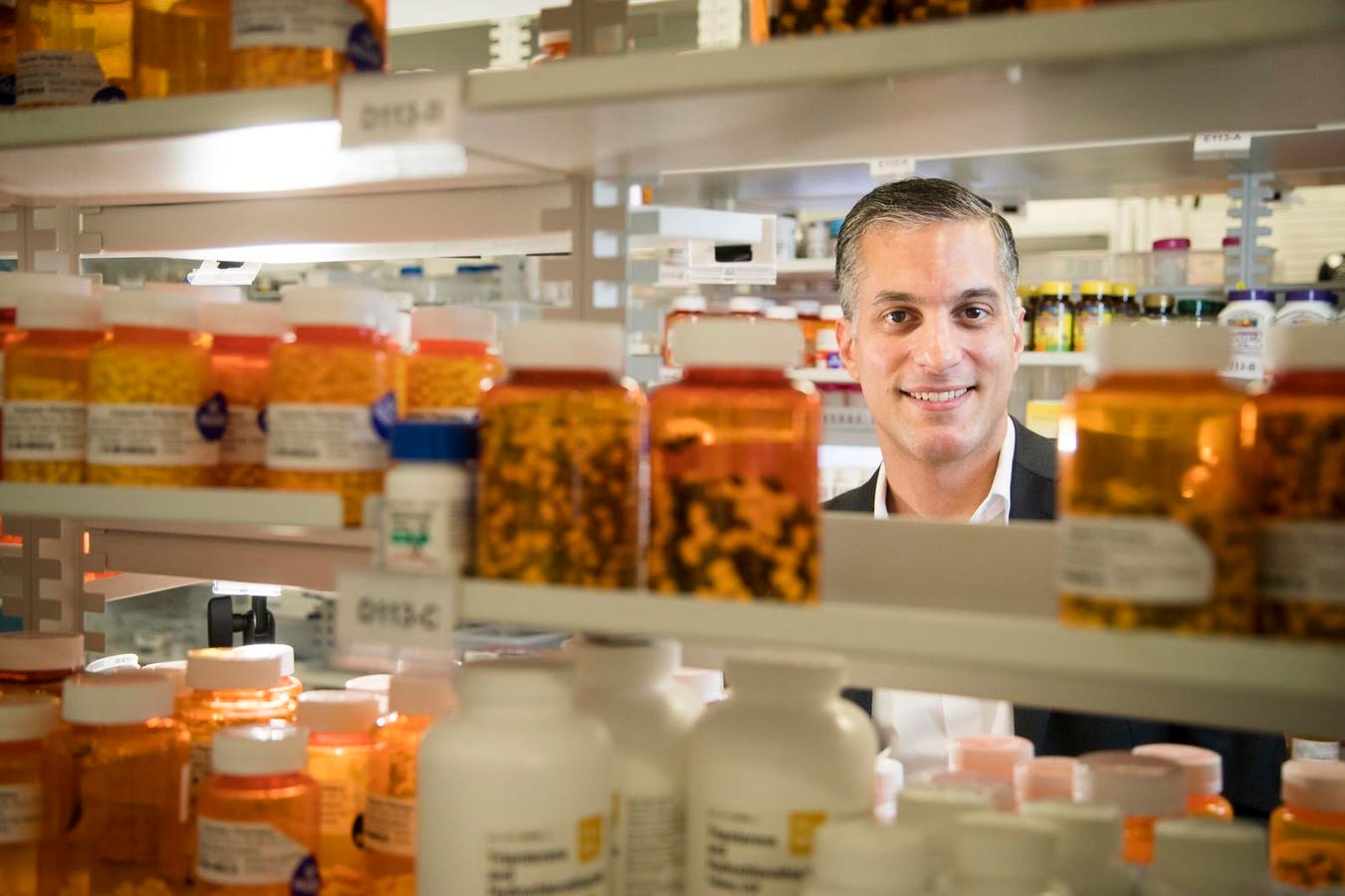
When the FDA panel that’s considering whether to recommend legal production of seven peptides meets starting Thursday, Shaun Noorian will be at its Maryland campus in person. “I wouldn’t miss it for the world,” Noorian, the founder and CEO of Houston-based Empower Pharmacy, one of the nation’s largest compounding pharmacies, tells Forbes. “The who’s who of the peptide space will be there.”
Hundreds of others are expected to jam into the room as well, including compounders, telehealth founders and longevity influencers, who are flying in for the event. “It will be a circus,” says Scott Brunner, CEO of the Alliance for Pharmacy Compounding, the industry’s trade group. “Everybody and their brother is coming.”
While these peptides are currently not legal to produce for anything other than “research purposes,” that hasn’t stopped a booming gray market from exploiting that loophole. There’s little scientific data on their safety and efficacy, and the many sketchy sellers who distribute them operate with no oversight. Still, the illicit peptide market could be worth an estimated $3 billion. Silicon Valley bros, longevity medics and MAHA believers take them, while wellness influencers promote their “peptide stacks” online to speed recovery or improve sleep. Health and Human Services Secretary Robert F. Kennedy Jr. is a self-described “big fan of peptides,” as he told podcaster Joe Rogan in February.
While peptides are a broad category of amino acid-based drugs that include well-known legal ones (like insulin and the GLP-1 weight loss drugs), the buzz—and the FDA panel—is focused on a bunch of them known by a string of letters and numbers. These are injectables like BPC-157, which is extremely popular online for its reputed ability to heal tendons, ligaments and muscles, and TB-500, which is believed to reduce inflammation and improve wound healing. “This is akin to the supplement industry,” says Michelle Davey, founder and CEO of telehealth company Wheel. “I feel like it will be the Wild West for the first six months at least.”
Kennedy has argued that legalizing these substances would make them safer by moving Americans away from the existing gray market. There’s some truth to that. When people buy peptides directly from China or other countries, there’s a risk of contamination, incorrect dosing or other problems—and buyers can’t easily tell if they’ve actually gotten the peptide they purchased. But legalization would also make these substances whose efficacy hasn’t been proven more readily available and give them a stamp of approval. That’s why the FDA’s own technical staff has recommended against expanded access, and the public health group Partnership for Safe Medicines calls them “popular, unproven, dangerous.” As Peter Kolchinsky, managing partner of biotech investor RA Capital Management, puts it: “Is the FDA going to stand on science or is it going to permit all kinds of snake oil to be readily available?”
The FDA meeting will last two days. The panel is widely expected to recommend allowing compounders to make at least some of the seven peptides under review in what some online commentators are calling “Peptide Liberation Day.” Another five peptides are slated for consideration in 2027. The panel makes its recommendations to the FDA, which will then determine whether to begin the process of approving these peptides. That approval could take as little as a few months or longer than a year.
For compounding pharmacies like Empower, telehealth giant Hims & Hers and a slew of others, which can concoct drugs specifically for individual patients, that puts a potential multi-billion-dollar market within reach.
“We’d love to make them, and we’re getting ready to do it,” says Mike Walker, cofounder and president of Strive Pharmacy, another major compounder. “We are just waiting for the green light from the FDA.”
Compounding pharmacies are in some ways a throwback. A century ago, three-quarters of prescriptions required some sort of in-pharmacy compounding–mixing up drug formulations in the shop rather than giving a patient a standard off-the-shelf medication–but that number dropped to 1% by the 1970s. In the last two decades, compounding found new life with the boom in testosterone for men, hormone-replacement therapy for women, and, more recently, GLP-1 weight-loss drugs. (Compounders are required to follow regulations about manufacturing, but the drugs they produce are not FDA-approved.)
Noorian, a former mechanical engineer, founded Empower Pharmacy in 2009 after using a compounded medicine to treat his own low testosterone at age 24. Today, it has two manufacturing facilities in Houston comprising 212,000 square feet. (Its expansion has not been without issues: Empower has received multiple warning letters from the FDA about quality concerns. Empower says it takes every inspection seriously.)
Strive Pharmacy, founded by Walker and his childhood friend Nate Hill in Utah in 2018, acquired a 275,000-square-foot manufacturing and outsourcing facility in Alachua, Florida, in November. In December it broke ground on a new 350,000-square-foot headquarters and advanced compounding plant in Mesa, Arizona, that’s expected to open in early 2027.
Across the country, compounding pharmacies like Houston-based ReviveRx and Fort Lauderdale-based Hallandale have sprung up or expanded, while private-equity-backed Revelation Pharma has been rolling up compounding pharmacies into a larger operation. Hims & Hers, the $7.6 billion (market cap) telehealth giant, even acquired its own compounding pharmacy in September 2024.
These compounders boomed in recent years, especially as GLP-1 weight-loss drugs became so popular that they were deemed to be in shortage. Compounding pharmacies could legally make them to fill the gap. The shift to telehealth also made compounded drugs, which are generally cheaper, easier to get. But when the GLP-1 shortages subsided, a huge chunk of compounders’ business was suddenly in jeopardy. Some kept selling GLP-1 knockoffs anyway, leading regulators to crack down on false advertising and bootleg sales. GLP-1 pharma giants Eli Lilly and Novo Nordisk slapped some of them with lawsuits.
For compounders who had shunned the GLP-1 space due to its legal risk and to those who are seeing their business in that area dwindle, peptides are the obvious answer. “For the players who built their infrastructure around GLP-1s, this is the place to go,” says Wheel’s Davey. Importantly, no pharma companies own any patents on the peptides under consideration. “No one can say these medications should be made by traditional pharma companies,” Noorian says.
It won’t just be compounders who get into the game, Davey says. She believes non-traditional healthcare players and manufacturers of vitamins and supplements will try to seize the opportunity too.
Jon Lensing, CEO of OpenLoop, a VC-backed startup that runs telehealth operations for customers under their own brand names, says that his customers—including large gym chains—have been asking about peptides. “Patients want convenience,” he says. “Why would a gym not open up access?”
The land grab has investors looking for ways to get in, too. “We already are having clients positioning themselves for it,” says Jesse Dresser, a partner at Frier Levitt. “The compounders and the telehealth companies—the targets, so to speak—are in talks right now with private-equity groups and with VC firms.”
To prepare for the FDA decision, Noorian says that Empower has been “prepping for months,” including doing R&D to ensure that its formulations are stable and that it can offer peptides as injections, pills and nasal sprays to meet expected demand. He figures that Empower’s revenue from peptides could eventually reach “several hundred million dollars.”
Hims & Hers is also currently building out its infrastructure and clinical protocols to be ready to produce and sell peptides if they should gain approval. Industry watchers expect it to be one of the largest players in the space given its scale. Last month, the company brought on Dr. Anant Vinjamoori, a Harvard-trained longevity expert, as chief medical officer of Hims. One focus: the company’s strategy for peptide therapy.
Even if the FDA’s committee recommends in favor of peptides this week, it’s unclear what the timing would be for their ultimate approval. Then, too, turning on the supply chains for them won’t be so simple. Because these peptides aren’t currently legal for consumers, the only active pharmaceutical ingredients now available are research-grade ones that aren’t permitted in human drugs, explains Brunner of the compounding industry trade group. Setting up pharmaceutical ingredient supply chains that adhere to the complex regulations on manufacturing and quality could take months—or perhaps longer if the Administration were to require them be sourced in the United States rather than China.
“Everybody can cheer and rah-rah and hope the FDA approves these substances,” Brunner says. “The dilemma that many aren’t talking about is managing the supply chain.”
But the market is simply too enticing. “Given the number of peptides we are talking about, this has the potential to make the experience we have just gone through with GLP-1s look little by comparison,” he says.
Read the full article here