




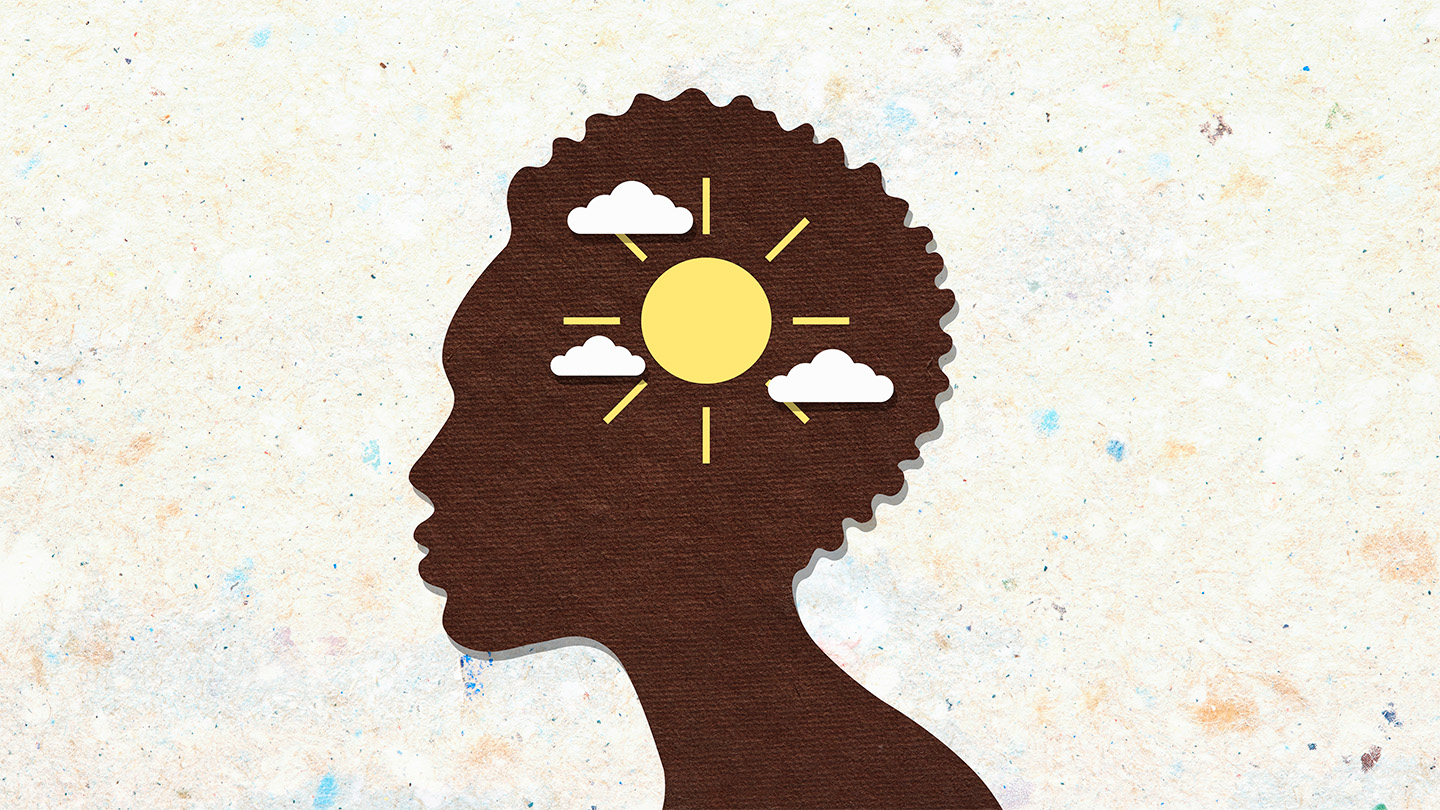
Positive thinking may boost the body’s defenses against disease.
Increasing activity in a brain region that controls motivation and expectation, specifically the brain’s reward system, is linked with making more antibodies after receiving a vaccine. The finding suggests these boosts were related to the placebo effect, researchers report January 19 in Nature Medicine.
“Placebo is a self-help mechanism, and here we actually harness it,” says Talma Hendler, a neuroscientist at Tel Aviv University. “This suggests we could use the brain to help the body fight illness.”
The work is important because it “is first-in-human evidence of a relationship between brain reward systems and immune function,” says Tor Wager, a neuroscientist at Dartmouth College in Hanover, N.H., who was not involved in the study. The study was not designed to test vaccine effectiveness. Larger studies, including more complete immune assessments, will be required to test this association as a medical intervention.
Scientists have found many links between the brain and bodily health. Both negative and positive mental states can affect the immune system, and studies in rodents have suggested that the brain’s reward network is involved in these effects.
To find out if the same circuitry was at play in humans, Hendler and colleagues trained healthy volunteers to regulate their brain activity using neurofeedback, a technique that uses brain imaging to show users the activity of the area they are trying to boost. The team randomly assigned 85 participants to receive training aimed at increasing activity in either their reward network or a different network, or to receive no training.
Immediately after the final training session, participants received a hepatitis B vaccine. The researchers measured antibody levels in the volunteers’ blood before vaccination, then twice afterward. Comparing brain activity in each participant with changes in their antibody levels showed that those who maintained higher activation in the reward network’s ventral tegmental area (VTA) during training produced more antibodies in response to the vaccine.
The team then identified the factors that led to higher VTA activation. Participants were better at boosting their VTA activity when their mental strategy included positive expectations, rather than other mental content, such as visual imagery. The researchers connect this result to the placebo effect, which occurs when a person feels better after a faux treatment they expect will work.
The study wasn’t able to discern a difference in immune response between the reward network group and either of the other two groups. In hindsight, it’s not surprising that the two different types of brain training showed no difference, says Nitzan Lubianiker, a neuroscientist at Yale University. The reward network training didn’t exclusively focus on the VTA because he and his colleagues hadn’t known in advance to target it. What’s more, “neurofeedback is in itself a rewarding task,” Lubianiker says, because participants get visual feedback showing when they’re doing well. Brain scans showed that both types of training activated the VTA.
In other words, “the immune effect appears to scale with how effectively individuals engage specific brain circuits, not merely with assignment to an experimental condition,” says Jonathan Kipnis, an immunologist at Washington University School of Medicine in St. Louis, who wasn’t involved in the study but wrote an accompanying commentary article.
The team is conducting animal studies to trace the VTA’s connections with other brain regions, to further disentangle how the brain might influence the immune system.
Future studies could use neurofeedback that specifically targets the VTA, and a control condition that avoids activating it, to clarify how useful neurofeedback might be for driving immune responses, says Michael Irwin, a psychoneuroimmunologist at the University of California, Los Angeles, who was not involved in the work.
The result should motivate researchers to replicate it in larger studies, Wager says. “If these findings hold up, it could change the way we think about how to deliver effective vaccination.”
Read the full article here