




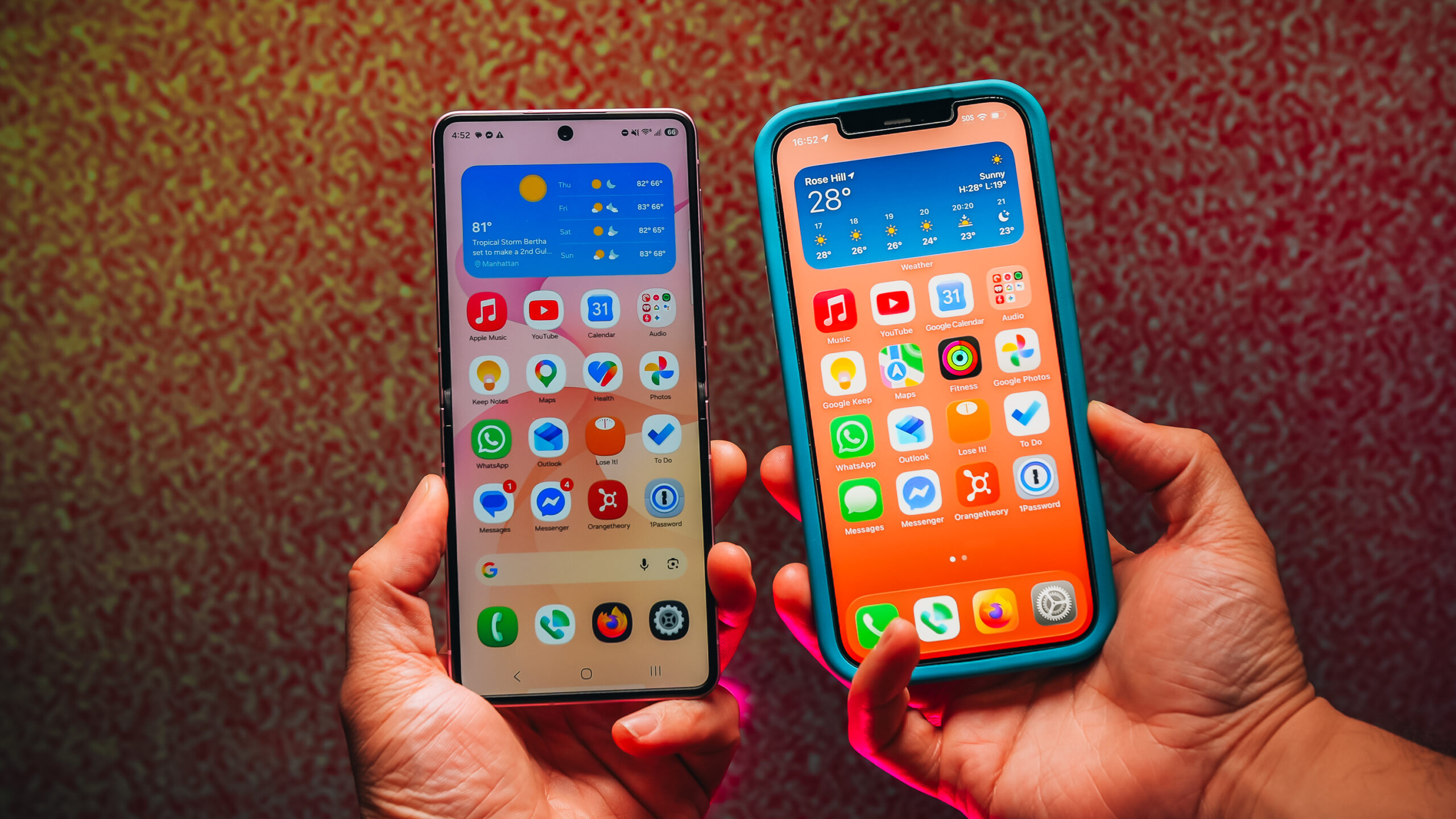
After getting my Galaxy Z Flip 8 review unit, I did something I haven’t normally done when switching from iPhone to Android: I used the updated Samsung Smart Switch app to transfer my personal data from my iPhone to the Android phone. This improved process has made it much easier to transition my habits and conversations, which is often a major pain point when switching.
I regularly swap from iPhone to Android when reviewing devices, a process that’s usually so cumbersome and prone to breaking my chats that I typically prefer to just set up an Android phone from stock or rollover a prior Android backup.
But as part of Samsung’s July Unpacked event, where the company unveiled the $1,200 Z Flip 8 alongside the $1,900 Z Fold 8 and $2,100 Z Fold 8 Ultra, the company said that its Smart Switch app now works natively with iOS 26’s new Transfer to Android feature. And compared with the old way – where you also needed to install Smart Switch on an iPhone and hope your data made its way over – this new process is significantly streamlined and transferred more than I expected.
Apple’s iPhone is now directly involved
It’s strange that the iPhone can now directly help when switching to an Android phone, but Apple’s direct assistance appears to be key to bringing over so much of my data more easily than before.
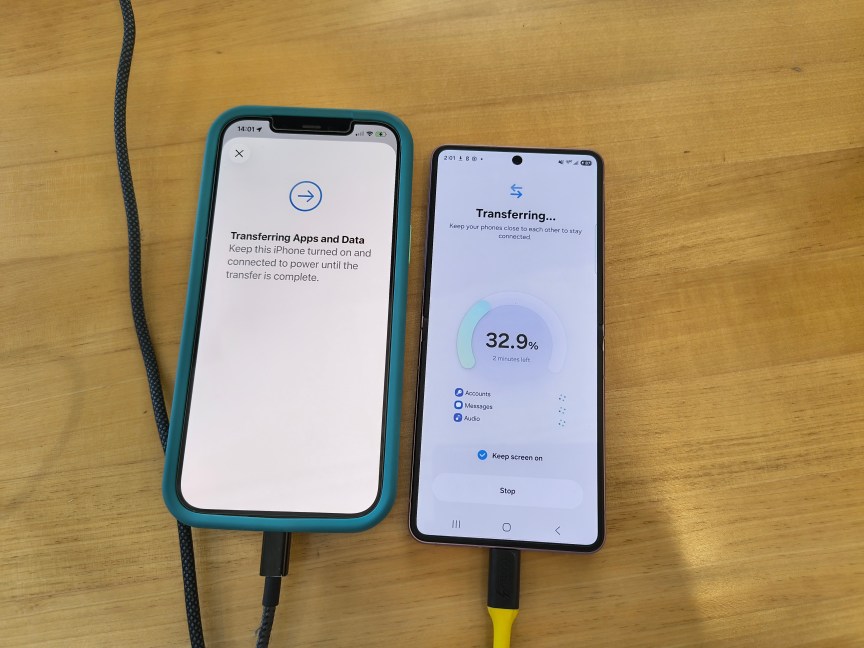
As with many Android phone setup processes, after first booting up the device, I selected the option to transfer from an iPhone. Historically, the next step would be hardwiring the phones together with a cable. Instead, Samsung directs you to open the Settings menu on an iPhone, select Transfer to Android, and a QR code scan connects the phones wirelessly.

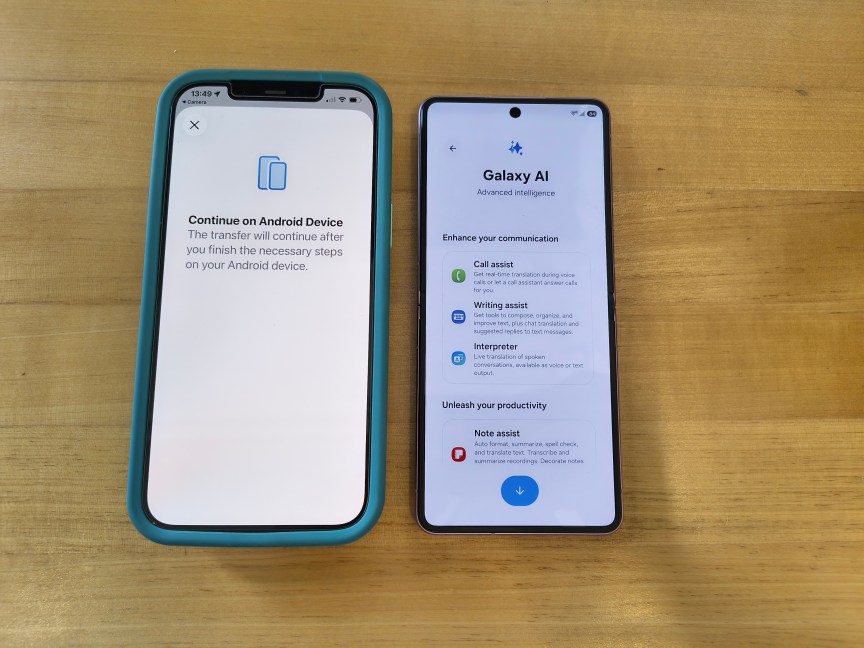
On the iPhone, I opted to only transfer my text message history and app data, since information like my photos, videos and contacts is already synced through Google services and will automatically appear on an Android phone. iOS then prompted me to continue the process from the Android phone, and the Galaxy Z Flip 8 started showing transfer progress as it received my data from the iPhone.
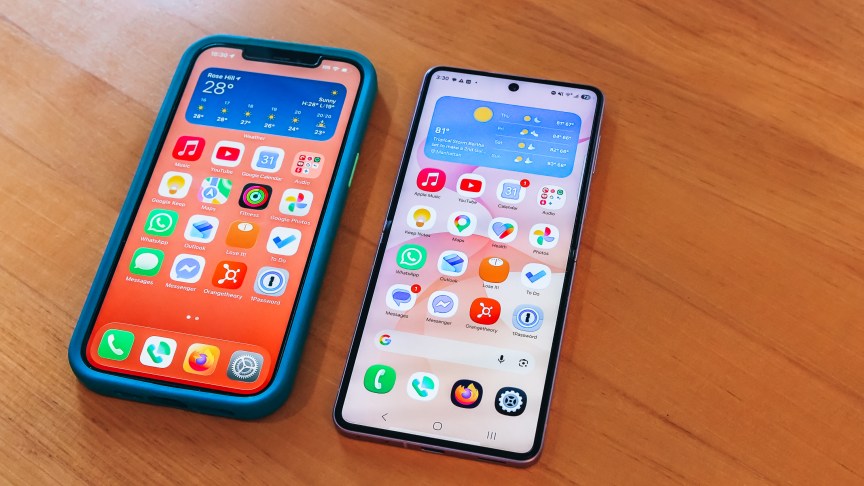
The process wasn’t completely seamless: after 15 minutes, I received a message saying the transfer failed and I should try again. Despite the warning, it had indeed worked — my data had rolled over, and the phone was already downloading the Google Play equivalents to my iPhone apps. Even better, the home screen already had its apps organized identically to how I had my iPhone home screens laid out, and replaced apps like Apple Health and the Apple Watch app with Samsung equivalents. I did need to add weather and calendar widgets, but not having to rearrange my home screens is a big time-saver whenever I swap phones.
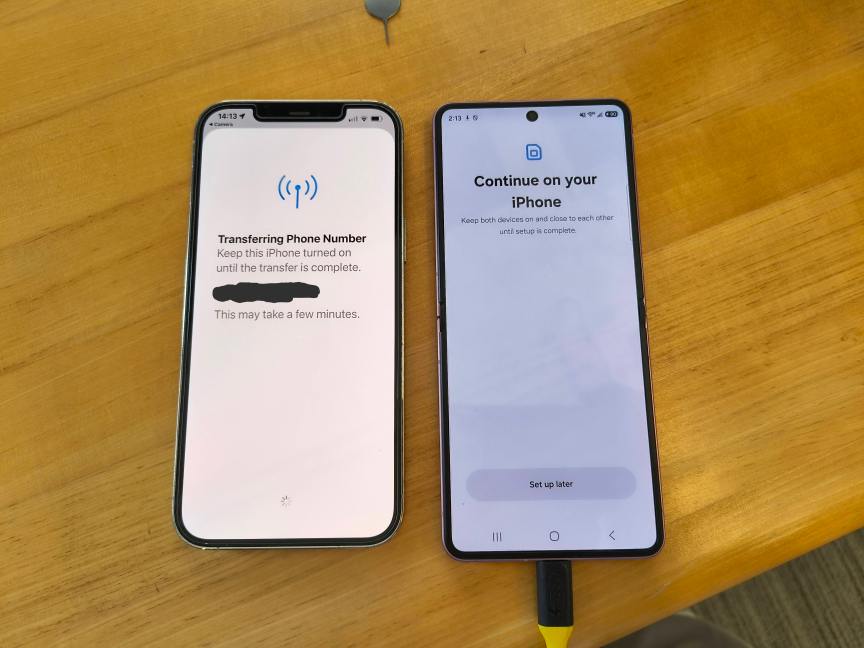
I wasn’t done with the transfer yet. I wanted to go a little further and try to convert the iPhone’s physical SIM card into an eSIM that could be transferred to the Flip 8. While last year’s Pixel 10 phones supported an eSIM transfer from iPhone to Android, most other Android phones haven’t immediately followed suit. I got this started in the cellular settings menu on the Flip 8, which generated a QR code I scanned on my iPhone to sync the devices wirelessly again.
I followed the prompts, but the first attempt failed, displaying a note that I may need to contact my phone carrier. That turned out to be a temporary issue, though, as I simply made another attempt following the same prompts — and it worked! The phone number previously on the physical SIM card had been converted and beamed over to the Flip 8 as an eSIM.
Chats will still need a little work
The biggest complaint about switching from an iPhone to an Android phone is how it affects leaving iMessage — especially group chats. Last year, my colleague, CNET video producer Carly Marsh, attempted to switch from an iPhone 12 Mini to a Motorola Razr, and, to her horror, many of her group chats splintered into a billion side chats.
This new process has substantially ironed out that transition from iMessage chats to RCS chats, but I did notice a few issues. On the one hand, the vast majority of my chat history made the move, including group chats with their fun nicknames (my friends recently made a group chat nicknamed after the reality TV show Love Island). The media within those chats was less consistent: one of the first baby photos a friend sent to me appears to have stayed on the iPhone.
Samsung’s setup process emphasizes that you need to deregister your phone number from both iMessage and FaceTime to avoid losing text messages, but I still missed some initial messages after the device transition. When a friend or group first sent a text after I switched phones, I didn’t receive it, though I did receive follow-ups.
Outside of these initial hiccups, RCS appears to be working rather well as an iMessage replacement, especially as features like encryption and improved media message support between the iPhone and Android continue to develop. And since I’m now able to text from the Flip 8’s smaller display while closed, it’s nice to just focus on addressing those texts with that cover screen without lighting up a larger screen.

A much better transfer process, but it can get better
I’d say the switch from an iPhone to the Galaxy Z Flip 8 took me about 3 hours from start to finish, with much of that time spent waiting for the rest of my apps to download and logging into them to finish setting up. This might sound like a lot of work, but compared to horror stories where text message chains have also blown up along the way, this was pretty breezy.
We should be seeing this improved process on more phones outside of Samsung’s new Galaxy devices. Android Community Engagement Manager Mishaal Rahman posted a list on Reddit of ways Android 17’s updated Android Switch should improve the move from iOS on Pixel phones and other devices, with the eSIM transfer I tested being one of the newest features.
I’m hopeful that, in time, some of these remaining bugs will get worked out as this new process improves. For instance, getting a more nuanced message if the connection process got interrupted but most of your data did make the transfer would be more helpful than a note that the entire process failed and to start over. And there must be a way to transition out of iMessage to Android without missing any texts — that’d be my top priority.



See full bio
Read the full article here