





The closure of Prairie Harm Reduction in Saskatoon continues to have a big impact on the community.
It closed its doors last week after reporting a major financial shortfall, leaving big gaps in the support services that ran through the facility.
Now, many are calling on the provincial government to get those workers back into the community, helping the city’s most vulnerable. The closure means 126 fewer front-line workers in the community, providing critical care. A lot of that work was being done in housing and mental health support.
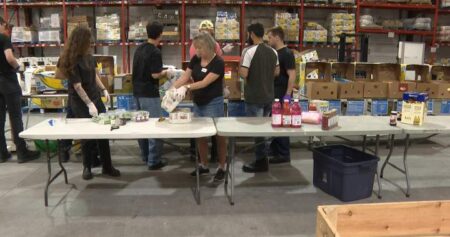
“As a result of this, people are going to die. Families are not going to receive infant formula. They’re not going to receive diapers. They’re not going to receive groceries,” Graham Mitchell with Service Employees International Union West said.


Get daily National news
Get daily Canada news delivered to your inbox so you’ll never miss the day’s top stories.
He is calling on the province to rehire those workers. He says they should be doing the life-saving work they had been doing at Prairie Harm Reduction.
“This is also another example of the need for stable multi-year funding for community-based organizations like Prairie Harm Reduction.”
Up until the financial issues became apparent, the provincial government supported Prairie Harm programs tied to family services.
Those dollars will be reallocated; it is just not yet clear where. But some argue the facility provided very unique services. They doubt the gaps left behind will be properly addressed.
Rachelle Dauncey-Ripplinger, who provided family support services with Prairie Harm up until its doors closed, doubts the gaps left behind by the closure will ever properly be addressed.
“So even when we distribute those funds, we risk not filling those gaps and perhaps they are going to get even bigger,” Dauncey-Ripplinger said.
She says that’s because Prairie Harm Reduction was a “no-fault agency.”
“That meant that no matter if there was any escalation, anything other organizations deemed too complex to deal with, we never cut them out,” Dauncey-Ripplinger added.
“So even when we distribute those funds, we risk not filling those gaps and perhaps they are going to get even bigger.”
Meanwhile, overdoses continue to rise in the city.
The Saskatoon Fire Department responded to 157 overdose calls between April 1 and April 11 — an average of just over 14 per day and nearly as many as there were for January and March this year. About 30 per cent were within five blocks of Prairie Harm Reduction.
It’s more reason, many say, to lock in stable, multi-year funding for organizations like Prairie Harm, supporting the work they do in the community.
Read the full article here